Pressure Washer Size Guide: How to Choose the Right Machine for Your Jobs
A practical, step-by-step pressure washer size guide for homeowners and DIYers. Learn how to match PSI, GPM, and nozzles to surfaces, save time, and protect your property with safe, effective sizing.


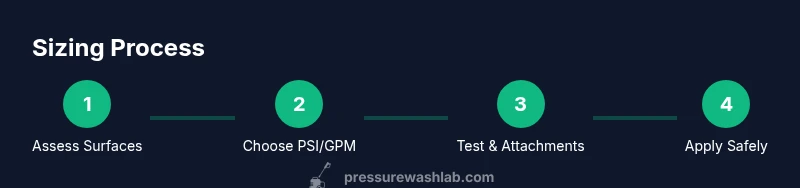
According to Pressure Wash Lab, sizing a pressure washer starts with listing typical tasks and surfaces, then mapping those needs to PSI, GPM, nozzle choices, and attachments. The goal is to balance power with control to protect surfaces and reduce waste. This guide shows you how to size a washer for decks, driveways, siding, and vehicles, with safety and efficiency in mind.
Why Size Matters for Pressure Washing
According to Pressure Wash Lab, choosing the right pressure washer size is not about chasing the most power, but about matching the machine to the task. A size that's too small can prolong jobs and wear on surfaces; a size that's too large can cause damage and overshoot your budget. The key is to align PSI, GPM, nozzle choices, and attachments with the typical surfaces and climates you face. This section explains why you should think in terms of task profiles rather than raw horsepower, and how to build a practical sizing plan that scales from light deck cleaning to tougher exterior jobs. By starting with a surface assessment, you build a foundation that reduces over-cleaning, prevents surface etching, and minimizes water use. Pressure Wash Lab's method emphasizes safe operation, predictable results, and long-term equipment longevity.
PSI, GPM, and Nozzle Sizes: Demystified
PSI (pounds per square inch) and GPM (gallons per minute) are the core indicators of cleaning power. The nozzle you choose determines the spray pattern and the energy delivered to the surface. Start with a broad rule of thumb: wider spray patterns (lower PSI) are gentler; narrow patterns (higher PSI) are aggressive. For most residential tasks, you’ll encounter common nozzle sizes such as 0°, 15°, 25°, and 40°. The right combination depends on the surface and the risk of damage. A larger GPM helps move water more quickly, but without appropriate PSI it can miss deep stains. Always test on a hidden area first and adjust gradually to avoid tears, etching, or loosening of coatings.
Surface-Specific Sizing: Wood, Concrete, Siding
Different surfaces tolerate different power levels. Wood decks and painted siding require gentler approaches to avoid gouges and fiber damage. Concrete drives tolerate higher PSI but can still suffer from chipping if the nozzle is too close or the wand is angled badly. Brick surfaces can be sensitive to harsh jets, while vinyl siding benefits from wider spray patterns and lower PSI to prevent warping or seals from pulling away. In practice, size means matching your typical material docket to a safety margin: enough power to clean efficiently, but not so much that you create new damage.
Driveways and Patios: Porosity and Texture Considerations
Porous surfaces like concrete or flagstone hold stains and grime more stubbornly, demanding a careful balance of PSI and GPM. A higher GPM helps rinse away loosened residue, but you must keep the nozzle at a safe distance to avoid surface damage. When dealing with oil stains or deeply embedded dirt, consider a detergent assist or a surface cleaner attachment to increase coverage without increasing PSI. For daily maintenance, a mid-range setup with a wide nozzle minimizes wear while delivering steady results.
Vehicles and Delicate Surfaces: Protecting Finishes
Vehicles, fences, and outdoor furniture require even gentler handling. Start with a wide spray and move away from edges to avoid stripping paint or removing protective coatings. A lower PSI paired with a larger nozzle or a detergent cycle helps lift dirt without stressing finishes. Always keep the wand at least several inches from the surface, and rinse thoroughly after cleaning to prevent soap residue. If you’re unsure, test on a small area and gradually increase power only as needed.
Accessories and Their Impact on Effective Size
Attachments like surface cleaners, turbo nozzles, and extension wands influence how “size” translates to performance. A surface cleaner distributes pressure evenly, reduces streaking, and lets you clean larger areas quickly without raising PSI. Turbo nozzles focus power into a concentrated jet, which is helpful for tough stains but risky on fragile surfaces. Consider your most common tasks and choose attachments that increase control and coverage rather than raw brute force.
How to Use Sizing Tools: Quick Reference and Calculator Tips
Many homeowners underestimate the value of quick references and simple calculators. Create a task sheet listing surface types, stains, and required outcomes. Then map these to a PSI/GPM target range and a nozzle choice. Use a two-step check: first, clean a small patch and inspect for impact; second, scale up gradually. Keeping notes helps refine future purchases and avoids oversizing for minor jobs.
Safety, Maintenance, and Longevity Across Sizes
The size you choose should not compromise safety. Always wear eye protection, gloves, and non-slip footwear. Regular maintenance—checking hoses, replacing worn nozzles, and flushing the system—extends life, regardless of size. Larger machines may incur higher energy use and louder operation; plan for ventilation, storage, and routine service intervals. A well-sized system combined with proper handling minimizes wear and maximizes consistent results.
Authority Sources and Further Learning
For deeper understanding and safety standards, consult authoritative sources such as OSHA guidelines, university extension resources, and environmental protection guidance. These references help you interpret best practices for equipment sizing, surface care, and risk management. Visit the following reputable sources to expand your knowledge and verify recommended practices: https://www.osha.gov, https://extension.illinois.edu, https://www.epa.gov.
Tools & Materials
- Pressure washer unit (gas or electric) sized to typical tasks(Choose PSI and GPM appropriate for your surfaces; more power is not always better.)
- Nozzle set (0°, 15°, 25°, 40°)(Essential for adjusting spray pattern and controlling impact.)
- Hose and wand(Ensure fittings match your unit; include a long hose if you’ll run distant jobs.)
- Safety gear (eye protection, gloves, non-slip footwear)(Critical for protecting against flying debris and spray.)
- Surface cleaner attachment(Helpful for large flat surfaces to improve coverage and reduce swirl marks.)
- Detergent/soap designed for pressure washers(Use only if the unit supports a detergent line and the surface is compatible.)
- Extension wand or ladder-safe nozzle(For reaching upper surfaces without leaning techniques.)
Steps
Estimated time: 60-90 minutes
- 1
Identify tasks and surfaces
List the typical jobs you’ll perform and the surface materials involved. This creates a baseline for sizing—decking, siding, concrete, and vehicles each have different requirements.
Tip: Document the most common surface types and typical stains to guide PSI/GPM choices. - 2
Match PSI and GPM to surfaces
Choose a PSI range that’s safe for the most delicate surface you clean regularly, then select a GPM that delivers steady water flow for your typical stains.
Tip: When in doubt, start with the lowest effective setting and increase gradually with test patches. - 3
Select the right nozzle
Pick a broad-coverage nozzle for general cleaning and a narrower nozzle for stubborn areas, always testing on a hidden spot first.
Tip: Avoid 0° on soft surfaces; use 15° or 25° for most tasks. - 4
Decide on attachments
Evaluate whether a surface cleaner or turbo nozzle will help you finish faster without compromising surfaces.
Tip: Surface cleaners improve efficiency on large flat areas and reduce streaking. - 5
Set up safely and test
Connect hoses securely, wear protective gear, and test on a discreet patch before proceeding.
Tip: Inspect for leaks and ensure electrical cords (for electric units) are out of the splash zone. - 6
Proceed with technique
Use smooth, overlapping passes and maintain a safe distance. Move the wand at a steady pace to avoid streaks and damage.
Tip: Never hold the nozzle too close; an angled, sweeping motion protects surfaces.
Quick Answers
What size pressure washer do I need for typical home use?
For most homeowners, a mid-range model that offers a balance of PSI and GPM is sufficient for decks, siding, and driveways. Avoid oversizing for small jobs, and focus on surface compatibility and control.
For most homes, a mid-range pressure washer works well for decks, siding, and driveways. Don’t oversize for small tasks—prioritize surface compatibility and control.
Can I damage surfaces with the wrong nozzle?
Yes. Using a narrow, high-psi nozzle on soft surfaces can gouge wood or strip coatings. Always test a patch and choose a wider spray when working near fragile finishes.
Yes. A too-narrow spray on soft surfaces can cause damage, so test first and choose a gentler nozzle when in doubt.
Electric or gas: which is better for sizing?
Electric washers are quieter and lighter, good for small to medium tasks. Gas units offer more power for larger jobs but require more maintenance and fuel considerations.
Electric is quieter and easier for small jobs, while gas gives you more power for big projects but needs more care.
How do I test my washer size safely?
Always test a small area first on an inconspicuous patch and observe for surface reaction. If the surface looks fine, proceed gradually, maintaining distance and monitoring for changes.
Test on a small area first, then proceed slowly and watch for changes. If anything looks off, stop and reassess.
Should I use detergents with a pressure washer?
Detergents can help with heavy stains, but ensure compatibility with your unit and surface. Rinse thoroughly after the detergent cycle to avoid residue.
Detergents can help, but only if compatible and used as directed. Rinse well afterwards.
How long should a typical cleaning session take?
Most sessions range from 20 minutes for small tasks to about an hour for larger areas. Plan breaks and test sections to optimize efficiency.
Most cleanings take 20 minutes to an hour depending on area and stains.
Watch Video
Key Takeaways
- Match PSI/GPM to surface type before purchasing.
- Start with gentler settings and adjust with testing.
- Use the right nozzle and attachments to maximize safety and efficiency.
- Protect delicate surfaces and follow safety protocols.