What Size Pressure Washer Do I Need? A Homeowner's Guide
Learn how to choose the right pressure washer size by evaluating tasks, PSI, GPM, nozzle tips, and safety. Practical steps from Pressure Wash Lab to help homeowners size up like a pro.


Goal: determine the right pressure washer size for common home tasks. For light jobs like cars and patios, choose 1500–2000 PSI with 1.2–1.8 GPM. For siding, decks, and concrete, use 2000–2800 PSI with 2–3.5 GPM. Gas-powered units offer mobility and power, while electric models are quieter and easier to maintain. Always match nozzle and safety gear to prevent damage.
Why Size Matters
Choosing the right size matters because it directly affects cleaning speed, surface safety, and overall job practicality. PSI (pounds per square inch) determines the force behind the water, while GPM (gallons per minute) controls how much water moves through the nozzle. For small tasks like cleaning a car, patio furniture, or a light deck, a compact electric unit in the 1500–2000 PSI range with 1.2–1.8 GPM is usually sufficient. For larger surfaces such as siding, driveways, or concrete, you’ll want more power and flow, typically in the 2000–2800 PSI range with 2–3.5 GPM. Selecting too much pressure can damage wood, vinyl, or painted surfaces; too little pressure can leave grime behind and require more passes. The balance is to match the job type to the right PSI/GPM and to choose a model that suits your access to power, noise tolerance, and budget. Pressure Wash Lab’s guidance emphasizes starting with moderate settings and adjusting conservatively as you gain experience, especially on delicate materials. In 2026, the home-washing landscape favors versatile, user-friendly electric units for most homeowners, while gas models remain valuable for frequent, heavy-duty work.
Key Specs: PSI, GPM, and Nozzle Types
PSI and GPM are the core specs; PSI measures the cleaning force, while GPM measures water volume. A higher PSI is not always better; on soft surfaces like wood or painted siding, high PSI can cause etching, chipping, or paint removal. A typical starter range is 1500–2000 PSI for light tasks and 2000–2800 PSI for tougher jobs. For cleaning speed, GPM matters: 1.2–1.8 GPM is fine for small tasks; 2–3.5 GPM helps when washing large areas, but it also drains more water and can increase splashback. Nozzle tips affect spray pattern and distance. A 25-degree nozzle is a common all-purpose choice; a 40-degree nozzle provides gentler cleaning; a 15-degree nozzle focuses more power but requires careful distance and technique. Quick-connect tips allow you to adapt to different surfaces. When starting, always test on a hidden area and gradually increase pressure; never point the nozzle at people, pets, or fragile surfaces. Gas units generally deliver higher PSI and GPM; electric units are quieter and easier to maintain and often adequate for typical home tasks.
Matching Tasks to Size: Quick Guide
Light tasks (cars, patio furniture): 1200–2000 PSI, 1.2–1.8 GPM. Medium tasks (siding, decks): 2000–2600 PSI, 1.5–2.5 GPM. Heavy tasks (concrete, driveways): 2600–3200 PSI, 3.0–4.0 GPM. Always consider the surface and coatings; delicate surfaces should never be jumped to the upper end of PSI. Start with a moderate setting and adjust by small increments. For most homeowners, a versatile unit in the 2000–2600 PSI and 2–3 GPM range handles the majority of tasks efficiently while reducing risk to surfaces. Nozzle choice should be a primary tool in dialing in your results, with the 25-degree nozzle as a solid default for general cleaning. Electric models are great for regular maintenance tasks, while gas-powered machines excel during heavier-duty projects or when mobility is essential.
Electric vs Gas: Pros and Cons
Electric pressure washers are quieter, lighter, and require less maintenance. They’re ideal for small to medium jobs around the home and typically connect to a standard outlet with minimal setup. Gas-powered units offer significantly higher PSI and GPM, which translates to faster cleaning of large areas and tougher grime, but they’re louder, heavier, and require fuel and routine maintenance. For homeowners with frequent driveways, siding, or heavy staining on concrete, a gas unit saves time; for casual cleaning and mulitple small jobs, an electric model is often sufficient. When choosing, consider local noise regulations, access to power, and the kinds of surfaces you’ll encounter most often.
How to Estimate Your Needs: Quick Formula
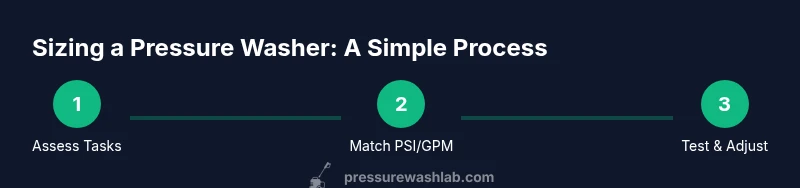
- List typical tasks (cars, patio, siding, concrete). 2) Assign a PSI range per task (light, medium, heavy). 3) Pick a GPM that balances speed and water usage (1.2–1.8 for light; 2–3.5 for faster cleaning). 4) Choose nozzle tips that fit your surfaces (start with 25°). 5) Decide between electric or gas based on mobility, budget, and maintenance. 6) Add 10–20% headroom to accommodate larger tasks or future needs. 7) Test in an inconspicuous area and adjust gradually to protect surfaces.
Common Pitfalls and How to Avoid Them
- Overestimating PSI on delicate surfaces can cause damage; always test first. - Relying on high PSI alone; combine with correct GPM and nozzle choice for best results. - Skipping safety gear; always wear eye protection and gloves and keep bystanders away. - Choosing the wrong nozzle for a given surface; use wider spray for coatings and grime, narrow spray only when appropriate. - Ignoring manufacturer guidance; always check your unit’s manual for the recommended PSI range and surface limitations.
Safety First: Protect Surfaces and Yourself
Always wear PPE (eye protection, gloves, closed-toe shoes) and keep others away from the cleaning area. Begin with the lowest effective pressure and a wide spray pattern; gradually increase only as needed. Maintain a safe distance from the surface (start at several inches away and move closer in controlled passes). Use a surface cleaning attachment for flat surfaces to reduce gouging, and never direct the spray at fragile materials like loose paint, vinyl, or stained wood.
Tools & Materials
- PSI/GPM reference chart or calculator(Helps map task types to PSI and GPM ranges)
- Power source(Electrical outlet with outdoor-rated extension cord or fuel source for gas units)
- Nozzle tips (0°, 15°, 25°, 40°)(Start with 25° all-purpose; have wider tips for delicate surfaces)
- Protective equipment (safety goggles, gloves, closed-toe shoes)(Always wear PPE during operation)
- Hose and quick-connect fittings(Ensure hose length reaches work area and is in good condition)
Steps
Estimated time: 25-40 minutes
- 1
Assess the task
List typical cleaning jobs you’ll tackle this season and note surface sensitivity. This helps determine whether you need lower PSI for delicate surfaces or higher PSI for tougher grime.
Tip: Write down surface materials and any coatings to reference as you choose PSI/GPM. - 2
Match PSI and GPM to the job
Choose a PSI/GPM range based on the most demanding task you expect. If you’re uncertain, select a mid-range unit and test on a hidden area first.
Tip: Prioritize surface safety; you can often adjust with nozzle changes rather than jumping to higher PSI. - 3
Choose electric vs gas
Electric units are quiet and convenient for lighter work; gas units deliver more power for large or stubborn jobs. Consider noise, weight, and fuel cost when deciding.
Tip: If you’ll be mobile around a yard, gas may be worth the trade-off for power. - 4
Select a nozzle and start at wide spray
Attach a 25° nozzle for general cleaning and adjust distance to avoid surface damage. Avoid 0° unless you’re trained and know the surface can handle it.
Tip: Test on a hidden area to confirm the spray won’t etch or strip coatings. - 5
Test, observe, and adjust
Begin several inches away from the surface and move in steady, overlapping passes. Increase pressure only if grime remains after several passes.
Tip: Keep the wand moving to prevent gouging; never hold in one spot. - 6
Finalize and store safely
Rinse surfaces to remove detergent residue, shut down equipment, and drain water. Coil hoses neatly and store away from extreme temperatures.
Tip: Inspect hoses and fittings for wear before storage.
Quick Answers
How do I determine the right PSI and GPM for my tasks?
Start by listing typical tasks and assigning a PSI range per task. Pick a GPM that balances speed with water usage, and choose nozzle tips that suit each surface. Always test in a hidden area first.
First list your regular tasks, then pick a PSI range and nozzle that fit each surface, and test on a hidden area before full use.
Can I damage surfaces using too much pressure?
Yes. Excessive PSI can etch wood, strip coatings, or dent soft materials. Always start with moderate pressure and test, then adjust carefully.
Yes, too much pressure can damage surfaces; start low and test before increasing.
Is electric or gas better for a DIY homeowner?
Electric units are quieter and easier to maintain, often enough for light to medium tasks. Gas units provide more power for tougher jobs and larger areas, but require fuel and more maintenance.
Electric is great for light use; gas works well for bigger jobs and more power.
What nozzle should I start with?
Begin with a 25-degree nozzle for most tasks; switch to wider or narrower tips only as needed. 40-degree is gentler for delicate surfaces.
Start with a 25-degree nozzle and adjust as needed.
How should I size for concrete cleaning?
Concrete typically benefits from 2000–2800 PSI and 2–3.5 GPM, depending on stain severity. Use a wide nozzle and test on a small area first.
For concrete, use higher PSI and GPM with careful testing.
Watch Video
Key Takeaways
- Match tasks to PSI and GPM ranges before buying.
- Start with lower pressure and adjust gradually.
- Electric vs gas weighs trade-offs; choose based on tasks and noise tolerance.
- Use appropriate nozzle tips to protect surfaces.
- Prioritize safety and PPE during operation.