Pressure Washer Soap for Concrete: A Practical Guide
Learn how to choose and use pressure washer soap for concrete safely and effectively. This comprehensive guide covers detergent selection, dilution, dwell time, application, and safety tips to remove dirt, oil, and algae from driveways and sidewalks.


You will learn how to select and apply pressure washer soap for concrete, how to dilute it safely, and how to rinse for best results. You’ll need a pressure washer, a concrete-safe detergent, a nozzle suitable for soap application, eye protection, and a rinse-only nozzle for cleanup. Follow manufacturer instructions and test a small area first.
Why soap matters for concrete cleaning
Concrete surfaces like driveways and sidewalks accumulate dirt, oil, algae, and mineral deposits over time. Simply using water rarely penetrates and loosens deeply embedded grime. The right pressure washer soap for concrete creates micelles that surround and lift contaminants, helping them rinse away with the final rinse. When used properly, soap enhances cleaning efficiency and reduces surface abrasion by improving lubricity and reducing the need for aggressive scrubbing. This matters most on highly used surfaces where staining and mold growth are common. According to Pressure Wash Lab, selecting a product labeled safe for concrete and outdoor use protects nearby plants, pets, and adjacent structures. Always read the label, test in a small, inconspicuous area, and follow dilution instructions to avoid residue or color changes on your concrete.
Dirt and oil sit in the concrete’s pores and tiny capillaries. Soap lowers surface tension and helps emulsify oily films, while surfactants reduce water beading and improve wetting for complete coverage. Using the correct soap for concrete also reduces the likelihood of chemical interactions with sealants or coatings that might be present on the surface. A good test patch will reveal whether the product causes any whitening, staining, or color change before you commit to the whole area.
How pressure washer soap for concrete works
Soap designed for exterior cleaning contains several functional components. Surfactants lower surface tension, allowing water to spread more evenly and penetrate into pores. Builders and chelating agents soften mineral deposits, helping loosen mineral scale and dirt. Some products include degreasers that emulsify vegetable and petroleum oils, while enzymes or bio-enzymatic cleaners can target organic residues. When applied with a compatible pressure washer and nozzle, the mixture forms a foam that clings to vertical and horizontal surfaces long enough for agitation and breakdown. As you rinse, emulsified grime is carried away with the rinse water, leaving the surface cleaner and brighter. This is especially important for concrete surfaces where micro-porosity can trap grime and moisture, leading to slow residue buildup if not treated properly.
The effectiveness of the soap also depends on contact time, temperature, and surface condition. Warmer days and moist surfaces offer faster breakdown of contaminants, but you should avoid letting soap dry on the surface, which can leave streaks or residues. Always spray from the top down to prevent dirty runoff from re-depositing on cleaned areas. In short, the right pressure washer soap for concrete works with your tools to lift and flush away contaminants rather than just rinse them.
How to choose the right pressure washer soap for concrete
Choosing the right product starts with surface compatibility. Look for concrete-safe formulas that are labeled biodegradable, phosphate-free, and suitable for outdoor use. Some cleaners are designed to address specific stains, such as oils, mildew, or algae, while all-purpose cleaners provide general dirt and grime removal. Pressure Wash Lab analysis shows that eco-friendly soaps that minimize harsh chemical residues tend to perform better on porous concrete without causing long-term environmental impact. When selecting a product, check the label for recommended surfaces (driveways, sidewalks, pavers), dwell time, and dilution guidance. Avoid products that rely on highly aggressive acids or bleach-based formulas unless you are working in a controlled environment and following all safety precautions. Keep in mind that some cleaners are formulated for use with cold water only, while others perform better with heated systems.
For best results, choose a product with clear directions, a visible biodegradability claim, and compatibility with your equipment. If you are cleaning stained concrete with oil or grease, consider a degreasing additive as part of the soap system. Finally, verify that the product won’t void any sealant or coating you may have applied previously. Using the right soap for concrete saves time and improves outcomes, particularly on large areas where uniform coverage matters.
Dilution, application, and dwell time guidelines
Always start by reading the detergent label and following the manufacturer’s recommended dilution ratio. Use a dedicated soap nozzle or a low-volume foam cannon for even distribution. Begin with a light dilution for general dirt removal and a heavier dilution only for heavy staining, oil spots, or algae growth. Apply soap from the highest point you’re cleaning to the lowest, ensuring a consistent coat over the entire surface. Allow a brief dwell time to let the agents work, typically a few minutes, then begin gentle agitation with a surface brush if needed. Do not let the soap dry on the surface, as dried residues may require re-application. Finally, rinse thoroughly from top to bottom with clean water to remove all loosened grime and soap residue. Monitor runoff to prevent dirty water from recontaminating already-cleaned sections. Consistent coverage and proper dwell time are essential when using any pressure washer soap for concrete to achieve a uniform, stain-reduced finish.
Common mistakes and safety considerations
A common error is using household cleaners or dish soap in a pressure washer, which can create excessive suds, damage equipment, and leave residues that are hard to remove. Always select a dedicated concrete-safe soap and never mix cleaners with bleach or ammonia, as dangerous fumes may be generated. Wear eye protection, gloves, and non-slip footwear, and protect nearby plants and soil from chemical runoff with plastic sheeting or tarps. Keep electrical components dry and do not point the nozzle at yourself or others. Always test a small patch first to check for color changes or surface damage. Finally, never leave soap to dry on the surface, as it can leave unsightly streaks and require rework.
Real-world scenarios: stains, algae, mildew, and efflorescence
Oil stains on concrete respond to degreasing soaps and longer dwell times. Algae and mildew require a soap with a mild fungicidal component or a dedicated mildewcide, paired with a thorough rinse. Efflorescence, the white mineral bloom, often recurs after cleaning; repeat washing with a gentle soap and rinse, and consider sealing the surface to reduce porous absorption. Some paints or coatings might react to certain cleaners, so always patch-test first. For heavily stained driveways, you may need to apply soap more than once in stages, followed by a thorough rinse to prevent residue buildup. In all cases, maintain proper safety and ventilation to protect yourself and the environment while using pressure washer soap for concrete.
Step-by-step workflow overview: sweetness of a well-planned wash
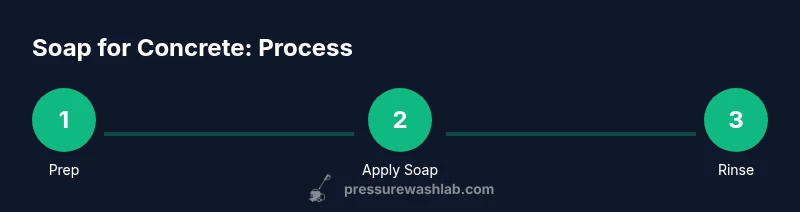
A well-planned wash follows a logical flow: protect nearby plants, pre-wet the surface, apply soap evenly, allow dwell time, scrub stubborn stain areas if needed, rinse thoroughly, and inspect the result. Keeping a clean detergent bottle and a separate rinse nozzle reduces cross-contamination. This approach minimizes wasted product and ensures a uniform finish across concrete surfaces. Pressure Washer Lab emphasizes that adhering to the product’s guidance, wearing protective gear, and performing a patch test are essential for optimal outcomes.
Maintenance, cleanup, and post-wash considerations
After cleaning, rinse spray lines, nozzles, and any foam-generating equipment thoroughly to remove residual soap and debris. Store detergents in a cool, shaded area to preserve their effectiveness, and label bottles clearly to avoid accidental use of the wrong product later. If you plan to seal the concrete after cleaning, ensure the surface is completely dry and free of soap residues. Finally, dispose of rinse water in accordance with local environmental guidelines, especially if the runoff contains oils or other contaminants. With proper maintenance, your pressure washing routine will continue to deliver clean, bright concrete with minimal hassle.
Next steps after selecting a soap solution
With the right pressure washer soap for concrete chosen, plan a wash day that coordinates with weather and surface condition. Prepare the area, protect vegetation, and confirm your equipment is in good working order. Document any areas that require extra attention or repeated passes for stains. A systematic approach not only improves results but also reduces the chance of rework on subsequent cleanings.
Final note on efficacy and best practices
The most important takeaway is that the combination of a quality concrete-safe soap, proper dilution, appropriate agitation, and thorough rinsing yields superior results. Don’t rush the process; allow for adequate dwell time when needed and always test a patch first. For homeowners and DIY enthusiasts, consistency and safety are the keys to achieving professional-looking concrete cleaning outcomes. Remember that Pressure Wash Lab’s guidance emphasizes using the correct product for concrete, adhering to label directions, and prioritizing environmental responsibility.
Tools & Materials
- Pressure washer(Gas or electric, at least mid-range PSI for concrete cleaning)
- Soap nozzle or foam cannon(Specialized for even soap application)
- Concrete-safe detergent(Biodegradable, phosphate-free preferred)
- Safety glasses(Protect eyes from splashes)
- Gloves(Chemical-resistant; long sleeves recommended)
- Hose and water supply(Clean, free-flowing water source)
- Brush or deck brush(For light agitation on stubborn spots)
- Drop cloths or plastic sheeting(Protect nearby plants and surfaces)
- Masking tape(Seal off delicate areas if needed)
Steps
Estimated time: 60-120 minutes
- 1
Prep area and safety gear
Clear the workspace, cover nearby plants, and put on protective equipment. Inspect the equipment for leaks and ensure cords and hoses are in good condition. A clean, organized setup minimizes accidents and ensures even cleaning.
Tip: Test spray on a small patch of concrete to verify no color change before you proceed. - 2
Wet the surface
Lightly pre-wet the concrete to improve soap penetration and prevent rapid soap evaporation. A uniformly damp surface helps the cleaner spread evenly and reduces the chance of uneven patches.
Tip: Keep the surface consistently damp during application, avoiding puddles. - 3
Apply soap with proper dilution
Attach the soap nozzle and apply a thin, even layer of pressure washer soap for concrete. Start at the highest area and move slowly to coat all surfaces without creating excessive foam.
Tip: Begin with a light dilution for general dirt; increase concentration only for heavy stains. - 4
Let the soap dwell
Allow the detergent to sit for a few minutes to break down grime. Do not let it dry; re-wet if you notice drying patches. This dwell time enhances cleaning efficiency.
Tip: Keep an eye on edges and corners where residue can accumulate. - 5
Agitate stubborn stains
Use a brush or gentle scrubbing to loosen embedded grime on oil spots or algae. Target the toughest areas with circular motions and moderate pressure.
Tip: Work in small sections to avoid over-scrubbing any single area. - 6
Rinse thoroughly
Switch to a rinse nozzle and wash from top to bottom, ensuring all soap and grime are flushed away. Inspect for missed spots and re-clean if needed.
Tip: Rinse phases should be progressive to prevent dirty runoff from reworking cleaned areas. - 7
Inspect and repeat if needed
Evaluate the surface after the first pass. For stubborn stains, repeat the process on the affected zones. Dry times vary with weather; plan accordingly.
Tip: Note any staining that recurs and plan sealant or a targeted treatment if desired.
Quick Answers
Can I use general household dish soap in a pressure washer for concrete?
General household dish soap is not recommended for pressure washers on exterior concrete. It can create excessive suds, leave residues, and shorten pump life. Use a concrete-safe detergent designed for outdoor cleaning.
Dish soap isn’t recommended for pressure washing concrete; use a dedicated concrete cleaner instead.
What PSI should I use when cleaning concrete with soap?
Use a pressure range recommended by your machine’s manual for concrete surfaces, and adjust based on stain level. Avoid the highest PSI on delicate coatings to prevent damage.
Follow your machine’s manual for the recommended PSI for concrete surfaces and adjust for stains.
Is soap necessary for removing oil stains on concrete?
Soap helps emulsify and lift oils, but very deep or old stains may require a specialized degreaser. Pair with proper dwell time and rinse to achieve best results.
Soap helps with oil, but stubborn stains may need a degreaser and time.
Can I mix bleach with pressure washer soap on concrete?
Avoid mixing chlorine bleach with detergents; this can release dangerous fumes and damage the concrete or surrounding vegetation.
Do not mix bleach with soaps when pressure washing.
How often should I clean concrete with a pressure washer?
Frequency depends on exposure and use. Seasonal or annual cleanings work for most residential driveways; high-traffic areas may benefit from more frequent cleanings.
Seasonal or annual cleanings are common, adjust for traffic and exposure.
What safety precautions should I take?
Wear protective eyewear and gloves; keep bystanders away; be aware of electrical hazards and avoid spraying near outlets or wet areas. Ensure proper ventilation and avoid inhaling fumes.
Wear protection and keep people away; watch out for electrical hazards.
Watch Video
Key Takeaways
- Test a patch before full use.
- Select a concrete-safe soap with clear instructions.
- Follow dilution and dwell-time guidance from the label.
- Rinse completely to prevent residue and streaks.
- Protect the environment and equipment with proper safety and maintenance.