How to Remove Paint with a Pressure Washer: A Step-by-Step Guide
Learn how to safely remove paint with a pressure washer. This guide covers surface assessment, tool choices, step-by-step methods, safety tips, and maintenance to protect substrates.


You can remove paint with a pressure washer by choosing the right nozzle, testing a small area first, and applying steady, controlled strokes to lift paint without damaging the substrate. Start with low pressure on fragile surfaces and adjust as needed, using protective gear and masking to protect nearby areas.
Overview and Safety Considerations
Removing paint with a pressure washer is a practical approach for preparing surfaces for repainting or restoration. When you remove paint with a pressure washer, you must balance cleaning power with substrate safety to prevent gouges, fiber damage, or moisture intrusion. According to Pressure Wash Lab, the optimal outcome comes from matching technique to surface type and paint condition, using a deliberate, test-first approach. Before you begin, consider peeling, blistering, or lead paint risks and adjust your plan accordingly. Always wear eye protection, gloves, hearing protection if using a gas unit, and respiratory protection when removing lead-based coatings. Mask nearby plants and windows to keep chemicals and debris contained.
Assess Your Surface and Paint Type
Different substrates respond differently to pressure washing. A sturdy exterior wall like brick or concrete can tolerate more aggressive cleaning than soft wood or painted siding. The only reliable way to decide how aggressively to work is to test a small, inconspicuous patch and observe paint lift and surface reaction. If the paint agrees to lift with a light spray and the surface remains intact, you can proceed with caution. If you see fiber raise, surface roughening, or moisture seepage, stop and reassess your approach. Pressure Wash Lab analyses suggest documenting paint condition, substrate softness, and moisture levels before scaling up pressure.
Tools, Settings, and Preparation
Selecting the right tool and attachments is critical for safe paint removal. A electric or gas pressure washer with adjustable flow is preferred. Use a 15-degree spray tip (or a fan spray) for better control and reduced risk of gouging. A surface cleaner attachment can improve evenness on flat surfaces, while a scraper or putty knife should be reserved for stubborn edges after washing. Cover plants, outlets, and adjacent surfaces with plastic sheeting or painter’s tape. Apply a biodegradable detergent or paint-diluting cleaner only if compatible with your surface and paint type, and follow the product’s instructions.
Nozzle Selection and Spray Technique
Nozzle choice determines how gently or aggressively you work. Start with a wide spray and a low flow setting on sensitive substrates like wood or composite siding. Keep the nozzle moving in smooth, overlapping strokes and avoid holding it in one spot for too long. Maintain a consistent distance from the surface—usually several inches depending on nozzle and machine—so you don’t gouge the finish or drive moisture into joints. If paint remains stubborn, pause to inspect a test patch again before proceeding.
Step-by-Step Process for Exterior Surfaces
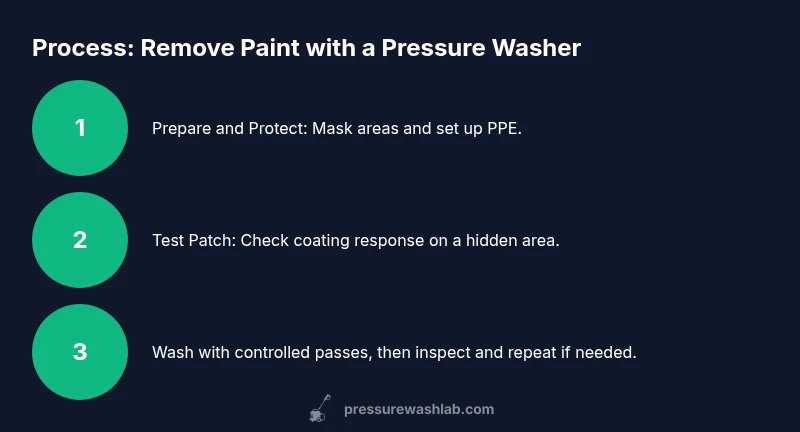
- Prepare the area: Remove loose debris, cover vegetation, and mask windows, outlets, and doors. 2) Test a patch: Spray a small, hidden area to gauge paint lift and substrate response. 3) Apply with control: Use a wide spray at a safe distance, moving methodically in horizontal or vertical passes. 4) Work in sections: Treat one area at a time, stepping back to evaluate progress and adjust pressure as needed. 5) Target stubborn areas: For peeling edges, use a scraper after washing to lift residual paint. 6) Rinse and dry: Rinse the surface with a lighter pass to remove residue and allow to dry before repainting.
Techniques for Wood, Brick, and Concrete
Wood surfaces require gentler handling to avoid gouging or splintering. Brick and concrete tolerate higher pressure but can throw paint chips far, so containment is key. For porous surfaces, introduce a brief rinse to flush out loosened paint, then rewash with broader passes. Always test on an inconspicuous area first. Lead-based paints require additional caution; if present, consider combining washing with professional guidance or chemical strippers approved by local regulations.
Common Mistakes and How to Avoid Them
Common mistakes include using too high pressure on soft substrates, staying in one spot for too long, and neglecting masking. These can cause surface damage, moisture intrusion, or unsafe debris dispersion. To avoid these issues, always start with the lowest effective pressure, keep the nozzle moving, and perform regular spot checks. If you spot signs of damage, pause, reassess, and switch to a safer approach.
Maintenance and Aftercare
After removing paint, clean and dry your equipment to prevent mineral buildup and nozzle clogs. Inspect the surface for adhesion and any remaining paint that may require chemical treatment rather than further mechanical removal. Once cleaning is complete, plan for proper surface preparation before repainting, including cleaning, sanding, and priming as needed. Regular maintenance of your pressure washer, nozzle, and attachments will extend their life and ensure consistent results over multiple projects. Pressure Wash Lab recommends documenting the process and protecting yourself with PPE during each step.
Tools & Materials
- Pressure washer (electric or gas)(Choose a unit with adjustable PSI and a dependable nozzle system.)
- 15-degree spray tip or adjustable fan nozzle(Prefer a nozzle designed for paint removal to balance power and control.)
- Surface cleaner attachment (optional but recommended)(Helps even cleaning on flat surfaces and reduces splash.)
- Masking materials (plastic sheeting, painter's tape)(Protect plants, windows, outlets, and nearby surfaces.)
- Scraper or putty knife(Use after washing for stubborn edges or peeled paint.)
- Biodegradable detergent/paint cleaner(Only if compatible with surface and paint type; follow label directions.)
- Personal protective equipment (safety goggles, gloves, hearing protection, long sleeves)(Protect against flying debris and spray irritants.)
Steps
Estimated time: Estimated total time: 2-3 hours (varies by surface size and paint condition)
- 1
Prepare and Protect
Clear the area, cover nearby plants, and mask windows or outlets. This reduces splash and protects people and property from contaminants. Ensure PPE is worn before you begin.
Tip: Mask all exposed surfaces that could be affected by spray duct and debris. - 2
Test a Patch
Spray a small, hidden area to gauge lift and surface response. If paint lifts easily and the substrate remains intact, you can proceed. If not, adjust nozzle and distance.
Tip: If the patch refuses to lift or the surface shows damage, stop and reassess rather than continuing. - 3
Set Up and Start Light
Begin with the widest spray at a conservative distance. Move the nozzle in steady, overlapping strokes, keeping a constant height from the surface.
Tip: Always start with the lowest effective pressure on the target area. - 4
Work in Manageable Sections
Tackle one area at a time; avoid rushing. If a stubborn edge remains, switch to a scraper after washing and rinse the area again.
Tip: Work from top to bottom to prevent dirty runoff from re-soiling cleaned areas. - 5
Rinse and Inspect
Once the main paint is lifted, rinse with a lighter pass to remove residue. Inspect adhesion by gently testing with a finger; rewash if needed.
Tip: Do not let residue dry; damp paint is easier to remove with another pass. - 6
Post-Clean Evaluation
Assess whether more steps are required or if a chemical stripper is more appropriate for tight corners. Plan for proper surface prep before repainting.
Tip: Document results for future reference and ensure the surface is fully dry before priming.
Quick Answers
Can I remove all types of paint with a pressure washer?
Pressure washing works best on solid film coatings, especially non-lead paints on sturdy substrates. Some paints or coatings may require chemical strippers or professional methods, especially on delicate surfaces or lead-containing layers.
Pressure washing can remove many common paints, but lead paint and fragile surfaces may need extra steps or professional help.
What surfaces are safe to treat with a pressure washer for paint removal?
Rough and sturdy surfaces like brick, concrete, and hard siding tolerate aggressive cleaning. Soft woods, aged decks, and fragile veneers may suffer damage if sprayed too aggressively.
Hard surfaces usually tolerate washing better, while soft wood or old coatings need gentler handling.
Do I need a chemical stripper or detergent?
Detergents can aid removal on some coatings, but avoid harsh chemicals that could harm the substrate. For stubborn paint or lead-based coatings, follow local guidelines and consider combining washing with approved chemical treatments.
Detergents help in some cases, but safety and compatibility are important; use approved products when needed.
Is it safe to remove lead-based paint with a pressure washer?
Lead-based paint requires caution. If lead is suspected or confirmed, consult local regulations and consider professional abatement options instead of DIY pressure washing alone.
Lead paints require special care; if in doubt, seek professional guidance.
What nozzle should I use for paint removal?
Begin with a broad spray nozzle to minimize risk and increase control. Avoid high-pressure, narrow nozzles on delicate materials; adjust distance and angle to prevent damage.
Start broad, then tighten your spray only if the surface responds without damage.
How long does the process take and when should I repaint?
Time varies with surface size and paint layers. After removal, ensure the surface is dry, clean, and properly prepped before applying primer and new paint.
It depends on the surface; make sure it's dry and clean before painting.
Watch Video
Key Takeaways
- Test patches first to determine safe pressure and technique.
- Protect surrounding surfaces with masking and containment.
- Move the nozzle steadily and avoid staying in one spot.
- Rinse and reassess before repainting to ensure a clean, sound surface.