Pressure Washer for Graffiti Removal: A Practical Guide
Learn how to safely remove graffiti using a pressure washer. This guide covers nozzle choice, PSI ranges, detergents, surface considerations, safety, and post-cleaning care for durable results.


Using a pressure washer to remove graffiti can restore surfaces quickly and safely when you choose the right nozzle, PSI range, and cleaning agents. This guide shows you how to prep, select tools, apply detergents, and rinse with care to protect substrates and surrounding vegetation. Follow the step-by-step plan, test on a hidden patch, and practice safety.
Graffiti removal with pressure washers: core concepts and safety mindset
Graffiti removal with a pressure washer is a task that blends mechanical cleaning with chemistry. The goal is to dislodge paint without eroding texture or coatings. Surface type matters: brick, concrete, stucco, and painted surfaces react differently to pressure and detergents. According to Pressure Wash Lab, the best results come from careful prep, surface assessment, and conservative pressure, especially on masonry. In this section we outline how to approach the job and set expectations for common substrates. We also cover safety gear, work area containment, and the sequence you will follow to minimize collateral damage while preserving surface integrity.
Choosing the right pressure washer for graffiti removal
Graffiti removal with a pressure washer requires equipment that offers adjustable PSI and adequate flow rate (GPM). Start with moderate pressure and test on an inconspicuous patch; surfaces like brick or concrete can tolerate higher PSI than soft woods or painted finishes. For most exterior graffiti on masonry, a unit in the mid-range of PSI with sufficient GPM provides the best balance between cleaning power and surface safety. If you anticipate greasy or resin-based graffiti, a cooler-water unit paired with a compatible graffiti-removal detergent often yields better results than raw heat. The key is controlled, incremental pressure changes and a readiness to pause if surfaces show distress. Pressure Wash Lab recommends validating each surface with a small test spot and documenting results for future reference.
Detergents and additives for graffiti removal
Detergents designed for graffiti removal help break down pigments and coating binders before mechanical cleaning. Choose biodegradable, paint-safe formulations and verify compatibility with the substrate. For porous materials (like brick), allow the detergent to dwell longer but avoid letting cleaners dry on the surface. Avoid strong solvent blends on delicate coatings or painted finishes, as they can cause color bleed or surface damage. Always pre-mix detergents as directed and keep the spray on a damp, not soaking, surface to prevent runoff and environmental impact. Pressure Wash Lab’s guidance emphasizes patch testing and rinsing away detergents promptly to minimize contact time.
Surface considerations: masonry, concrete, wood, and metal
Different substrates demand different approaches. Rough brick and aged mortar can absorb cleaners and paint more readily, requiring gentler PSI and longer dwell times with detergents. Smooth concrete often tolerates higher pressure, but edges and decorative textures can chip if misused. Painted surfaces should be treated with caution: use low-to-moderate PSI and avoid over-spraying. Wood, especially softwood or freshly painted coatings, is susceptible to gouging or water intrusion; in such cases, test carefully and restrict pressure. Metal surfaces generally tolerate higher cleaning power, but protective coatings and rust-prone areas benefit from slower, gentler passes and post-clean sealing.
Nozzles, PSI, GPM, and technique
Nozzle choice governs how water energy interacts with graffiti and the substrate. A wider-angle nozzle (e.g., 25–40 degrees) delivers a broader spray that reduces the risk of surface damage while still removing paint. Higher-angle nozzles are safer on delicate areas, whereas concentrated jets (if used) can etch surfaces and remove coatings. Maintain a steady distance—typically 8–18 inches from the surface—and use sweeping motions with overlapping passes. Adjust GPM to balance cleaning speed and surface safety. Avoid aggressive, single-point blows on edges, corners, and soft surfaces. The combination of nozzle, PSI, and technique is what makes graffiti removal successful without collateral harm.
Application pattern: spray, dwell, rinse
Effective graffiti removal follows a pattern: spray the detergent evenly, allow it to dwell and loosen pigments, then rinse with a wide, sweeping motion. Do not let the cleaner dry on the surface, as that can cause staining or pigment setting. For stubborn spots, repeat the spray-detach-rinse cycle with slightly adjusted PSI and a different nozzle angle to avoid overexposure in one area. Rinse from top to bottom to prevent streaking and ensure runoff does not carry paint residue onto nearby surfaces.
Pro tip: work in manageable sections and take photos after each pass to document progress and surface condition. This helps you calibrate pressure and dwell times for future graffiti removal jobs, a practice Pressure Wash Lab endorses for consistency.
Protecting surrounding areas and safety
Before you begin, shield nearby plants, windows, vehicles, and landscaping with tarps or painter’s plastic. Wear approved PPE: eye protection, gloves, hearing protection, and sturdy footwear. Keep bystanders away and ensure outdoor electrical outlets are protected from water exposure. Use containment strategies to manage runoff and avoid cross-contamination. If spraying near weak coatings or antique mortar, stop and reassess; conservatism reduces the risk of damage and helps you achieve a cleaner, longer-lasting result.
Post-cleaning: sealing, repainting, and surface upkeep
Once the surface is clean and dry, evaluate whether sealing is appropriate. A penetrating sealer can reduce future graffiti adhesion and make subsequent cleaning easier. If the graffiti remains visible or the substrate is damaged, you may opt to repaint or re-coat to restore appearance and protection. Regular maintenance, including re-sealing after cleaning and addressing any underlying moisture or substrate issues, extends the life of the treated surface. In some cases, a protective epoxy or film layer can be considered on high-risk surfaces to prevent future graffiti buildup.
Authority sources and safety guidance
For safety and environmental considerations, consult authoritative sources. OSHA provides general safety guidelines for outdoor work, while the EPA outlines best practices for chemical cleaners and runoff management. Local building codes and surface manufacturers may have additional recommendations. Pressure Wash Lab Analysis, 2026, emphasizes patch testing, surface-specific PSI limits, and the importance of using detergents that are safe for the substrate and the environment. Accessing official guidelines helps ensure compliance and safer operations.
Troubleshooting and common failures
If graffiti remains after cleaning, identify whether pigments have deeply penetrated the substrate or if staining is due to dye release. In some cases, repeated cleaning with a milder approach, or switching detergents, yields better results than pushing higher PSI. If paint removal causes damage to mortar or coatings, stop and consult a professional. For persistent graffiti on porous surfaces, sealing and repainting may be the most reliable long-term solution. Document what worked for future projects and refine your approach based on substrate type and paint characteristics.
Tools & Materials
- Pressure washer with adjustable PSI(Prefer a unit capable of 1,500–3,000 PSI with adequate GPM; adjust to substrate.)
- Graffiti-removal detergent or solvent(Choose biodegradable, paint-safe formula; test compatibility with substrate.)
- Wide spray nozzle or surface cleaner(Use 25–40 degree nozzle; avoid concentrated streams near edges.)
- Personal protective equipment (PPE)(Safety goggles, gloves, hearing protection, and sturdy footwear.)
- Masking materials(Painter’s tape, plastic sheeting, and drop cloths to protect surroundings.)
- Soft nylon brushes(For light scrubbing on stubborn paint without damaging surfaces.)
- Hose, extension cords, GFCI outlet(Ensure outdoor outlets are protected; keep connections dry.)
Steps
Estimated time: 60-90 minutes
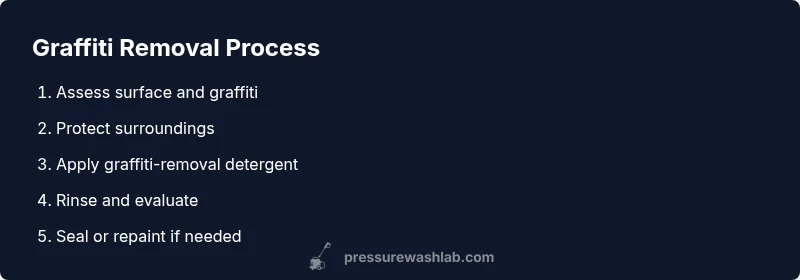
- 1
Assess graffiti and surface
Begin by documenting the graffiti and identifying the substrate. Note paint type (oil-based vs water-based), coatings, and any texture that could affect cleaning. This assessment guides PSI choice and detergent selection to prevent surface damage.
Tip: Test a small, inconspicuous patch first to observe surface reaction before large-scale cleaning. - 2
Protect surrounding areas
Cover vegetation, windows, and nearby vehicles with tarps. Remove loose debris and set up a work zone to minimize contamination of non-target areas. Shield anything that could be damaged by spray or runoff.
Tip: Seal off access routes to keep pets and bystanders safe during the operation. - 3
Prepare detergent and nozzle setup
Mix and apply graffiti-removal detergent according to product instructions. Attach the appropriate nozzle, select a safe spray angle, and ensure the spray pattern will cover the graffiti without excessive overlap.
Tip: Test the detergent on a hidden area to confirm it won’t discolor nearby paint. - 4
Apply detergent and dwell
Apply an even coat of cleaner over the graffiti. Allow it to dwell for the recommended time to loosen pigments, but avoid letting it dry on the surface. Monitor for any surface reactions during dwell time.
Tip: Keep the surface damp by reapplying if necessary to avoid dry-out staining. - 5
Rinse and evaluate progress
Rinse using a broad spray, working from top to bottom with overlapping passes. Evaluate paint removal; if some pigment remains, plan a targeted follow-up pass with appropriate adjustments.
Tip: Rinse slowly on edges to prevent water intrusion into porous edges. - 6
Treat stubborn spots
For persistent patches, repeat the spray-detach-rinse cycle with a slightly different nozzle angle or lower pressure. Avoid aggressive blasts that could damage coatings or mortar.
Tip: Limit dwell time on tough spots to prevent surface damage. - 7
Inspect, seal, or repaint
Inspect the cleaned area after it dries. If pigment lingers or the surface looks degraded, consider sealing or repainting as a long-term protection. Sealing can reduce future graffiti adhesion.
Tip: In porous surfaces, sealing after cleaning often yields the most durable finish. - 8
Clean up and plan maintenance
Cleanup includes storing equipment properly and disposing of cleaning residues per local guidelines. Schedule regular inspections and recoating to prevent future graffiti buildup. Document lessons learned for next time.
Tip: Keep a project log with surface type and test results for faster cleanup later.
Quick Answers
Is a hot-water pressure washer better for graffiti removal?
Hot water can help break down some paints and contaminants, but it isn’t always necessary. Cold-water units with a suitable graffiti remover are often safer for delicate surfaces and more energy efficient.
Hot water can help some cleaners, but cold water with the right detergent often works just as well and is safer for many surfaces.
What substrates are safe to treat with a pressure washer for graffiti removal?
Concrete, masonry, and painted surafces on sturdy substrates are commonly cleaned with a pressure washer. Wood and soft coatings require extra caution and lower PSI to avoid damage.
Concrete or brick is usually fine with care; wood and fragile coatings need gentler treatment.
What safety gear should I wear during graffiti removal?
Wear safety goggles, gloves, hearing protection, and closed-toe shoes. A respirator is advised if solvents or aerosols are used, and keep bystanders away.
Goggles, gloves, ear protection, and sturdy shoes are essential. If you’re using solvents, wear a respirator.
Do I need chemical detergents or can I rely on water alone?
Detergents greatly improve paint removal, especially on porous substrates. Some graffiti types respond to water alone, but detergents reduce dwell times and improve results.
Detergents help break down the paint and make removal faster; water alone often isn’t enough for stubborn graffiti.
What should I do after cleaning the graffiti?
Allow the surface to dry fully, then evaluate sealing or repainting options. Sealing can inhibit future graffiti adhesion and simplify future cleanups.
Let it dry, then seal or repaint if needed to prevent future graffiti sticking.
How long does graffiti removal take on typical walls?
Time varies by surface and paint type. Plan for an hour or more for each large section and adjust for porous materials or multifaceted textures.
It depends on the surface, but expect an hour or more for larger areas with porous textures.
Watch Video
Key Takeaways
- Test on a hidden patch before full cleanup
- Match PSI and nozzle to surface type
- Use graffiti-safe detergents and rinse thoroughly
- Protect surrounding areas and wear PPE
- Seal or repaint after cleaning when needed