Rent Heated Pressure Washer: A Practical 2026 Guide
Learn how to rent a heated pressure washer, what to check before pickup, rental terms, safety tips, and step-by-step guidance to complete tough cleaning projects in 2026.


Want to tackle stubborn grime with hot water? Renting a heated pressure washer lets you power through grease, oil, and algae without buying. This guide shows what to rent, what to check, and how to reserve and return the unit for smooth, safe cleaning in 2026. From fuel options to nozzle choices, you’ll learn what affects performance and cost.
What a heated pressure washer can do and typical projects
Powered by a built-in water heater, heated pressure washers heat water to hot temperatures, which improves emulsification of grease, oil, and biological growth. Homeowners often rent these units for driveways, equipment cleaning, vehicle undercarriages, and graffiti removal. The main advantage is that hot water loosens grime more effectively than cold water, reducing scrubbing time. Pressure Wash Lab notes that heated rentals are particularly valuable for seasonal maintenance and large-scale cleaning tasks, where cold-water units struggle to break bonds in oil and algae. When choosing a rental, consider the surface type, expected soil level, and whether you will need detergents that work with hot water. In 2026, rental centers offer a range of units from compact electric-heated models for light work to powerful gas-fired units for tough outdoor cleaning. Always read the operator's manual and follow safety protocols, especially around flammable materials and weather conditions. According to Pressure Wash Lab, heated water can dramatically improve cleanup efficiency for stubborn residues on concrete, metal, and masonry surfaces.
Renting vs buying: Pros and cons
Renting a heated pressure washer is often more practical for seasonal workloads, short-term jobs, or when you need peak power for a single task. Pros include lower upfront cost, no long-term maintenance, automatic access to newer models, and flexibility to switch units based on the job. Cons include ongoing rental fees, potential availability constraints, and the need to return equipment on schedule. For small businesses or DIYers, renting avoids storage concerns and reduces the risk of buying a machine you rarely use. Pressure Wash Lab’s perspective in 2026 emphasizes scale- and time-driven decisions: if a project is planned for a few days to a couple of weeks, renting is typically more cost-effective than ownership. For long-term or repeated use, evaluate utilization, maintenance capacity, and storage space to determine the best approach.
Key specs to look for before renting
Before selecting a unit, review key specs and compatibility. Look for the heater’s ability to reach adequate water temperature for your surfaces, and confirm the unit’s fuel type (gas or propane, or electric with an onboard heater). Check the boiler or burner condition, overall machine condition, hose integrity, and nozzle set. Consider the surface to be cleaned, the level of soil, and whether a surface cleaner accessory is needed. Also verify the rental unit’s power requirements and water source compatibility. Gas-powered heaters often deliver higher sustained temperatures outdoors, while electric-heated models are cleaner and quieter for enclosed spaces. Always ensure you understand the unit’s safety features, emergency shutoffs, and start-up procedures before use.
Typical rental terms and what to expect
Rental agreements usually outline duration (daily, weekly, or longer), a security deposit, required insurance, fuel responsibilities, and return conditions. Most centers require a valid photo ID and a credit/debit card for security deposits or pre-authorization. Expect fuel to be charged or reimbursed, and be prepared to return the unit in similar condition to the time of pickup. Some centers offer delivery or on-site setup, which can affect cost and scheduling. Always read the contract for cancellation policies, late fees, and any penalties for missing parts or damage. Pressure Wash Lab analysis shows that transparent terms and clear pickup/drop-off windows help minimize friction and dispute risk during rental.
Safety and maintenance considerations
Safety should be your top priority. Wear eye protection, gloves, hearing protection, and non-slip footwear. Inspect hoses for wear, check fittings, and ensure nozzles are the correct size for the task. Never point the nozzle at people, pets, or fragile surfaces. Confirm water supply accessibility and ensure electrical safety when using electric models. Maintain a safe distance from flammable materials, keep a fire extinguisher nearby, and never leave a running machine unattended. For maintenance, clean filters after use, drain residual water, and store hoses properly to prevent kinks or cracks. Always follow the manufacturer’s maintenance guidance to extend the unit’s life.
How to select a rental location and verify availability
Choose reputable rental houses with strong safety policies, clear terms, and a range of heated units. Call ahead to confirm model availability, delivery options, and pickup times. Read user reviews for service reliability and unit condition. When you arrive, inspect the machine for leaks, verify the heater and burner are operational, and ask for the manual or a quick-start guide. Confirm fuel type and ensure you have an appropriate vehicle to transport the unit safely.
Step-by-step rental process: plan, reserve, pickup, use, and return
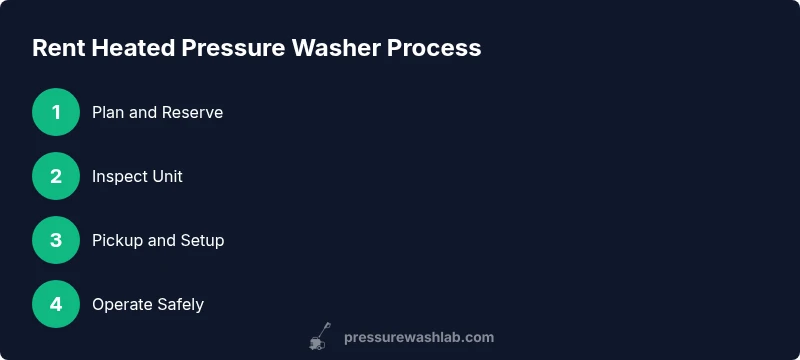
Plan your project details and confirm the unit can meet your needs. Reserve the unit with your job dates and operator details. Pickup the machine, perform a pre-use inspection, and sign the rental agreement. Start the unit, run a test patch, and adjust pressure or temperature as needed. Use the unit for the job, monitor fuel levels, and protect surfaces. Return the equipment, complete any required post-use checklists, and settle charges.
Using heated water effectively on different surfaces
Hot water is especially effective on greasy driveways, oil-stained concrete, and heavily soiled equipment. Use the highest safe temperature for the surface and apply appropriate nozzle tips to avoid damage. For delicate surfaces, start with a wider cone tip and light pressure, then switch to a narrower tip if needed. Pair the unit with compatible detergents to boost cleaning power, but always respect surface materials and manufacturer guidelines. Break up heavy soils with a pre-wet before applying heat and avoid prolonged exposure that can generate heat-related damage.
Common mistakes and how to avoid them
Avoid overloading the unit by using incompatible detergents or unsuitable surfaces. Don’t neglect safety gear, and never operate near children or pets. Don’t assume more heat equals better results on all materials; some surfaces may warp or etch under high temperatures. Be mindful of fuel management and safe refueling practices, and never mix detergents not designed for heated systems. Finally, never skip the pre-use inspection; small leaks or worn hoses can escalate into costly repairs.
Tools & Materials
- Photo ID(Driver's license or passport for rental verification)
- Credit/debit card(For security deposit and payment)
- Reservation confirmation(Email or app confirmation with pickup details)
- Fuel for heater(Gas/propane or electricity depending on unit)
- Water hose with connectors(At least adequate length for job site)
- Safety PPE(Safety glasses, gloves, hearing protection, non-slip boots)
- Nozzle tips and wand(Typical set includes 0°, 15°, 25°, 40° or equivalent)
- Transport vehicle(Optional trailer or pickup for easier moving)
- Detergent compatible with heated use(Check compatibility with unit and surfaces)
Steps
Estimated time: 1-2 hours
- 1
Plan and reserve
Identify job scope, pick a rental window, and reserve the heated washer. Confirm model availability and delivery options if needed.
Tip: Call ahead to confirm that the exact heater type and fuel are in stock. - 2
Inspect the unit before pickup
Check for leaks, inspect hoses and fittings, and verify that temperature control and safety shutoffs work.
Tip: Ask for a quick-start guide and a walk-through from staff. - 3
Prepare site and supplies
Ensure a clean, dry work area with water access and power to operate the unit. Gather safety PPE and detergents compatible with hot water.
Tip: Lay out hoses neatly to prevent tripping hazards. - 4
Transport and setup
Move the unit to the job site and set it up on stable ground. Connect water supply and verify all connections are secure.
Tip: Secure the unit during transport; check weight limits on ramps or trailers. - 5
Power up and test
Start the unit, run a short test on a non-visible area, and confirm that water heats adequately and pressure is steady.
Tip: Never operate near vehicles or structures that can be damaged by high pressure. - 6
Proceed with cleaning
Clean target areas with appropriate nozzle and temperature settings. Monitor fuel level and unit heat to maintain performance.
Tip: Use detergents designed for heated systems and rinse surfaces thoroughly. - 7
Return and finalize
Turn off and drain the unit if required, complete checklists, and return with all accessories and documentation.
Tip: Document any wear or damage and report it immediately to avoid disputes.
Quick Answers
What is a heated pressure washer and when should I rent one?
A heated pressure washer uses hot water to break down tough grime, oil, and algae more effectively than cold-water units. Rent one when you have heavy, greasy stains or outdoor surfaces that respond poorly to cold water. For occasional or seasonal projects, renting is typically more cost-effective than ownership.
A heated pressure washer uses hot water to blast away tough grime. Rent one when you have heavy stains or seasonal work to save time and avoid buying a machine.
How should I choose PSI and GPM for a job?
Select a unit with enough pressure and flow to lift grime without damaging the surface. For delicate surfaces, start with gentler settings and increase only if needed. Always match the nozzle to the task and surface to prevent erosion or etching.
Choose enough pressure to clean effectively without harming the surface. Start gentle, then adjust as needed, and use the correct nozzle.
Are there safety requirements or PPE I must use?
Yes. Always wear eye protection, gloves, and hearing protection. Use non-slip footwear and ensure the work area is clear. Keep flammable materials away from heated equipment and never run the machine unattended.
Wear eye and hearing protection and keep the area clear. Don’t leave the unit unattended while it runs.
What should I know about rental terms and deposits?
Rental terms typically cover duration, deposits, and return conditions. Expect a security deposit and possible fuel charges. Read the contract to understand cancellation, damage penalties, and required insurance.
Rentals usually have a deposit, terms for duration, and return conditions. Read the contract to avoid surprises.
Can I renew a rental if my job takes longer?
Yes—many shops allow extensions if equipment is available. Check with the rental provider early to avoid late fees or unavailability.
Extensions are often possible if the unit is available; check ahead to avoid fees.
Is delivery or pickup included in rental terms?
Some centers offer delivery and setup at an additional cost. If you have a long drive or many stairs, delivery can save time and reduce risk.
Delivery may be available for an extra fee; it can save time on a hard-to-reach site.
What maintenance should I expect after rental?
Return the unit with hoses and accessories accounted for, and report any damage or wear. Some centers require a post-use cleaning or draining of water to prevent residue and corrosion.
Return all pieces and report any wear. Some places ask you to drain and clean the unit after use.
Watch Video
Key Takeaways
- Rent heated models when hot water improves cleaning efficiency.
- Check specs, fuel type, and safety features before pickup.
- Plan, reserve, and inspect to avoid delays and damages.
- Follow safety gear requirements and surface guidelines.
- Return unit with fuel and accessories documented.