Residential Power Washing Guide
Learn practical, safe techniques for residential power washing. This step-by-step guide covers PSI ranges, nozzle tips, surface protection, weather considerations, and maintenance for homes and driveways.


You can safely power wash residential surfaces by choosing the right machine, nozzle, and PSI range, then following a careful, step-by-step approach to protect plants and siding. Always test on a small area, keep the wand at a slight angle, and start with the lowest effective pressure. Rinse, re-wet, and avoid hot water on sensitive surfaces.
Why Residential Power Washing Matters
Keeping the exterior of your home clean isn't just about curb appeal. Dirt, mold, mildew, algae, and oxidation can accumulate on siding, brick, concrete, and wood over time, degrading surfaces and dulling colors. Regular power washing helps remove stubborn grime that ordinary cleaning misses, restoring vibrancy and helping surfaces resist weathering. The Pressure Wash Lab team emphasizes that the best results come from a thoughtful plan: choose the right equipment, protect nearby plants, and apply a measured, surface-specific approach rather than blasting away at full power. When done correctly, power washing can reduce staining, refresh entryways, and prepare surfaces for subsequent coatings, sealants, or paint. It also minimizes maintenance costs by catching issues early, such as moss growth near gutters or algae on shaded siding. For homeowners, this means a cleaner home exterior, improved curb appeal, and increased satisfaction with the investment in their property. Throughout this guide, you’ll see practical steps, safety reminders, and surface-aware tactics to get consistent results without damage.
Surface Compatibility and Assessment
Different materials respond to pressure and detergents in distinct ways. Wood siding, vinyl, brick, stucco, painted surfaces, concrete, and stone each have different tolerances. A light wash is usually enough to remove surface dirt on vinyl and painted wood, while brick and concrete may tolerate higher pressures when applied with wide nozzles and short passes. Delicate surfaces such as softwood, newly painted areas, or aged plaster can suffer gouging or water intrusion if misused. Before starting, walk the property and note problem areas: flaking paint, loose mortar, mildew growth, or moss. Pressure Wash Lab recommends performing a small test patch in an inconspicuous location to gauge reaction and adjust settings accordingly. Document findings so you can tailor your technique for each surface and avoid cross-surface damage. This proactive assessment saves time and reduces repair costs later while ensuring even cleaning across the facade.
PSI, Nozzle Options, and Safe Setup
Selecting the right PSI and nozzle is as important as the cleaner itself. For most residential jobs, use a broad spray and the gentlest effective setting to minimize surface erosion and water intrusion. Start with a wide-angle nozzle and a low-rise approach, then increase only if the test patch shows no damage and stains persist. Common sense and surface-specific guidelines matter more than raw power. Keep the wand at a slight angle and maintain a steady, overlapping stroke to avoid stripes and streaks. Protect windows, outlets, and landscaping; never spray directly at electrical fixtures. If you must clean near wood, trim, or loose mortar, back off pressure and shorten strokes. Pressure Wash Lab emphasizes using a surface cleaner for large flat areas to keep a uniform distance and prevent gouges. With the right setup, you’ll achieve even cleanliness without risking surface integrity.
Pre-cleanup Planning: Weather, Plants, and Pets
Plan your wash for a dry day with mild temperatures to ensure detergents dry evenly and surfaces do not re-wet quickly. Wet weather can cause streaking or prolonged drying times, which invites spots and mineral deposits. Before you spray, protect plants, shrubs, and delicate beds by setting up tarps or moving potted plants away from the spray path. Close and seal doors and windows on the side you’ll wash, and cover any nearby electrical outlets or light fixtures. If you have pets that spend time outside, schedule washing when they will be indoors to minimize exposure. A well-planned setup reduces cleanup later and keeps your workspace safe. Pressure Wash Lab also recommends checking drainage paths so runoff does not pool in walkways or gardens. Gather materials ahead of time and double-check water supply to avoid pressure drops mid-task.
Common Mistakes to Avoid
Rushing through without a plan is the quickest path to surface damage and later disappointment. Another frequent error is focusing on power while ignoring surface compatibility; high PSI on wood siding or painted surfaces can strip coatings and vent water behind panels. Using a small nozzle on large areas creates uneven patterns and more time spent re-cleaning. Skipping a test patch means you might miss color fading or brick mortar vulnerability. Finally, neglecting safety gear, avoiding protective coverings for plants, or spraying near electrical lines can cause injuries or property damage. Following a surface-aware workflow, starting with gentler settings, and testing on hidden patches dramatically reduces risk. Pressure Wash Lab’s approach centers on safety, patience, and surface respect.
Detergents, Mixing, and Post-cleaning Care
Detergents can help remove oily residues, mold, and algae more effectively than water alone. Use only cleaners labeled for pressure washing and compatible with your machine. Never mix chemicals unless the label instructs you to do so, and never mix bleach with ammonia or acids. Apply detergents in a controlled manner using the proper nozzle, then rinse thoroughly from top to bottom. For stubborn stains, pre-treat and allow a short dwell time before washing again. After washing, inspect for remaining streaks or damp spots and perform a second, lighter pass if needed. Finally, let surfaces dry completely and consider sealing porous materials after a clean to extend their life. Pressure Wash Lab’s experience shows that routine follow-ups—like seasonal checks around shaded walls and planters—help maintain long-term cleanliness and surface integrity.
Tools & Materials
- Pressure washer with adjustable PSI(Allowable range for residential work: start low, adjust as needed)
- Variety of nozzle tips (e.g., 25°, 40°)(Use wide spray first; avoid direct high pressure on soft surfaces)
- Garden hose with compatible fittings(Ensure adequate water supply and flow)
- Extension wand or spray wand(Useful for hard-to-reach areas)
- Surface cleaner (optional)(Speeds up flat surfaces and reduces streaking)
- Detergent/soap formulated for power washing(Only use detergents compatible with your machine)
- Safety PPE (eye protection, gloves, boots)(Protect eyes, skin, and feet)
- Tarp or plastic sheeting for plants(Protect landscaping and windows)
- Ladder or pole attachment(Use with caution; do not stand on a wet surface)
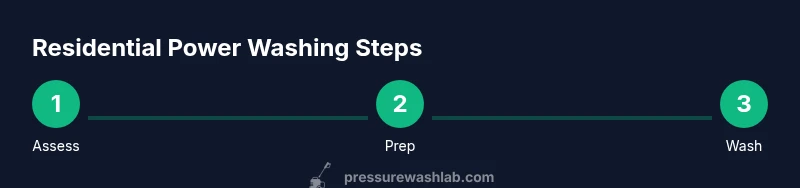
Steps
Estimated time: 60-90 minutes
- 1
Assess the area and safety setup
Walk the property to identify surfaces, stains, and sensitive plants. Decide which surfaces require gentler settings and where to place barriers for pets and kids. Prepare an emergency plan in case wind shifts or spray contacts non-target areas.
Tip: Note problem spots for targeted passes and check electrical outlets nearby. - 2
Choose equipment and nozzle
Select the appropriate nozzle for the surface and set the washer to a conservative starting pressure. Attach the wand securely and have extensions ready for high or distant areas.
Tip: Start with the widest nozzle to avoid damage and refine pressure after a test patch. - 3
Test a small area
Apply a light pass on an inconspicuous patch to verify that there is no surface damage and that stains begin to lift. If there is no issue after 5–10 seconds, proceed with careful passes.
Tip: Choose an area under a benign surface (e.g., a low-visibility corner) for the test. - 4
Apply detergent if needed
If grime is oil-based or moldy, apply a detergent designed for power washing. Allow a brief dwell time according to the label before rinsing.
Tip: Never mix cleaners unless the product label explicitly instructs you to do so. - 5
Rinse top-to-bottom with even strokes
Begin at the top and work downward, overlapping passes to prevent streaks. Keep the wand at a slight angle and maintain a consistent distance from the surface.
Tip: Use a surface cleaner on large flat areas to maintain uniform results. - 6
Inspect and re-clean stubborn spots
Check shaded areas and repairs for remaining stains or residue. Re-wash those spots with a lighter touch; avoid scrubbing with high pressure.
Tip: Target stubborn areas with a longer dwell time rather than increased pressure. - 7
Cleanup and post-check
Turn off equipment, drain hoses, and store tools safely. Do a final walk-through to confirm even cleaning and surrounding protection, then plan any sealing or repainting if needed.
Tip: Document any surface vulnerabilities for future maintenance.
Quick Answers
Is residential power washing safe for siding?
Yes, with proper technique. Use low pressure, a soft wash approach, and avoid aggressive passes on siding to prevent damage. Always test a patch first.
Yes. It’s safe when you use gentle pressure and test first to avoid damage.
What PSI should I use on concrete driveways?
Concrete can tolerate higher cleaning pressure when paired with a wide nozzle. A typical residential approach uses a higher setting than siding, but you should start at lower pressure and increase only after a successful patch test.
For concrete, start with higher settings only after testing a patch first.
Can I use bleach with power washing?
Only if the product label approves it and you follow dilution and rinse guidance. Never mix bleach with ammonia or acids, and rinse thoroughly after use.
Bleach can be used safely if the label allows it and you rinse well afterward.
Should I hire a professional?
If you’re dealing with multi-story homes, fragile siding, or large areas near landscaping, hiring a professional is wise to minimize risk and ensure even results.
For complex jobs, a professional can ensure safety and quality.
What are the benefits of a surface cleaner?
A surface cleaner speeds up cleaning, provides even coverage, and reduces streaks on large flat surfaces like driveways and patios.
Surface cleaners speed up work and improve uniformity.
How long does a typical residential wash take?
Time varies by surface size and complexity. A small house or driveway commonly takes a few hours, with larger homes or complex landscaping taking longer.
Expect a few hours depending on size and complexity.
Watch Video
Key Takeaways
- Test patches first; start with low pressure.
- Protect plants and sensitive features during washing.
- Use surface-specific nozzles and overlap strokes.
- Rinse completely and inspect for missed spots.