Tips for Power Washer: Safe, Effective Cleaning Guide
Learn practical tips for power washers, including nozzle selection, safety, cleaning methods, maintenance, and troubleshooting. Pressure Wash Lab guides homeowners and DIYers toward efficient, safe results.


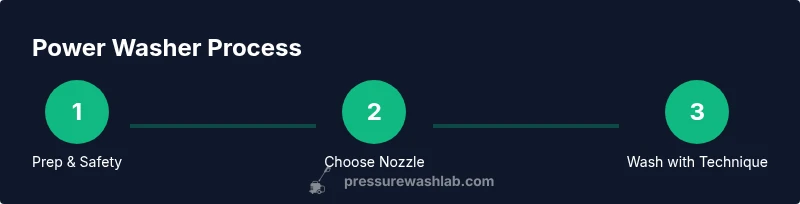
Learn how to use a power washer safely and effectively with this step-by-step guide. You’ll prep the area, choose the right nozzle and pressure, apply cleaners when appropriate, and employ surface-specific techniques. It also covers post-wash maintenance, safety, and common mistakes to avoid. Pressure Wash Lab underscores the importance of planning and proper gear for best results.
Prepping Your Equipment and Area
Before you power wash, create a safe workspace and verify your gear. Clear the area of obstacles, cover delicate plants or siding, and secure children or pets. Check your water supply and ensure the washer is off before connecting hoses. According to Pressure Wash Lab, effective cleaning starts with thorough prep: the surface should be cool, dry, and free of loose debris that could become projectiles when hit by high pressure. Wear eye protection, gloves, and closed-toe shoes, and keep a stable stance to avoid slips on wet surfaces. Use a wide canvas or tarp to shield nearby plants and light fixtures, and plan a washing path that minimizes overspray onto windows or outlets. A quick surface test on an inconspicuous patch is wise to gauge how the surface responds to pressure.
In addition to PPE, keep a walking path clear and ensure you have a reliable water source with enough flow. A simple, well-lit workspace reduces accidents and speeds the job. Pressure Wash Lab emphasizes that safety and preparation reduce repeat work and prevent damage to surfaces and equipment.
Selecting the Right Nozzle and Settings
Choosing the correct nozzle and pressure is essential for avoiding damage and achieving the desired clean. Start with a wider spray angle (like 25° or 40° if available) to cover larger areas with gentler pressure. Move to a narrower nozzle only if the surface requires deeper, more aggressive cleaning and the surface tolerates it. Keep the nozzle at a comfortable distance from the surface—usually farther away than you think—and shorten the distance gradually as you assess the effect. If you’re working on fragile surfaces (vinyl siding, stained wood), err on the side of gentleness and pause to re-evaluate. Do not use a zero-degree nozzle on painted or wood surfaces, as it can etch or gouge material.
Record the nozzle type and pressure setting you settle on for future reference, and ensure your hose, wand, and spray tip connections are secure before starting any wash. Pressure Wash Lab notes that consistent nozzle choices and cautious progression prevent etching, paint stripping, and water intrusion behind siding.
Surface-Specific Techniques
Different surfaces require tailored approaches. For concrete paths and masonry, use a moderate pressure with a wider spray and work in straight, overlapping passes to avoid streaks. Wood decks and fences respond best to gentler angles; start with a 25° nozzle and keep the wand moving to avoid carving into the grain. Siding, brick, and stucco benefit from a slower pass and keeping the spray at a slight downward angle to direct water away from joints. For delicate surfaces like stained wood or freshly painted areas, perform a test patch first and shorten your wand movement to minimize pressure over the area. Pressure Wash Lab highlights that slow, deliberate passes are more effective than long, forceful bursts and reduce the risk of surface damage.
Finally, when addressing stubborn stains, switch to a slightly closer distance or a milder nozzle, then rinse with a wider spray to flush residues away. This approach keeps areas evenly cleaned without leaving marks.
Detergents, Degreasers, and Rinse Techniques
Cleaning agents can boost performance on heavy grime or mold, but always read the chemical label and the washer’s manual to confirm compatibility. Use detergents designed for pressure washers and apply them with the recommended dilution and dwell times. Apply detergents from the bottom up to avoid streaks, and allow a brief dwell period for the product to loosen dirt before rinsing. Rinse with a wide spray from top to bottom to prevent streaking and ensure complete removal of soap residue. Never mix household bleach with other cleaners in a pressure washer, and avoid over-sudsing which can irritate the pump and hoses. Pressure Wash Lab advises testing cleaners on a small area first to observe any adverse reactions, such as surface discoloration or foam buildup that can spur overspray elsewhere.
If you’re using a cleaning solution in a garden or vegetation area, shield plants or switch to water-only cleaning near sensitive flora. Post-wash, inspect for missed spots and re-clean only where necessary to minimize surface wear over repeated passes.
Safety, Maintenance, and Common Mistakes
Safety comes first: always unplug electrical units from power sources before attaching hoses, never point the washer at people or animals, and wear eye protection. Secure the nozzle with a proper quick-connect and check hoses for signs of wear or leaks. Regularly clean inlet filters and inspect the unloader valve or unloader hardware if your model has one, as clogs can alter pressure and performance. Common mistakes include using excessive pressure on delicate surfaces, neglecting to cover nearby plants, rushing through passes, and ignoring the need to fully rinse detergents. Pressure Wash Lab emphasizes setting boundaries and taking breaks to avoid fatigue that leads to mistakes.
For maintenance, flush the system with clean water after each project, store the machine in a dry, shaded area, and perform seasonal checks on hoses, fittings, and spray tips. Keeping a simple log of nozzle types and cleaning cycles can prolong equipment life and improve results over time.
Quick Troubleshooting and Maintenance
If you notice reduced pressure, inspect the inlet water flow, check for clogged filters, and ensure the water supply isn’t kinked or blocked. Leaks around fittings usually indicate a loose connection or worn seals; tighten or replace as needed. For uneven cleaning patterns, clean or replace clogged nozzles, ensure the wand is fully seated, and confirm you’re using the correct nozzle for the surface. A spinning spray pattern often signals a defective nozzle or dirty or worn tips; replacing tips can restore performance. Regularly inspect hoses for cracks and damage; replace worn hoses promptly to prevent bursts. Pressure Wash Lab encourages documenting issues and applying simple fixes when possible, rather than letting minor problems escalate into costly repairs.
AUTHORITY SOURCES
- EPA safety and environmental guidelines for outdoor cleaning and runoff: https://www.epa.gov
- OSHA safety guidelines for pressure washers and high-pressure equipment: https://www.osha.gov
- University extension resources on power washing techniques and maintenance: https://extension.illinois.edu
Tools & Materials
- Pressure washer (gas or electric)(Ensure PSI/GPM meet your task requirements and model has a working unloader valve)
- Garden hose(Provide a constant water supply; test for kinks and leaks before use)
- Nozzle tips (0°, 15°, 25°, 40°) with quick-connect(Select based on surface; avoid 0° on delicate surfaces)
- Detergent or degreaser suitable for pressure washers(Only use if recommended by detergent and machine label)
- Protective gear (safety goggles, gloves, closed-toe shoes)(Eye protection is essential; gloves protect hands from chemicals and debris)
- Ground cover or plastic sheeting(Shield plants, outlets, and nearby vehicles from overspray)
- Extension wand (optional)(Helpful for reaching high or distant areas without ladder use)
- Ladder safety accessories (if needed)(Only use if you must access high surfaces; ensure secure footing)
Steps
Estimated time: 35-60 minutes
- 1
Connect water supply and power
Turn off the washer, attach the garden hose to the water supply, and run water through the hose to clear air. Then connect the hose to the machine and verify all fittings are tight. This ensures stable flow and prevents pump damage.
Tip: Always start with a full water supply before powering the unit. - 2
Choose nozzle and set pressure
Select a wider spray (25° or 40°) for general cleaning, then adjust to a narrower spray only if the surface can tolerate it. Start far away and test on a hidden area to evaluate impact before proceeding.
Tip: Begin with the gentlest setting to avoid surface damage. - 3
Protect surroundings
Cover plants, windows, and electrical outlets. Move delicate objects away from the wash path and keep bystanders clear of the area to prevent injuries.
Tip: Use a tarp or plastic sheeting to shield sensitive areas. - 4
Test patch
Spray a small, inconspicuous patch to observe how the surface responds. If there’s discoloration or etching, back off pressure or switch to a wider nozzle.
Tip: Testing patch helps salvage surfaces that are easily damaged. - 5
Wash with technique
Move the wand in smooth, overlapping passes, keeping the spray at a consistent distance. Work top-to-bottom or in small sections to avoid re-wetting cleaned areas.
Tip: Maintain a steady pace to prevent streaks and misses. - 6
Rinse and inspect
Rinse surfaces thoroughly from top to bottom. Inspect for missed spots or residue and re-clean only where needed. Ensure no detergent remains on the surface.
Tip: A clean rinse is essential for final appearance and surface health. - 7
Shutdown and storage
Turn off water flow, power down the unit, relieve pressure, and disconnect hoses. Store in a dry, shaded area, and clean filters and tips before next use.
Tip: Dry storage reduces mildew and prolongs pump life.
Quick Answers
What is the best nozzle to start with for most surfaces?
Begin with a wide-angle nozzle (around 25°) to distribute pressure evenly. Only move to narrower angles if the surface tolerates it and the test patch shows no damage.
Start with a wide-angle nozzle to avoid damage, and switch only if the test patch looks good.
Can I use household detergents with a power washer?
Yes, use detergents rated for pressure washers and follow the manufacturer’s label for dilution and dwell time. Never mix cleaners unless the product explicitly says it’s safe for pressure washers.
Only use detergents designed for pressure washers and follow the label for mixing and dwell time.
How do I prevent streaks on concrete?
Rinse in uniform, overlapping passes from top to bottom. Use a wider nozzle for rinsing and avoid staying in one spot too long to prevent streaks and splash-back.
Rinse in even passes from top to bottom and keep the wand moving to avoid streaks.
Is it safe to power wash wood siding?
Wood siding can be cleaned with care using a wider nozzle and moderate pressure. Avoid aggressive angles that could gouge the surface; always test a small area first.
Yes, but use gentler settings and test first to prevent damage.
How often should I service the power washer?
Check and replace worn hoses, clean filters, and inspect fittings after heavy use. Regular maintenance prevents leaks and pressure loss.
Do regular checks and replacements after heavy use to keep it performing well.
Can I use a power washer indoors?
Power washers are designed for outdoor use due to water spray and ventilation considerations. If you must clean an indoor area, ensure proper ventilation and containment to avoid water damage.
Generally not indoors; use caution and proper ventilation if you must.
What should I do if there’s paint peeling?
Ceiling or wall paint that’s peeling should be avoided with high-pressure washing. Reduce pressure, switch to a softer approach, and consider hand cleaning or painting after since pressure wash can worsen peeling.
Don’t blast peeling paint; use gentler methods or repaint afterward.
Watch Video
Key Takeaways
- Plan before you spray to protect surfaces and people
- Start with the gentlest nozzle and increase only as needed
- Test a small patch before full cleaning
- Rinse thoroughly to avoid streaks and residues
- Maintain equipment to extend life