RV Antifreeze for Pressure Washer: A Practical Guide
Learn how to safely winterize your pressure washer with rv antifreeze for pressure washer. Materials, step-by-step instructions, safety tips, and maintenance guidance from Pressure Wash Lab to protect pumps, hoses, and seals.


With rv antifreeze for pressure washer, you’ll protect pumps, seals, and hoses from freeze damage during winter storage. This quick guide shows you how to choose the right antifreeze, prep your unit, and perform a safe, thorough winterization. Follow the steps to avoid costly repairs and ensure spring readiness.
rv antifreeze for pressure washer: why winterization matters
rv antifreeze for pressure washer isn’t just for RV plumbing. It’s a practical safeguard that prevents freeze damage to pumps, seals, and hoses when you store or operate in cold climates. According to Pressure Wash Lab, residual water in lines can expand when temperatures drop, leading to leaks, cracked fittings, and reduced performance. Using rv antifreeze designed for potable-water systems is preferred because it’s non-toxic, glycol-based, and formulated to mix with water without harming metal components. Before you begin, remember that antifreeze is not a solvent; it won’t dissolve mineral deposits or lubricate moving parts. It acts as a protective liquid barrier that lowers the freezing point of residual water in the pump, hoses, and connectors, helping preserve critical passages so the engine and pump can start smoothly in spring.
This guide centers on the practical realities of winterizing a pressure washer used for RVs, campsites, and home storage. You’ll learn what to buy, how to prepare, and the step-by-step process that minimizes risk. Pressure Wash Lab emphasizes following the manufacturer’s guidance for your specific model, since pump design and hose routing vary. The key objective is to keep water from freezing inside high-pressure lines, filters, and the pump chamber where stiffness or rupture could occur. Proper winterization also reduces salt and mineral buildup that complicates startup after storage. By planning ahead, you minimize downtime and maximize reliability when you’re ready to work again.
noteRunOnSentenceOnlyForStyling
Tools & Materials
- rv antifreeze (propylene glycol-based)(Choose a product labeled for potable water systems and compatible with your pump materials.)
- clear siphon hose or injector line(Used to introduce antifreeze into the pump and lines without introducing air gaps.)
- catch basin or towels(Contain spills and protect surfaces during winterization.)
- gloves and eye protection(Personal protection when handling antifreeze and cold-weather tasks.)
- owner’s manual or model-specific guide(Follow model-specific steps and safety instructions.)
- basic tools (screwdriver/wrench)(Only if you need to access filters, drains, or fittings.)
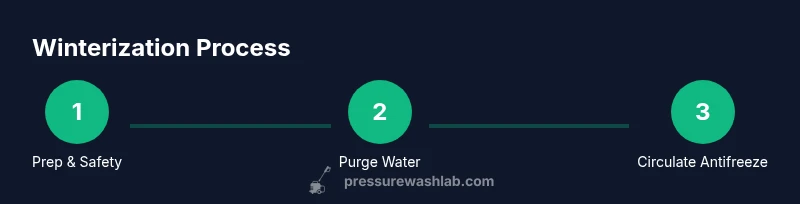
Steps
Estimated time: 20-45 minutes
- 1
Gather materials and prepare the work area
Start by collecting all required items: rv antifreeze, siphon line, towels, and safety gear. Clear a workspace, protect surfaces, and read your pressure washer’s manual to understand connection points. A clean setup minimizes mistakes and allows you to see antifreeze flow clearly as you begin.
Tip: Set a dedicated container for used antifreeze and keep pets and children away from the work area. - 2
Shut off water supply and relieve system pressure
Turn off the water source and press the trigger on the spray wand to purge residual water from hoses. This step reduces the amount of water that could dilute antifreeze and helps ensure a clean flow path for the antifreeze through the system.
Tip: Keep the wand pointed in a safe direction while triggering to avoid sprays on skin or eyes. - 3
Connect siphon line and prime antifreeze into the pump
Attach the siphon line to the antifreeze bottle and connect the other end to the pump or bypass hose as your manual suggests. Start the engine or motor and allow the pump to draw antifreeze until pink (or colored) antifreeze appears at the discharge side.
Tip: If you don’t see antifreeze after a few seconds, pause and reseat the line to remove air gaps. - 4
Run the system until antifreeze circulates every line
With the trigger engaged, run the pressure washer and observe that antifreeze travels through all hoses and out of the spray gun. This confirms that the pump, hoses, and connections are filled with antifreeze and protected against freezing.
Tip: Proceed until you see a steady stream of antifreeze from every outlet, not just the main hose. - 5
Drain and store the unit properly
Shut off the engine and disconnect the siphon line after antifreeze has circulated. Open any drain plugs or outlets per your manual to remove remaining water, then store the unit in a dry, sheltered location. Label the unit as winterized for clarity.
Tip: Label storage notes with date and model for future reference. - 6
Inspect afterward and plan for spring reactivation
When you’re ready to use the washer again, inspect seals and hoses for signs of degradation. Refill fuel or battery as needed, and plan a quick test run to verify operation after winter storage.
Tip: Keep a written checklist to simplify spring reactivation and reduce downtime.
Quick Answers
Is RV antifreeze safe to run through a pressure washer?
Yes, when you use RV antifreeze designed for potable water systems and follow the manufacturer’s instructions. It is non-toxic and intended for winterizing water lines. Never mix with fuel or other chemicals.
Yes—use the RV antifreeze meant for potable water systems and follow the steps; it’s designed for winterizing water lines.
Can I use automotive antifreeze instead of RV antifreeze?
No. Automotive antifreeze is toxic and not intended for potable water systems. Use RV antifreeze (propylene glycol) that’s labeled for RV or potable water use.
No—stick with RV antifreeze meant for potable water systems.
How much RV antifreeze should I use in a pressure washer?
Amount depends on system size and your manual. The goal is to fill the pump and lines until antifreeze is visible at outlets. Follow the manufacturer’s guidance for your model.
Follow your model’s manual; run until antifreeze appears at the discharge outlets.
Do I need to winterize if I store indoors?
If temperatures could drop indoors, winterizing is still wise. Small freezes and condensate can occur, so maintaining antifreeze protection helps prevent surprises in spring.
Yes—indoor storage still benefits from winterization if cold conditions are possible.
Will winterizing void my warranty?
Most manufacturers require following their winterization steps. Using approved RV antifreeze and the correct procedure typically aligns with warranty guidelines.
Usually fine as long as you follow the manual and use the approved antifreeze.
How often should I re-winterize my pressure washer?
Winterize at the end of each storage season or whenever you anticipate freezing temperatures. If you use it year-round in cold climates, re-winterize as needed between uses.
Do it at the end of each storage season or when freezing temps are expected.
Watch Video
Key Takeaways
- Always use RV antifreeze labeled for potable water systems
- Purge water from all lines before introducing antifreeze
- Ensure antifreeze reaches every line and outlet before storing
- Document the winterization date and model for spring reactivation