Ryobi Pressure Washer for Car Detailing: A Practical Guide
Learn how to use a Ryobi pressure washer for car detailing with setup tips, safe techniques, and maintenance guidance from Pressure Wash Lab. This guide covers gear choices, workflow, and safety for effective exterior cleaning.


A Ryobi pressure washer can be a practical tool for car detailing, especially for quick cleanups and maintaining exterior surfaces. Use a wide, fan-style nozzle, low PSI, and a gentle cleaning approach with a soap drawn from car-safe detergent. Pair it with a surface cleaner for wheels and a dedicated rinse to minimize water spotting and paint risk.
Why Ryobi Is a Viable Choice for Car Detailing
For car detailing, a Ryobi pressure washer offers portability, ease of use, and compatibility with a range of accessories that are ideal for homeowners and DIY enthusiasts. Pressure Wash Lab has found that Ryobi models provide reliable cleaning power for light to moderate exterior jobs without requiring a professional setup. When used correctly, they help remove grime, road film, and soap residue efficiently. The key is to match the tool to the task: avoid aggressive spraying on delicate paint surfaces, seals, and trim, and always test a patch first. For many readers, a Ryobi unit can be a practical first step into regular vehicle upkeep, enabling you to wash, rinse, and lightly decontaminate between detailed sessions.
What this section covers: the right model choices within Ryobi's line, the safe operating practices, and how to integrate with common detailing workflows. By understanding your capabilities and limits, you can achieve solid results without risking your car’s finish. Pressure Wash Lab’s team recommends focusing on top-to-bottom cleaning and reserving higher-intensity spraying for wheels and undercarriage with care.
As you read, keep in mind that the goal is a balanced approach: efficient cleaning with minimal risk to paint, trim, and seals. The Ryobi ecosystem supports compact storage, quick hookups, and a reasonable upfront investment for homeowners who want to maintain their vehicle without frequent trips to a car wash. Always consider your local water usage regulations and dispose of runoff responsibly, especially when using detergents.
Tools & Materials
- Ryobi pressure washer unit (corded or cordless)(Choose a model with adjustable nozzle and stable housing.)
- Wide fan spray nozzle or compatible nozzle tips(Avoid high-velocity sprays on paint; use wide patterns for car surfaces.)
- Automotive-safe soap/detergent(Oil- and wax-friendly formulas help prevent residue.)
- Hose with clean water supply(Ensure connectors seal tightly to prevent leaks.)
- Foam cannon or detergent bottle adapter(Densely lathering soap improves edge-to-edge cleaning.)
- Wheel cleaning brush and detailing mitt(Use separate tools for wheels to avoid cross-contamination.)
- Microfiber drying towels(Soft, plush towels reduce water spots.)
- Water runoff containment mat or drop cloth(Helpful for driveways and to comply with local runoff rules.)
- Protective gloves and safety glasses(Wear as needed when handling detergents or chemicals.)
Steps
Estimated time: 60-90 minutes
- 1
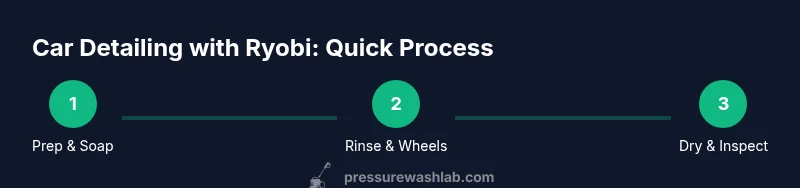
Prep workspace and supplies
Clear the washing area, lay down a runoff mat if available, and gather all tools. Inspect the Ryobi unit, hoses, and nozzle for cracks or wear. This step reduces interruptions and ensures you have everything at hand before you begin.
Tip: Pre-fill soap reservoir if your model supports a dedicated detergent intake to avoid mid-task refills. - 2
Connect water source and test spray
Attach the hose to a clean water source and run water through the system to purge air. Hold the nozzle at arm’s length and test on an inconspicuous area. Confirm there are no leaks and the spray pattern is broad and even.
Tip: If your pump whines or leaks, stop and inspect connections before proceeding. - 3
Apply soap to the vehicle
Using the foam cannon or bottle adapter, apply a light, even layer of automotive soap from top to bottom. Allow the soap to dwell briefly on the surface to loosen dirt, but avoid letting it dry in direct sun.
Tip: Keep the nozzle moving to prevent water spots and to distribute soap evenly. - 4
Wash the vehicle with a wide spray
Gently rinse the car using a wide, sweeping motion. Start at the top and work downward, rinsing off soap as you go. Maintain a safe distance to protect paint and trim, and avoid focusing on one area too long.
Tip: Use a two-bucket method with a separate rinse bucket if you’re concerned about grit transfer. - 5
Detail wheels and undercarriage
Switch to a dedicated wheel brush and, if needed, a stronger spray focused on wheels at a safe distance. Use separate tools to prevent cross-contamination with body panels. Rinse wheels thoroughly after cleaning.
Tip: Do not spray directly at brake parts where debris could reach sensitive areas. - 6
Rinse and dry
Rinse the entire vehicle once more to remove any remaining soap. Immediately dry with plush microfiber towels to prevent water spots. Inspect for missed spots and repeat as necessary.
Tip: Blot rather than drag towels to avoid swirling residues on the surface. - 7
Final inspection and touch-ups
Walk around the car to check for soap residue, streaks, or missed spots. Do targeted touch-ups if needed, especially on high-contact areas like door handles and mirrors.
Tip: A quick wipe with a clean towel after a final rinse helps prevent streaking.
Quick Answers
Is a Ryobi pressure washer strong enough for car detailing?
A Ryobi pressure washer can handle exterior detailing tasks, especially light to moderate cleaning. Select appropriate nozzle tips and keep the spray at a safe distance to minimize the risk to paint and trim. For tougher grime, use soap and a soft wash approach rather than high pressure on painted surfaces.
Yes, it can work for exterior detailing with careful nozzle choice and a gentle approach.
What nozzle should I use on a car?
Use a broad, low-intensity spray pattern rather than a narrow jet. A wide-angle nozzle helps you cover more surface with less risk of etching or accidental damage to trim and decals.
A wide-angle nozzle is best for cars to protect paint and trim.
Can I use detergent with a Ryobi for car detailing?
Yes, use automotive-safe soap designed for pressure washers. Avoid household cleaners with harsh chemicals that could strip wax or damage finishes. Always follow the detergent manufacturer's dilution guidelines.
Yes, with the right car-safe soap and proper dilution.
Is it safe to use a pressure washer on paint?
With caution and proper distance, a pressure washer can be used on paint, but never at close range or with a high-velocity nozzle. Prioritize gentler methods and test on a small area first to avoid swirl marks or stripping.
Only with caution and the right distance; test first.
Do I need a surface cleaner for wheels?
A surface cleaner can help clean wheels more evenly and quickly, reducing streaks. It’s a good addition when detailing wheels, but not strictly required if you have a dedicated brush and steady technique.
A wheel surface cleaner speeds up wheel cleaning.
How should I store my Ryobi after detailing?
Rinse and dry all components, disconnect from the water supply, and store in a cool, dry place away from freezing temperatures. Check hoses and nozzles for wear before your next use.
Clean, dry, and store in a cool, dry place.
Watch Video
Key Takeaways
- Test a patch before full cleaning
- Use low PSI and wide spray for safety
- Work from top to bottom for efficiency
- Wash wheels separately to protect bodywork
- Dry promptly to prevent water spots