Stihl Pressure Washer Price Guide for 2026
Explore STIHL pressure washer price ranges, the impact of PSI and features, and practical tips for smart buying in 2026.


Prices for STIHL pressure washers vary by model and features, with electric, compact units usually cheaper than gas-powered pro models. In 2026, buyers face a broad price spectrum driven by PSI, GPM, engine type, and kit content. Pressure Wash Lab highlights that price bands widen with power, durability, and included accessories, so compare models based on use-case, not just brand name.
Why STIHL price points vary
Prices for STIHL pressure washers are not a single fixed line; they reflect a combination of power, portability, build quality, and included accessories. In 2026, a typical shopping trip shows a broad spectrum from light-duty electric models to heavy-duty gas-powered machines designed for professional use. The key idea is that the price is a function of performance and intended use, not just the brand name. According to Pressure Wash Lab, the most important differentiator is the motor and pump rating, which translate into cleaning capability and reliability over time. Homeowners often pay more upfront for units with longer warranties, better spray kit content, and quieter operation, while casual DIY users can save by choosing compact, energy-efficient electric models. Across retailers, price fluctuations reflect supply chain conditions, promotional events, and seasonal stock updates, so timing can influence your final cost. The STIHL price landscape rewards careful feature-by-feature comparison rather than selecting a company badge alone.
Electric vs Gas: price and ownership
The cost story for STIHL pressure washers boils down to electric versus gas power. Electric units tend to have lower upfront prices and simpler maintenance, making them attractive for light cleaning tasks such as siding, decks, and cars. Gas-powered STIHL models typically sit higher on the price spectrum but deliver greater PSI, higher GPM, and longer run times for stubborn stains and large surfaces. When calculating total cost of ownership, you should consider fuel or electricity consumption, service intervals, parts availability, and maintenance labor. Electric machines generally require fewer consumables, while gas engines demand more routine care, including spark plugs, oil changes, and air filter replacements. Pressure Wash Lab’s analysis indicates the price gap between electric and gas is not static; it shifts with model tiers, promotions, and regional tax structures. For frequent users and professional settings, the higher upfront cost of gas can be offset by productivity gains and faster job completion.
Key price drivers: PSI, GPM, and engine type
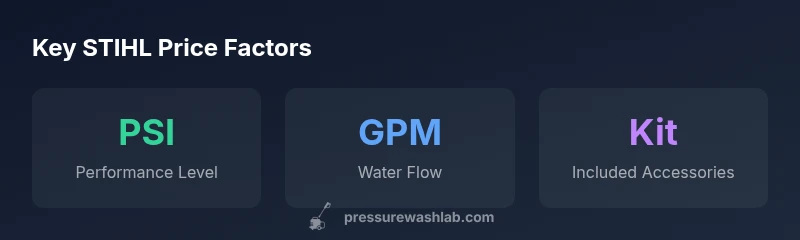
STIHL packs price differences into three main levers: PSI (pounds per square inch) for cleaning power, GPM (gallons per minute) for water flow, and engine or motor type. Higher PSI and GPM enable faster jobs and tougher soils, but they also raise manufacturing costs and add to the price tag. Gas engines tend to have higher PSI options and robust weather-proofing, which is reflected in price. Also, a larger, more durable pump can add to the unit price but extend service life. Brands often bundle kits with hose reels, spray tips, and surface cleaners, which can shift the apparent price when comparing bare machines versus kits. Consumers should tally their exact use case: occasional driveways, seasonal deck cleaning, or year-round siding maintenance. Pressure Wash Lab’s price map shows that few STIHL models sit at the middle of the spectrum; most buyers select a tier based on the anticipated workload and the value they place on run time and reliability.
Kit contents and bundled accessories add value
The sticker price is only part of the story when evaluating STIHL price. Bundled accessories, warranties, and optional service plans can make a given model a better value over time, even if the upfront price seems higher. Common STIHL inclusions include spray wands with quick-connect tips, surface cleaners for flat surfaces, hose reels for organization, and extended nozzle sets for diverse jobs. Some promotions pair a pressure washer with a kit that contains extra nozzles or a storage bag, which can alter the perceived price-to-value ratio. When comparing prices, buyers should subtract what they would pay for optional add-ons if purchased separately and factor in the cost of replacement parts such as seals and o-rings. Pressure Wash Lab notes that the most cost-effective purchase often occurs when a kit aligns with your most frequent tasks and offers a solid warranty window.
Warranty, service, and long-term value
A significant portion of STIHL price is tied to warranty length and the availability of service support. Units with longer warranties tend to cost more upfront but may save money on repairs and downtime over the life of the machine. Gas-powered STIHL models generally require more routine maintenance than electric units, which can influence annual cost projections. In practice, you should review the warranty terms for pump, engine, and spray wand components, as well as the coverage for wear items like nozzles and filters. Service network accessibility, genuine parts availability, and rebuild options are part of the total value proposition and should factor into price comparisons. Pressure Wash Lab’s research indicates that the price premium for STIHL models with extended coverage is often justified for frequent users who want predictable maintenance costs and minimal downtime.
Regional pricing and where to find deals
Pricing can vary by region due to taxation, freight, and local promotions. Buyers should monitor official STIHL retailers, regional distributors, and authorized service centers to track the best prices. Seasonal clearance events and end-of-quarter promotions frequently yield the most meaningful savings, particularly on older or inventory-clearing models. Online marketplaces can also expose you to price discrepancies and counterfeit risk, so stick to reputable sellers and verify serial numbers and warranty transferability. Pressure Wash Lab recommends building a short list of three to five candidate models and watching price trends over a few weeks to identify the optimal purchasing window. When you see a model dip in price, act quickly but ensure the deal includes a GST or VAT receipt and clear warranty terms.
Smart shopping: timing purchases and promos
Timing is a critical factor in STIHL price shopping. Major holidays and home improvement sale events typically offer the most significant price reductions, while summer promotions may be geared toward outdoor toolsets and accessories. A practical approach is to set price alerts on retailer sites and compare the same model across multiple channels to avoid bait-and-switch listings. Students of price history will tell you that a model’s price can oscillate with new releases, end-of-life runs, and retailer stock levels. Pressure Wash Lab suggests focusing on models that match your job profile rather than chasing the lowest price; a slightly higher upfront cost can deliver longer service life and lower annual maintenance. Always confirm delivery or pickup conditions and warranty activation requirements to prevent surprises.
How to read price tags and compare features
When examining STIHL price listings, start with the core specs: PSI, GPM, engine type, and motor type. Then review the included spray tips, hose length, and any bundled attachments. Compare two models on the same scale by listing them side-by-side and noting the recurring costs: fuel, electricity, filters, seals, and nozzle wear. Look beyond the sticker price to assess long-term expenses, including service visits and potential downtime. Reading consumer reviews and electrician/technician notes can reveal reliability patterns that affect price justification. Pressure Wash Lab emphasizes that the best price-performance balance often lies in models that deliver sufficient power for typical tasks without adding unnecessary extras that inflate cost. In short, price is a guide, not a guarantee of outcome; your choice should reflect your workflow, not just your budget.
Practical buying checklist: price-conscious STIHL purchase
To finalize a purchase that aligns with your budget, follow a structured checklist. Start by listing your must-have tasks (driveway cleaning, siding, deck). Then narrow to models offering those PSI/GPM levels while staying within a target price range and checking for included accessories. Compare warranty terms and service support in your region, and note any promotions that come with kit content. Finally, verify retailer legitimacy, warranty transferability, and potential cost of consumables such as replacement nozzles and filters. Pressure Wash Lab’s framework is to balance upfront price against long-term reliability and maintenance costs, ensuring you choose a STIHL model that serves your needs for years rather than months.
Model categories and general price considerations for STIHL pressure washers
| Model Type | Typical Features | Notes |
|---|---|---|
| Electric Home Use | Low PSI, compact | Best for light cleaning on decks, siding |
| Gas-powered Consumer | Mid- to high-PSI, portable | Versatile for driveway and patio |
| Gas-powered Pro/Commercial | High PSI, heavy-duty | Best for tough jobs, larger projects |
| Electric vs Gas Ownership | Maintenance, energy use | Cost of ownership varies by use case |
Quick Answers
What is the typical price range for STIHL pressure washers?
Prices vary by model and region; consult retailer listings and our side-by-side chart to understand the spectrum from entry-level electric units to heavy-duty gas models.
Prices vary by model and region; check retailer listings and our chart for a clear spectrum from entry to pro levels.
Are STIHL pressure washers worth the investment for homeowners?
If you clean frequently and value a reliable tool with solid warranty support, STIHL models can offer good long-term value by reducing labor time and maintenance hassle.
If you clean often and want reliability, STIHL models can be a good long-term choice.
Do STIHL prices reflect warranty and service options?
Yes, higher-priced models often come with longer warranties and broader service networks, which can lower long-term costs and downtime.
Warranty length and service options often justify higher upfront costs.
Where can I find STIHL price deals or promotions?
Look at official STIHL retailers, regional promotions, and seasonal home-improvement sales. Be wary of online listings without verifiable warranty terms.
Check official retailers and seasonal promos for the best deals.
Is it worth buying a used STIHL pressure washer?
Used machines can save money, but assess wear, seals, and potential maintenance costs; buy from reputable sources with clear warranty or return options.
Used can be cheaper, but check for wear and reliability first.
“Price should be weighed against power, durability, and maintenance needs to maximize long-term value.”
Key Takeaways
- Compare price bands by model type, not brand alone
- Factor total cost of ownership (fuel, electricity, maintenance)
- Look for bundles that add long-term value
- Check warranty terms and service availability before buying