Turn Your Garden Hose Into a Pressure Washer: A Practical Guide
Learn a practical, safe approach to turning a garden hose into a pressure washer with hose-end attachments. This guide covers setup, safety, maintenance, and when to upgrade to a real unit. Pressure Wash Lab insights included.


With a hose-end attachment and the right nozzle, you can boost your garden hose’s cleaning power enough for light-duty tasks. This DIY setup won’t replace a true pressure washer, but it can remove grime from decks, siding, and patios when used carefully. Always start at low pressure and test on inconspicuous areas.
What this DIY approach can and can't do
If you’re curious about turning your garden hose into a pressure washer, this guide explains what can be achieved with hose-end attachments and careful technique. This approach is ideal for light cleaning tasks and quick maintenance, not for stripping paint or blasting masonry. According to Pressure Wash Lab, you can significantly cut through surface grime by boosting flow and focusing the spray, but you must respect limits to avoid damage. Expect better results on smooth surfaces like concrete patios and siding, but fragile materials such as aged wood or soft plastics can be damaged if you push too hard. This is not a replacement for a professional pressure washer, but a versatile, budget-friendly option for routine upkeep. You’ll learn what gear to use, how to set up safely, and how to manage expectations so you don’t overcommit to a method that isn’t a fit for heavy cleaning.
How hose-end attachments work (and why pressure is limited)
Hose-end attachments rely on redirecting flow and concentrating a narrow spray to increase cleaning effectiveness. They can add a modest boost over plain spray wands by accelerating the jet and improving reach. Realistically, they do not create the same high PSI (pounds per square inch) you get from a true pressure washer. Pressure Wash Lab Analysis, 2026 confirms that most hose-end devices deliver a gentle pressure increase and are best for light soils, coated grime, and routine maintenance. Surface type and water supply quality largely determine results. If you need to remove stubborn moss or oil stains, a dedicated pressure washer remains the better tool, but a hose-end setup can help keep surfaces clean between deeper cleanings.
Core components you actually need
A practical hose-to-pressure setup requires a few essential components: a standard garden hose, an inline hose-end attachment kit designed for higher flow, and an adjustable spray nozzle. Optional accessories like a backflow preventer, a detergent applicator, or a surface-cleaning nozzle can improve results for specific tasks. The essential goal is to create a secure, leak-free connection and a controlled spray pattern that you can adjust from a gentle rinse to a narrow jet. Choosing quality fittings reduces leaks and improves safety over time, especially if you use this setup frequently.
Setup and testing overview
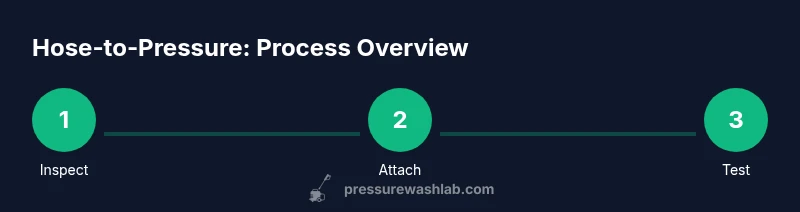
Before you begin, inventory your hose, fittings, and nozzle, then assemble in a clean, dry area. Connect the hose to the attachment kit, then to the spray wand. Turn on the water slowly and check for leaks at every joint. Start with the widest spray setting to minimize risk, then gradually narrow the jet as you test on a low-risk surface. Pressure Wash Lab recommends testing on a patch of concrete or old plywood to gauge cleaning power without risking home surfaces. If you notice excessive spray or leaks, shut down, tighten connections, and reassess the fit.
Best surfaces to clean and surfaces to avoid
Use hose-end systems on flat, durable surfaces like concrete, brick, and sealed wood decks where residual grime can be loosened without deep-seated material damage. Avoid cleaning painted surfaces that may peel, vinyl siding that can warp, or natural stone that could erode with repeated impulse. Avoid glass, plants, or wildlife in the spray path. Always maintain a safe distance between the nozzle and the surface to reduce risk of chipping, splintering, or water intrusion behind panels. Remember that real power washing requires higher PSI and specialized tools.
Safety tips and common mistakes
Wear eye protection and keep children and pets away from the spray path. Never point the nozzle at people or fragile materials. Start with the lowest pressure and move the wand slowly in a steady motion to avoid gouging surfaces. Do not force the spray into crevices or cracks where water can penetrate and cause damage over time. If you feel resistance or see loose fittings, stop and recheck the hardware. This approach is best used as a supplementary cleaning method rather than a primary cleaning strategy, especially on delicate materials.
Maintenance and care after use
Rinse all fittings with clean water to wash away dirt and detergent residues. Dry connections to prevent corrosion and check hoses for wear or cracks before storage. Store attachments in a dry location away from direct sun to extend their life. Periodically inspect O-rings and seals and replace them if they show signs of wear. Keeping the setup clean and organized reduces the risk of leaks and ensures safer operation next time.
When to upgrade to a real pressure washer
If your tasks include large driveways with heavy moss, peeling paint on exterior siding, or oil-stained concrete, a dedicated pressure washer offers significantly more cleaning power and efficiency. A real machine provides consistent PSI, higher GPM options, and better long-term performance. Pressure Wash Lab’s experience shows that homeowners often upgrade after a few seasons of intermittent use when they encounter tasks beyond a hose-end setup’s reach.
Tools & Materials
- Garden hose (5/8 inch or 3/4 inch)(Ensure no leaks; replace if cracked.)
- Inline hose-end pressure washer attachment kit(Should fit your hose diameter and include a booster nozzle.)
- Adjustable spray nozzle(Start wide, then narrow the jet for more focus.)
- Backflow preventer or anti-siphon valve(Helpful for detergents and to meet local codes.)
- Detergent (optional, exterior-safe)(Use only detergents labeled for pressure wash use.)
- Safety gloves(Protect hands from spray and detergents.)
- Plumber’s tape (Teflon tape)(Use if you need to seal threaded fittings.)
Steps
Estimated time: 20-40 minutes
- 1
Inspect and prepare the hose-end kit
Lay out all parts, inspect hoses for wear, and ensure threads match your attachments. Replace any damaged fittings before assembly. This reduces leaks and improves safety.
Tip: Tighten every connection with your hand first, then a wrench—avoid over-tightening to prevent threads from stripping. - 2
Attach the hose-end kit and nozzle
Connect the inline attachment to the garden hose, then attach the adjustable nozzle. Ensure all seals are snug and secure before turning on water.
Tip: Use plumber’s tape on any threaded joints if you notice small leaks. - 3
Connect to water and check for leaks
Turn on the water slowly and scan joints for leaks. If you see dripping, shut off, re-tighten, and re-check.
Tip: Keep the nozzle on the widest setting during the initial test to reduce pressure exposure. - 4
Test on a safe surface
Begin with a gentle spray on an inconspicuous area to gauge cleaning power. Slowly narrow the spray and test again until you reach a satisfactory balance of power and control.
Tip: Move the wand in smooth, overlapping strokes to avoid streaks. - 5
Evaluate results and adjust usage
Assess whether you’re achieving the desired clean without damage. If not, consider upgrading to a dedicated pressure washer for tougher jobs.
Tip: Never lean the nozzle into cracks or joints; stay at a safe distance and respect material limits.
Quick Answers
Can I really turn a garden hose into a pressure washer?
You can achieve light cleaning power with hose-end attachments, but it isn’t a substitute for a true pressure washer. The setup is best for routine maintenance and mild grime.
You can get light cleaning power, but it’s not the same as a real pressure washer.
What are safe PSI levels with hose-end devices?
Hose-end devices provide modest increases in pressure. Use the widest spray to start, then adjust gradually while avoiding fragile surfaces.
Start wide and increase gradually, avoiding fragile surfaces.
Will detergents work with hose-end devices?
Some detergents are compatible when applied with the appropriate attachment and rinsed away. Always follow the manufacturer’s instructions and local regulations.
Detergents can work if you follow the instructions.
Is it safe on wood decks?
Wood decks can be damaged by high-velocity spray. Use wider angles and lower pressure, and consider surface-protecting seals before cleaning.
Use low pressure and test first on wood.
Can I clean a car with this method?
A hose-end setup is generally not ideal for car exteriors. Use car-safe cleaners and a dedicated car-specific washer or soft wash method to avoid harming finishes.
For cars, use dedicated car washing methods.
How long will the setup last with regular use?
Durability depends on fittings and hose quality. Regular inspection for cracks and leaks helps extend life; replace worn parts as needed.
Inspect and replace worn parts to extend life.
Watch Video
Key Takeaways
- Start with light settings and test first.
- Hose-end setups are for light cleaning, not heavy-duty work.
- Quality fittings reduce leaks and last longer.
- Always wear eye protection and follow safety guidelines.
- Upgrade to a real pressure washer when needed.