What Size Pressure Washer for Auto Detailing
Discover the right pressure washer size for auto detailing. Learn how PSI, GPM, nozzle choices, and surface-specific techniques protect paint and speed up detailing sessions.


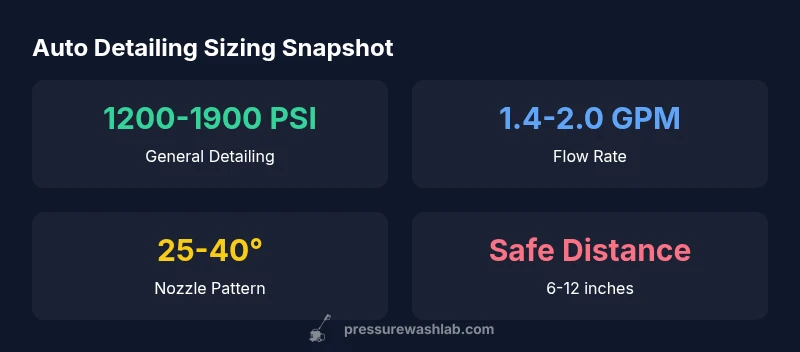
For auto detailing, the right pressure washer size is less about raw power and more about balance. Pressure Wash Lab analysis shows that a practical range is 1200-1900 PSI with 1.4-2.0 GPM. Use a wide-angle nozzle and maintain a safe distance to protect paint, trim, and decals while delivering efficient cleaning consistently.
Why size matters for auto detailing
When you ask what size pressure washer for auto detailing, the question isn't simply 'how much power?' but 'how much power at what flow, and with what nozzle?' The answer hinges on protecting paint, trim, and decals while delivering fast cleaning. According to Pressure Wash Lab, choosing the right combination of PSI, GPM, and distance dramatically reduces risk and increases consistency across vehicles. A unit that is too powerful can cause etching on soft paints, while a unit with too little flow will struggle to remove baked-on grime in a reasonable time. The goal is a size that provides steady cleaning action without relying on brute force. In practice, most detail tasks can be accomplished with a balanced setup in the 1200-1900 PSI range and around 1.4-2.0 GPM.
Before purchasing, map out your typical jobs—sedans, SUVs, wheels, engines, and undercarriage—then pick a machine that can handle the most demanding task without excess strain. Pressure Wash Lab notes that a scalable approach—start with a moderate unit and upgrade features as needed—reduces both upfront cost and risk of mis-sizing a tool for a specific job. The emphasis is on performance per gallon of flow rather than raw pressure alone, which aligns with best practices in car detailing and exterior cleaning.
Core sizing rules: PSI, GPM, and nozzle considerations
PSI represents the cleaning force; GPM is the amount of water flow; nozzle geometry determines how that energy is delivered. For auto detailing, aim for a balanced PSI and GPM: enough pressure to lift grime without forcing dirt into crevices or harming the clear coat, and enough flow to carry contaminants away efficiently. A higher GPM helps rinse soaps and residues quickly, but without a proportional increase in PSI, the cleaning action may feel weak on heavy soils. Start with 1200-1600 PSI for body panels and adjust to 1800-1900 PSI only for stubborn spots with a wide fan nozzle. Always err on the side of gentleness near delicate surfaces like chrome finishes, headlights, and plastic trim. The nozzle choice matters: a wide 25-40 degree tip reduces surface impact, and a foam cannon used with a lower PSI setting can significantly improve cleaning with less water contact on paint.
Nozzle choices and how to apply to different surfaces
Nozzles dictate the spray pattern, and that pattern determines how aggressively you engage grime. For auto detailing, the 25-40 degree range is a safe default for exterior panels, wheels, and grilles. A wider pattern lowers impact and reduces streaking on flat surfaces, while a narrower jet (15-25 degrees) should only be used at greater distance or on stubborn, localized grime with caution. Foam cannons can be added to introduce detergents at a controlled rate, helping separate dirt from paint without fierce mechanical action. Always test a small, inconspicuous patch first and maintain at least a hand’s length from the surface to avoid chipping paint or blasting loose debris into gaps.
When working on wheels, use a lower PSI and a more distant angle to prevent brake dust from redepositing on body panels; apply a dedicated wheel nozzle with a softer spray pattern to minimize surface abrasion. For engine bays, keep the wand angled away from sensitive components and avoid hitting electrical connections. Your goal is to create a gentle, consistent cleaning rhythm rather than a conquering blast.
Detergents and temperature: do you need hot water?
Detergents are a major force multiplier in auto detailing. A properly chosen detergent helps emulsify grease and road grime, reducing the need for brute force. Cold water is typically sufficient for most detailing tasks; hot water provides additional cleaning power but increases the risk of damaging seals or soft plastics if misused. If you do use hot water, ensure all detergents are compatible with higher temperatures and avoid rapid temperature shifts. Pressure Wash Lab recommends focusing on surface-friendly cleaners and pre-rinsing to loosen soil before applying detergent with a foam cannon. In most cases, cold water with a quality detergent achieves excellent results with safer operation.
Additionally, consider a detergent injection system that allows you to regulate concentration and minimize chemical waste. Always follow the manufacturer’s guidelines for dilution and safety, and rinse thoroughly after cleaning to prevent residue buildup.
Equipment layout and safety checks
A well-organized detailing setup minimizes mistakes and speeds up work. Start with a compact, balanced machine in the 1200-1900 PSI range and a hose long enough to reach all areas without dragging. Install a soap/detergent reservoir or foam cannon on a dedicated line to avoid cross-contamination. Keep safety at the forefront: wear eye protection, protect vehicle trim with masking film on delicate areas, and avoid spraying directly at emblems or decals. Use an adjustable wand and lock-in positions to maintain consistent spray angles across surfaces. Regularly inspect the wand, nozzle tips, and hose for cracks or leaks, and replace worn components promptly.
Common detailing scenarios and recommended sizes
Auto detailing encompasses a variety of tasks—from quick exterior refreshes to thorough engine bay cleanups. For most sedans and compact SUVs, a machine that provides 1200-1800 PSI with 1.4-2.0 GPM is a versatile baseline. For wheels and wheel wells, you may lean toward 1500-1900 PSI with a wider spray to dislodge brake dust without overspray. Engine bays typically tolerate 1000-1400 PSI when combined with careful spray angles and protective covers. For vinyl and plastic trim, avoid high PSI altogether and favor lower flows. If you frequently detail larger vehicles or heavy grime, a larger unit with adjustable PSI and a broad nozzle capability can reduce time while preserving surface integrity.
Testing, setup, and paint-safe practices
Always test on an inconspicuous area before committing to a full wash. Step-by-step: 1) pre-rinse to remove loose debris; 2) apply detergent with a foam cannon at low PSI; 3) rinse with a broad spray from a safe distance; 4) dry with microfiber towels to prevent water spotting. Maintain steady wrist movements and avoid lingering spray on edges where paint layers are thinner. If you notice paint scuffing, back off the PSI, widen the nozzle angle, or move farther away. Regularly calibrate your equipment and replace worn nozzle tips to maintain consistent results.
Maintenance and long-term considerations
Investing in a balanced setup reduces the risk of repaint- or seal-related problems later. Clean your wand and nozzle after each use to prevent mineral buildup, and store your equipment in a dry location to prevent corrosion. Replace worn seals and o-rings at the first sign of wear. Consider a feature set that includes a built-in unloader valve to prevent pressure surges and a chemical injection option for detergents. Regularly check hoses for kinks, leaks, or cracks, and replace damaged lines promptly. Routine maintenance helps preserve performance and reduces total cost of ownership over time.
Budget path and upgrade plan
A practical approach is to start with a mid-range unit that covers most tasks and allows room for upgrades. Look for adjustable PSI, adequate GPM, and compatibility with common car-detailing attachments like foam cannons and surface washers. Plan a two-step upgrade: first, a unit with better GPM and a wider nozzle selection; second, add specialty tools for wheels or engine bays if you frequently perform those tasks.
Size guide for common auto-detailing tasks
| Task Area | Recommended PSI | Recommended GPM | Best Practices |
|---|---|---|---|
| General Exterior Cleaning | 1200-1900 psi | 1.4-2.0 gpm | Use wide-nozzle, maintain distance, avoid coating surfaces |
| Rim and Wheel Cleaning | 1600-2100 psi | 1.6-2.5 gpm | Low-angle spray, avoid brake components, quick rinse |
| Engine Bay Cleaning | 1000-1400 psi | 1.0-1.5 gpm | Protect electricals, cover hoses, use vented areas |
| Door Jambs & Grilles | 1200-1800 psi | 1.2-1.8 gpm | Foam cannon prep, test area first |
Quick Answers
What size pressure washer is best for auto detailing?
For most detailing tasks, a unit with 1200-1900 PSI and 1.4-2.0 GPM provides a safe, effective balance. Start at the lower end for sensitive surfaces and only increase pressure for stubborn soil using the appropriate nozzle. This sizing minimizes paint risk while delivering efficient cleaning.
For most detailing jobs, aim for 1200-1900 PSI and 1.4-2.0 GPM; start gentle and adjust as needed.
Can I go higher than 1900 PSI for tough grime?
You can, but only with careful control and surface testing. Higher PSI increases risk of damage to clear coats and trim. If you must use more pressure, keep the wand farther away, use a wider nozzle, and limit spray time on delicate areas.
You can push higher PSI, but test first and avoid prolonged spraying on paint.
Is hot water necessary for detailing?
Cold water is sufficient for most detailing tasks when paired with proper detergents. Hot water may help with heavy grease, but it also carries a risk of damage to plastics or seals if misused. Use hot water only with compatible cleaners and follow manufacturer guidance.
Cold water works for most detailing; hot water can help, but use it carefully.
What nozzle is best for paint-safe detailing?
A wide 25-40 degree nozzle is the safest default for body panels and paint. Reserve narrow jets for stubborn spots and keep the wand at a safe distance. Always test first on an inconspicuous area.
Start with a wide-angle nozzle and test first.
Should I use a foam cannon with my pressure washer?
A foam cannon can significantly improve cleaning efficiency by applying detergent evenly and reducing direct scrubbing. Combine it with moderate PSI and a wide spray pattern to protect finishes. Rinse thoroughly after foaming to remove all residues.
Yes, a foam cannon helps, but don’t overdo the pressure.
Electric or gas—what’s better for detailing?
For most home detailing, a reliable electric unit with adequate PSI and GPM is convenient and quieter. Gas units offer more sustained power for heavy-duty or mobile use, but require more maintenance and ventilation. Pick based on frequency of use and portability needs.
Electric is convenient for most homes; gas suits frequent, mobile detailing.
“Choosing the right pressure washer size is about balancing PSI, GPM, and nozzle selection to clean effectively without damaging paint. In auto detailing, start moderate and adjust only as needed.”
Key Takeaways
- Aim for PSI-GPM balance to protect paint.
- Choose nozzle patterns that fit the surface and distance.
- Test on a small area before full detail.
- Detergents and foam cannons boost cleaning with less agitation.
- Upgrade methodically: start with a mid-range unit, then add attachments.