What Size Pressure Washer for Cars: A Practical Guide
Discover the right pressure washer size for cars, including PSI, GPM, nozzle choices, and safety tips to protect paint while delivering effective cleaning. Practical ranges and requirements for DIY car detailing from Pressure Wash Lab.


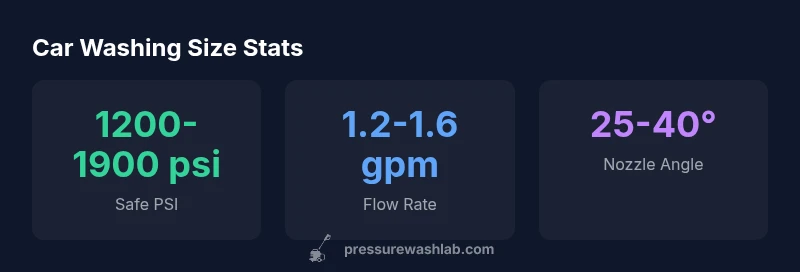
Definition: For most cars, a compact or mid-range electric pressure washer in the range of 1200–1900 psi and 1.2–1.6 gpm is sufficient. Higher PSI risks paint damage; use a 25–40 degree nozzle and optionally a surface cleaner for even coverage. Always test on a hidden area first and adjust based on paint hardness.
Why the Right Size Matters for Car Washing
Choosing the correct washer size is more than a numbers game; it’s about protecting the finish while delivering consistent, dependable cleaning. A car’s paint, clear coat, and trim are sensitive to excess pressure, heat buildup, and improper spray angles. Pressure Wash Lab’s analysis shows that using a machine within a safe PSI and GPM range, paired with appropriate nozzles, minimizes paint damage and reduces the risk of water intrusion around seals. For DIY enthusiasts, starting with a mid-range electric unit keeps things simple, affordable, and reliable while still offering enough power to remove road grime, dust, and light contaminants. The key is to balance cleaning capability with surface safety—especially on glossy panels, vinyl wraps, and chrome trim.
Core PSI ranges and why they matter for paint safety
PSI (pounds per square inch) measures the pressure exerted by the spray. Too high a PSI can strip wax, dull paint, or etch chrome accents. Too low may leave road film and grime behind. For most passenger cars, 1200–1900 psi provides a useful compromise: enough force to lift dirt without aggressively impacting the paint surface. GPM (gallons per minute) controls the total water flow; a rate around 1.2–1.6 gpm helps maintain consistent cleaning without excessive dampness that could reach sensitive seams. Pressure and flow work together with nozzle shape to determine how the spray interacts with the surface.
How to calculate your target PSI and GPM for a sedan, SUV, or truck
Start with the vehicle type and paint condition. Newer finishes tolerate slightly higher ranges; older, oxidized finishes may need gentler settings. A practical method is to set your washer to the lower end of the safe PSI range (1200–1500 psi) and then adjust up to 1900 psi only if dirt remains stubborn and the paint is in good shape. Measure the nozzle’s spray pattern; 25–40 degrees is commonly recommended for cars. If you notice streaking, micro-scratches, or water seep around door seals, reduce PSI and increase distance. Use short, overlapping passes rather than long, direct sprays to avoid concentrated stress in any one spot.
Nozzle choices and spray patterns for car detailing
Nozzle selection dramatically affects outcomes. A wider spray angle (25–40 degrees) reduces surface impact while still breaking surface grime. A zero-degree nozzle should be avoided on painted surfaces, as it concentrates force and can cause damage. Quick-change nozzle tips make it easy to switch between cleaning tasks (engine bays, wheels, body panels) without swapping equipment. For delicate areas, start with the widest nozzle from several inches away and move closer only if the surface looks clean enough. Pressure Wash Lab recommends testing on an inconspicuous area first to gauge paint response.
Accessories that help protect cars: surface cleaners, foam cannons, wheel cleaners
Surface cleaners create even, wide swaths of cleaning action, which helps reduce streaking on large panels and is gentler on finishes. Foam cannons and pre-wash foams lift grime before the spray comes into contact with the surface, minimizing direct abrasion. Wheel cleaners with appropriate brushes can tackle brake dust without harsh scrubbing. Detergents designed for automotive finishes reduce friction and help lift grime, but choose non-corrosive formulas compatible with your washer’s soap dispenser. Always rinse thoroughly after using cleaners to avoid residue.
Electric vs gas washers: which is better for car detailing?
Electric washers are typically quieter, lighter, and easier to control, which is advantageous for detailed car work in a driveway or garage. Gas washers offer higher peak PSI and GPM, useful for heavy-duty cleaning or large, neglected vehicles, but they’re louder and heavier and may require more maintenance. For most car detailing tasks, a quality electric model in the safe PSI range provides ample power, better control, and fewer fumes. If you anticipate frequent heavy-duty jobs or professional use, consider a gas-powered option with an adjustable regulator.
Step-by-step safe car-washing workflow
- Prep: Rinse with low-pressure water to remove loose dirt. 2) Apply appropriate detergent if needed and let dwell briefly. 3) Use the correct nozzle at 1200–1900 psi, keeping the wand at an angle and moving in smooth, overlapping strokes. 4) Target wheels and wheel wells with a dedicated nozzle or brush. 5) Rinse from top to bottom, ensuring all soap is removed. 6) Dry with a microfiber towel or chamois to prevent water spots. 7) Inspect for missed spots and re-wash if necessary. 8) Store equipment clean and dry to prevent corrosion.
Common mistakes and how to avoid them
- Using too high PSI on painted surfaces: stay in the safe range. - Holding the wand too close: keep a distance of at least 12–24 inches. - Skipping a pre-wash: loosens grime before the main wash. - Not testing on a hidden area: always check first. - Overreliance on detergents: detergents help but don’t replace proper technique.
Maintenance tips to extend your car-wash gear’s life
Rinse hoses, spray tips, and nozzles after each use to prevent residue buildup. Store in a dry, cool place and check for leaks. Periodically replace worn seals and gaskets, especially if you notice reduced pressure. Use manufacturer-approved lubricants for gun fittings and ensure the nozzle tips are securely attached. Regular maintenance keeps performance consistent and prolongs the life of pumps and hoses.
Car washing size guide
| Factor | Recommended Range | Why It Matters |
|---|---|---|
| PSI | 1200-1900 psi | Cleans effectively without damaging paint |
| GPM | 1.2-1.6 gpm | Controls water flow and surface impact |
| Nozzle angle | 25-40 degrees | Balances cleaning power and gentleness |
| Surface cleaner | Recommended optional | Promotes even coverage and reduces splash |
Quick Answers
What PSI is safe for washing a car?
Aim for 1200–1900 psi for most cars, staying within the lower end for newer finishes. If dirt remains, test cautiously up to 1900 psi. Always use a gentler nozzle and test on an inconspicuous area first.
Start with 1200–1900 psi and a safe nozzle. Test on a hidden area and only increase if the surface tolerates it.
Can I use a pressure washer on all car surfaces?
Most exterior car surfaces can handle the recommended PSI range, but avoid delicate finishes and seals. Always test small areas and avoid spraying directly at emblems or chrome trim at close range.
Most exterior surfaces are safe within the recommended range, but test first and be careful near sensitive areas.
Is it safe to use hot water on cars with a pressure washer?
Hot water is generally not necessary for routine car washing and can add wear on seals if used improperly. Cool or warm water is sufficient when paired with proper detergents and technique.
Hot water isn’t usually needed; use cool to warm water with proper technique.
What nozzle is best for car detailing?
Use a 25–40 degree nozzle for most body panels. Reserve 0-degree nozzles for heavy-duty cleaning away from paint, and only if you’re experienced. Quick-change tips help switch between tasks safely.
Choose a 25–40 degree nozzle for most panels; avoid zero-degree unless you’re experienced.
Do I need a surface cleaner for cars?
A surface cleaner isn’t mandatory but it helps achieve uniform coverage on larger panels and reduces streaks. It’s especially useful for walls, hoods, and doors where consistent distance matters.
Optional, but it helps with even cleaning on large panels.
Is a gas-powered washer better for car detailing?
Electric models are often more practical for home use due to weight and noise. Gas-powered washers offer more raw power but are heavier and louder. For most car detailing tasks, an electric unit within the safe PSI range is ideal.
Electric units fit most home detailing needs; gas is more powerful but louder.
“The right size pressure washer isn’t just about cleaning power; it’s about protecting finishes while delivering consistent results.”
Key Takeaways
- Know the safe PSI range (1200–1900) for most cars.
- Match GPM (1.2–1.6) to keep water usage efficient.
- Use 25–40° nozzles for paint-safe cleaning.
- Consider a surface cleaner for even results.
- Test on a hidden area before full use.