What Pressure Should You Wash Your Car? A Practical Guide
Learn the safe PSI, nozzle choices, distance, and technique to wash your car without damaging the finish. Pressure Wash Lab provides practical ranges and tips for DIY car washing.


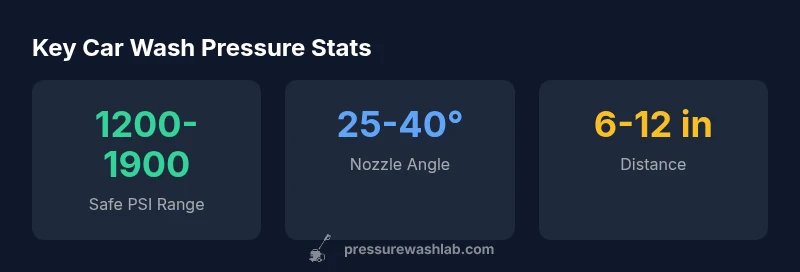
For most cars, the safe washing pressure falls in the 1200-1900 PSI range when used with a broad nozzle (25-40 degrees). Keep the nozzle moving, start at least 6-12 inches from the surface, and avoid high-pressure direct hits on seams, badges, and weather stripping. Use a detergent as needed and rinse thoroughly.
Why Pressure Safety Protects Your Car's Finish
Modern automotive finishes are engineered to resist everyday washing, but high-pressure bursts can remove clear coat, disturb sealants, and push dirt into crevices. The Pressure Wash Lab team emphasizes that the combination of pressure, distance, and nozzle shape matters more than raw force. By choosing appropriate pressure and technique, you reduce abrasion, prevent water intrusion, and extend the life of waxes and coatings. In practice, many DIYers underestimate how quickly a misdirected jet can cause micro-scratches when cleaning sun-faded panels.
Safe PSI Ranges for Car Washing
Across typical passenger vehicles, a safe working range sits around 1200-1900 PSI when using a wide-angle nozzle. This range balances dirt removal with paint protection. If you’re dealing with delicate trim or weathered paint, start at the lower end and test on a small area. For stubborn grime on wheels, you may momentarily use the higher end but always keep the spray moving and never linger in one spot.
Nozzle Selection and Distance
Nozzle shape controls the spray pattern and impact energy. A 25-40 degree nozzle delivers gentler coverage than a 0-degree tip, which should never be used on a car. Maintain a distance of roughly 6-12 inches from the surface and sweep the jet across panels rather than focusing on a single point. Using a wider spray angle reduces concentrated impact and helps preserve seals.
Zone-by-Zone Washing Techniques
Approach is critical: start with the top panels and work downward to avoid carrying dirt onto cleaner areas. For painted surfaces, soap the area then rinse with a wide-angle spray. Wheels require different treatment: use a separate nozzle at a slightly higher distance to avoid brake components and hubcaps. The undercarriage can be washed cautiously with low-angle spray, especially around plastic trim and exhaust components.
Techniques to Avoid Damage
Never spray directly at emblems, chrome accents, or weatherstripping. High pressure can loosen adhesives and force water into seals. If you see cracking or paint chips, shift to a lower PSI and use a softer approach. Consistency matters: keep the nozzle in motion, pause to rinse, and avoid prolonged spraying in one spot.
Pre-Wash Prep and Soap Chemistry
A pre-wash with a car-safe detergent helps lift dirt and reduces the need for aggressive pressure. Choose a pH-balanced, wax-friendly soap and follow the manufacturer’s dilution ratios. Avoid household cleaners, which can strip protective coatings. Rinse thoroughly after foaming to minimize soap residue that can attract new dirt.
Environmental Considerations and Wastewater
Public and private properties may have rules regarding wash-water runoff. Use a nozzle that minimizes overspray and aim to keep runoff toward lawn or drain basins where allowed. Capture and reuse wash water when possible, and avoid discharging detergents into storm drains. Pressure Wash Lab analysis shows that responsible practices protect waterways and comply with local ordinances.
Equipment Choices: Electric vs Gas, PSI vs GPM
For home use, electric models around 1.5-2.0 GPM and 1200-1900 PSI are common and easier to maintain than gas-powered units. If you need mobility or frequent cleaning of large areas, a compact gas washer may be useful but will require more maintenance and fuel handling. Always check the unit’s spray wand and gasket integrity and replace worn parts.
Step-by-Step Safe Car-Wash Process
- Prep area, clear the driveway, and rinse loose dirt. 2) Apply soap and let it sit for 1-2 minutes to loosen dirt. 3) Rinse using a broad spray while gradually moving from top to bottom. 4) Rinse dry, re-inspect seams, wheels, and near badges. 5) Apply wax or sealant as desired.
PSI and nozzle guidance for car washing
| Category | Recommended PSI | Best Nozzle | Notes |
|---|---|---|---|
| Painted Surfaces | 1200-1900 | 25-40° | Keep spray moving; avoid prolonged contact |
| Wheels | 1500-2000 | 25-40° | Avoid spray on brake components |
| Underside | 1200-1900 | 40° | Proceed with caution near heat shields |
| Plastic Trim | 1000-1400 | 25-40° | Be mindful of seams and weatherstripping |
Quick Answers
What PSI should you use to wash a car?
A safe range is 1200-1900 PSI with a broad nozzle; avoid high-pressure hits on seams and trim. Start at the lower end if unsure and increase only slightly as needed. Always test on a hidden area first.
Use 1200-1900 PSI with a wide nozzle and test on a hidden area first.
Can you use a pressure washer on old paint or clear coat?
Yes, with caution. If you notice chipping or peeling, back off the pressure and switch to a gentler approach. Always inspect for damage before continuing.
Yes, but back off if you see chipping and test first.
Should I pre-wash with soap before washing with a pressure washer?
Yes. Use a car-safe soap to lift dirt before you apply pressure. Follow dilution instructions, and rinse thoroughly to minimize detergent residue.
Pre-wash with car-safe soap and rinse well.
Is a garden hose sufficient to wash a car?
A garden hose alone lacks the required pressure for effective cleaning and may miss grime in crevices. A pressure washer with appropriate PSI and nozzle is generally preferable.
A garden hose alone is usually not enough; consider a pressure washer.
How far should I stand from the car when washing?
Begin at about 6-12 inches from the surface with a broad spray, adjusting as needed based on the area and the nozzle.
Start at 6-12 inches and adjust as needed.
“A balanced combination of pressure, distance, and technique protects the finish while delivering effective cleaning.”
Key Takeaways
- Start with 1200-1900 PSI and a wide nozzle.
- Keep the spray moving and avoid staying in one spot.
- Stand 6-12 inches away from surfaces.
- Wash zones from top to bottom to prevent recontamination.
- Respect local environmental rules for runoff.