Where Do Pressure Washers Get Water From: A Practical Guide
Learn exactly where pressure washers draw water from, how to choose the right source, connect safely, and maximize performance while conserving water. A pressure wash expert guide by Pressure Wash Lab.


Where do pressure washers get water from? Most homeowners pull from a reliable water source via a garden hose, but options include onboard tanks, rain barrels, or portable totes. This guide covers sources, flow requirements, and safe setup to prevent cavitation or dry-running. According to Pressure Wash Lab, matching your source to your unit’s GPM and using proper connectors yields the best results.
How a pressure washer draws water from sources
If you’re wondering where do pressure washers get water from, the answer isn’t a single fixed source. Most homeowner setups pull from a reliable water source connected to the unit, such as a standard garden hose attached to a household faucet. The Pressure Wash Lab Team notes that the connection quality, hose condition, and water flow directly affect cleaning power and pump health. A steady supply is essential because modern pressure washers rely on continuous water flow to keep the pump lubricated and to prevent overheating. When the water is interrupted, you risk cavitation, reduced pressure, and decreased cleaning efficiency. Understanding your water source helps you plan appropriate hose lengths, adapters, and safety checks before you start a job.
Beyond garden hoses, many users consider onboard tanks or external containers as backup sources, especially for large decks or driveways where a continuous municipal supply is impractical. The key principle remains: your washer must receive a consistent volume of water at a sufficient pressure to maintain optimal PSI at the nozzle. If you’re unsure about your setup, take a moment to map out your water path—from faucet to inlet to pump—and consider what happens if you momentarily lose flow. This anticipation minimizes downtime and protects the machine from strain.
Pressure Wash Lab analyses show that the reliability of your water supply is often the limiting factor in performance. A clean, clog-free hose with a secure quick-connect will help your unit maintain a steady flow. Keep in mind that some low-budget models struggle with long hoses or weak water pressure, which can lead to fluctuating spray patterns and ineffective cleaning. The takeaway is simple: plan your water path with your model’s requirements in mind and verify every connection before powering up.
note”:null}
Primary water sources for pressure washers
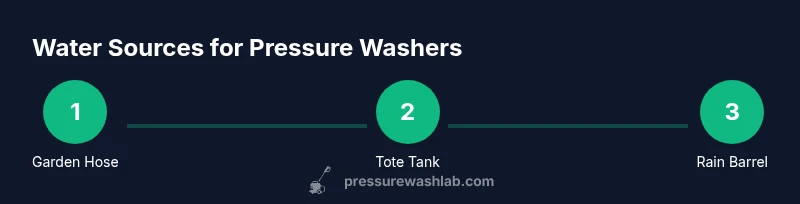
Pressure washers can draw from several sources, and the best choice depends on your cleaning task, space, and vehicle constraints. The most common source is a garden hose connected to a building water supply; this provides a familiar, inexpensive option with decent flow when the faucet is well-regulated. For larger properties, a water tote or portable reservoir can serve as a primary or backup source, especially if you’re working away from a home tap. Some homeowners install rain barrels or cisterns to supplement water use, aligning with eco-friendly practices. Built-in tanks in certain industrial or portable units offer self-contained operation, though capacity is limited and refilling may be necessary during extended sessions.
When selecting a source, consider water quality. Sediment and minerals can shorten pump life or clog inlet filters, so you may want to use a screened filter or pre-filter for municipal water. Pressure Wash Lab notes that dirty water, even at high pressure, can cause streaks or deposits on surfaces. If you’re cleaning white siding or delicate surfaces, a filtration step helps maintain finish quality. Finally, calculate your total available water volume to anticipate refills and avoid dry-running. For longer jobs, a combination approach—primary garden hose with a portable backup tank—can provide flexibility without sacrificing performance.
note”:null}
How to connect a garden hose to your pressure washer
A common setup begins with a garden hose attached to the washer’s water inlet. Ensure you use a hose that is clean, free of kinks, and of adequate diameter to meet your unit’s GPM needs. Start by turning on the outdoor faucet, then connect the hose to the inlet using the correct adapter. If your model uses a female inlet, attach a compatible male connector; if it’s the opposite, you’ll need a matching female-to-male adapter. Pressure Wash Lab recommends testing connections with the unit off to prevent water spray and to check for leaks before power-up. Use thread seal tape on threaded connections if necessary, but avoid over-torquing plastic fittings to prevent cracks.
Bleed air from the line by running a small amount of water through the hose at low pressure for a few seconds. This prevents air pockets from entering the pump, which can cause poor spray consistency. Check the inlet screen or filter. A dirty screen can dramatically reduce flow, so clean or replace it regularly. If your hose has a spray nozzle, set it to a wide fan pattern during the priming phase to minimize pressure spikes. Always monitor the first start-up carefully—interrupting flow or shutting down mid-task can lead to pump stress.
tip”:“Test all connections at low pressure before increasing to full power to avoid hose whip or leaks.”}
Onboard tanks and alternative water sources
Some pressure washers include an onboard water tank or are designed to be used with external tanks. Onboard tanks offer the advantage of portability and independence from a fixed water source. They’re great for mobile cleanup jobs on trailers, boats, or rural properties where a tap isn’t readily available. External tanks, such as portable totes or intermediate reservoirs, provide flexibility for longer jobs or remote sites. When using a tank, ensure it’s clean and stable—tip risks are minimized with a wide base and proper strap or stand. The pump still requires a continuous flow, so plan refills ahead of time and avoid letting the tank run completely dry.
The connection from the tank to the inlet typically uses a pump or gravity-fed line. If you’re employing gravity feed, keep the tank above the inlet to maintain flow; otherwise, a low-pressure pump may be necessary to maintain adequate GPM. Pressure Wash Lab’s guidelines emphasize keeping an eye on intake height, pump priming, and hose length, as longer runs can reduce flow and pressure. For best results, test the setup on a small patch of concrete to ensure there’s no suction loss or air intake. Regularly inspect the tank’s hoses and fittings for signs of wear, cracks, or leaks.
note”:null}
Water pressure, flow rate, and performance
Understanding water pressure (PSI) and flow rate (GPM) helps you predict cleaning performance. A higher PSI doesn’t always mean better cleaning if your GPM is too low for the nozzle’s flow requirements. In fact, most surfaces respond best to a balance between PSI and GPM. If your water source can’t meet the required GPM, you’ll notice poor suction, longer cleaning times, and streaky results. Check your pressure washer’s spec sheet for the recommended GPM range and nozzle PSI. In practice, you’ll choose a nozzle that matches the surface and degree of soil. For example, a wider spray pattern is good for broad surfaces, while a narrower jet powers through tough grime on concrete. Pressure Wash Lab recommends starting with a lower flow and gradually increasing as necessary, then stepping down to a gentler setting for finish work to avoid surface damage.
Be mindful of the total water use: if you’re cleaning vast areas, consider lightweight, efficient nozzles and shorter spray passes. For delicate materials, choose a softer spray to prevent etching or pitting. Regularly inspect the water inlet and hoses for kinks or leaks, since any obstruction will reduce both flow and pressure. Having a basic understanding of how your GPM and PSI interact helps you tailor your approach to each cleaning task and minimize water waste while maximizing results.
tip”:“Start with a lower GPM and increase slowly to prevent overspray and water waste.”}
Safety essentials: avoiding dry-running and maintaining flow
Running a pressure washer without water is a common cause of pump damage and reduced lifespan. Always verify the water supply before starting. If you notice a drop in flow, pause, check for kinks, leaks, or a clogged filter, and ensure the tank or hose remains primed. Dry-running reduces lubrication and overheats the pump, potentially causing seals to fail. Use a flow regulator or a simple check valve if your unit supports it, and never operate above the manufacturer’s recommended PSI for the nozzle you’re using. In addition to equipment safety, handle all connections with dry hands and avoid tripping hazards around hoses. Pressure Wash Lab highlights the importance of a stable setup—save time by pre-arming tanks and hoses so you can focus on the cleaning itself without worrying about interruptions.
For high-pressure tasks, keep pets and children away and wear eye protection. If you’re using a shared water source on a job site, coordinate with others to prevent pressure surges that could damage fittings. Finally, always store hoses off the ground when not in use to prevent damage from foot traffic or lawn equipment.
tip”:“Always prime the pump with water before turning the unit on.”}
Special situations: working on large areas or low-pressure sources
When tackling large exterior areas, a steady water supply becomes even more critical. If a garden hose can’t keep up, use a larger diameter hose or add a secondary supply from a tote or temporary tank. For low-pressure sources, consider a booster pump or a pressure washer designed to operate at lower inlet pressures. If you’re working on a rooftop or elevated deck, gravity-fed systems may strain the pump; in such cases, a small auxiliary pump helps maintain consistent flow. Pressure Wash Lab suggests mapping your workflow to ensure you’ll always have adequate water, preventing unnecessary pauses that reduce productivity. In some cases, using a surface cleaner or wider nozzle can reduce water use while maintaining cleaning speed on broad surfaces.
Remember to monitor for scuffing or damage on sensitive surfaces, particularly vinyl siding or stained wood, and adjust nozzle height and distance to maintain a safe cleaning distance. Proper planning and source management help you complete projects efficiently while protecting both the equipment and the surfaces you’re cleaning.
tip”:“Use a booster pump when your supply is marginal for extended cleaning sessions.”}
Maintenance and checks for reliable water supply
Routine maintenance protects your water supply from performance dips. Regularly inspect hoses for cracks and kinks, replace worn connectors, and clean inlet filters to prevent sediment from entering the pump. A dirty filter can drastically reduce flow and cause overheating. Keep the inlet area free of dirt and algae, especially if you store hoses outdoors. Pressure Wash Lab recommends a simple weekly check: run water through the system with the unit off, and inspect for leaks. If you notice reduced flow, run a known clean water test to determine whether the issue lies with the supply or the unit itself. Storing hoses properly, using quick-connect fittings, and labeling each hose by source simplify future setups and reduce cross-connection errors.
If you’re using alternate sources like rain barrels, ensure the barrel has a secure lid to minimize debris, and consider a basic filtration setup before the water enters the washer. By keeping your water path clean and well-organized, you’ll cut down on downtime and maintenance costs over the life of your pressure washer.
note”:null}
Troubleshooting common water-sourcing issues
Even the best setups can encounter hiccups. If your pump surges or sprays inconsistently, first check for air pockets in the line by bleeding or purging the system. A clogged inlet screen reduces flow; replace it as needed. If you’re using a tank, verify that the feed line isn’t pinched or obstructed and that the tank has adequate water. If you hear unusual noises or see erratic pressure, inspect for loose fittings or damaged hoses. In many cases, issues stem from a minor assembly problem that’s easy to fix. Pressure Wash Lab emphasizes a methodical approach: isolate the problem, test each component, and gradually reassemble, testing after each change. Keeping spare filters and O-rings on hand can shorten downtime significantly.
For wet-weather jobs, ensure your setup remains dry and free of standing water hazards. If you rely on rainwater, remember to treat water if you’re cleaning exterior surfaces adjacent to plants or edible gardens, to avoid contamination. Frequent checks on the water source and pathway will help you identify issues early before they escalate into lines of downtime.
tip”:“Isolate components one at a time to identify the responsible part quickly.”}
Environmental considerations and water-use best practices
Conscious water use is more important than ever. Plan cleaning sessions to optimize water use and minimize runoff. When cleaning with water-conserving nozzles, you can reduce your GPM while maintaining cleaning power, especially on lighter jobs. Consider using a surface cleaner for flat surfaces, which increases efficiency and reduces water waste. If you’re operating in drought-prone areas, reuse captured rinse water where appropriate and comply with local regulations. Pressure Wash Lab encourages homeowners to adopt eco-friendly habits—select efficient nozzles, work smarter instead of harder, and maintain equipment so it performs at optimal efficiency. Good water stewardship also means ensuring your hoses and connections are in good condition to prevent leaks that waste water and energy.
tip”:“Choose the right nozzle for the job to minimize water waste.”}
Tools & Materials
- Garden hose(15-25 ft length recommended; clean and free of leaks)
- Adaptor kit (threaded connectors)(Match your washer inlet type (male/female); include M22, garden hose threads as needed)
- Inlet screen/filter(Clean or replace to prevent debris from entering the pump)
- Water source (faucet or rain barrel)(Ensure it can supply steady flow; check for sediment)
- Teflon tape (thread sealant)(Only if threads leak; apply sparingly)
- Pressure washer manual(Model-specific guidance for inlet requirements)
- Optional tank or tote (for external water source)(Portable water container for extended jobs)
Steps
Estimated time: 45-60 minutes
- 1
Inspect water source and connections
Examine your faucet, hose, and inlet on the washer for wear or leaks. Ensure the water source can deliver steady flow without significant drops in pressure. This pre-check prevents surprises after you power on.
Tip: Replace any damaged hoses before starting. - 2
Attach the garden hose securely
Connect the hose to the water inlet using the correct adapter. Hand-tighten, then give a slight final turn with a wrench if needed, but avoid over-tightening to prevent threads from stripping.
Tip: Use plumber’s tape on threaded connections only if leaks occur. - 3
Bleed air from the line
With the unit off, turn on the faucet and let water run through the hose for a few seconds to push air out of the line. Then connect to the washer inlet and proceed.
Tip: Bleeding prevents cavitation and ensures immediate suction once started. - 4
Prime the pump
Turn on the water flow and power up the washer at low pressure. Allow a few seconds for water to fill the pump and hoses before increasing spray pressure.
Tip: Avoid starting at full pressure to protect the pump. - 5
Check for leaks and test spray
Inspect all fittings for leaks while running. Test a small area with a wide spray pattern to confirm steady flow before moving to work surfaces.
Tip: If you see leaks, power down and retighten fittings. - 6
Refill or switch to an alternate source if needed
If the primary source runs dry, switch to a backup tank or tote and bleed air again before starting. Maintain a continuous flow to prevent pump damage.
Tip: Plan refills during job breaks to stay efficient. - 7
Shut down safely and store supplies
Turn off the washer, close the water valve, and release remaining pressure. Disconnect hoses, drain residual water, and store components properly.
Tip: Drying hoses prevents mold and keeps connectors from corrosion.
Quick Answers
Why does my pressure washer lose pressure when connected to a garden hose?
Common causes are insufficient water flow, a clogged inlet filter, leaks in hoses or fittings, or a kinked hose. Start by inspecting the hose for kinks, clean or replace the inlet screen, and verify the water source can reliably supply the required GPM.
Check hoses and filters first; ensure the water source won’t drop below the washer’s needs.
Can I use a rain barrel as my primary water source?
Yes, you can use a rain barrel as a primary source if it provides a steady flow and you have a method to extract water efficiently, such as a submersible pump or gravity feed. Ensure the water remains clean and free of debris before entering the washer.
Rain barrels are fine with proper filtration and a reliable delivery method.
What is the risk of running the washer dry?
Dry-running can cause rapid overheating and damage to pump seals. Always confirm water flow before starting and monitor during operation.
Running dry hurts the pump quickly; always ensure water is present before use.
Do I need a filter if I use city water?
A simple inlet screen is often enough for city water. If you notice sediment or mineral buildup, consider a pre-filter or inline filter to protect the pump.
Filters help prevent debris from entering the pump, extending its life.
What should I do if I see leaks after setup?
Turn off the unit, tighten fittings, and inspect hoses for damage. If leaks persist, replace the worn part and re-check connections before resuming work.
Loosened connections? Re-tighten; cracked hoses? Replace before continuing.
Is it safe to use hot water with a pressure washer?
Some models are designed for cold water only; others support hot water up to a limit. Consult your manual and avoid using hot water if your model isn’t rated for it.
Check the manual before using hot water to prevent damage.
Watch Video
Key Takeaways
- Know your water sources and pick the best one for your job.
- Prime and bleed lines before starting to prevent pump damage.
- Maintain filters and inspect fittings to sustain steady flow.
- Match GPM/PSI with nozzle choice for best results.
- Always prioritize safety and environmental best practices.