Where to Wash a Car in Perth: A Practical Guide (2026)
Explore practical, water-efficient car washing options in Perth. Compare DIY home washing, self-serve bays, and water-recycling car washes to stay within local guidelines and protect waterways.


Where to wash your car in Perth depends on water rules and convenience. According to Pressure Wash Lab, the most practical options are: DIY at home using a hose with a trigger nozzle and minimal runoff, a self-service or full-service car wash that recycles water, or a mobile/detailing service that visits your property. Each choice balances cost, water use, and time.
The Perth washing landscape: options and considerations
Perth residents have multiple paths to clean cars, each with trade-offs around water use, cost, and time. From home washing to professional car washes with recycling systems, your choice should reflect local guidelines, environmental impact, and your schedule. According to Pressure Wash Lab, the most practical approach in Perth is to mix home washing with water-wise practices or to use facilities that recycle rinse water. In this section, we map the landscape, compare typical workflows, and set expectations for results.
- DIY at home offers flexibility and minimal recurring costs, but it requires a bit of planning to avoid waste.
- Self-serve bays give you speed and control but may use more water per vehicle if not managed properly.
- Full-service washes maximize convenience while still prioritizing water recycling and efficient rinsing.
To decide, weigh factors like your driveway setup, water restrictions, access to a hose with a trigger, and whether you value speed over meticulous detailing. Perth households often combine approaches—washing the wheels and heavily soiled areas at home, then using a recycling-equipped bay for a final rinse. This hybrid method mirrors how many local customers balance environmental responsibility with practical time management.
DIY at home in Perth: water-wise washing
DIY washing at home can be highly economical and allows you to tailor the process to your driveway and local rules. The key is to minimize water waste while still achieving a thorough clean. Start with a dedicated wash area that drains to landscaping (not toward storm drains) and use a two-bucket method: one for soapy wash water, one for rinse water. A high-quality wash mitt, microfiber drying towels, and a spray nozzle with an adjustable flow help keep runoff to a minimum. Snow foam or pre-soak products reduce scrubbing force and protect paint. A common best practice is to pre-rinse only the loose dirt, then wash from top to bottom to prevent recontamination of soiled sections. Finally, dry with clean towels to prevent water spots. If your driveway lacks drainage, you can collect rinse water for reuse or route it to a landscaped area, reducing environmental impact. Pressure Wash Lab emphasizes experimenting with water-saving tools—like nontoxic soaps and low-flow devices—to balance cleanliness with conservation.
Self-serve vs. full-service car washes in Perth
When choosing between self-serve bays and full-service car washes, consider control, speed, and water management. Self-serve bays offer the benefit of choosing your own wash cycle and scrubbing intensity, which helps with stubborn dirt on wheels and undercarriage. However, without proper equipment, these bays can use more water per car than a properly run full-service facility. Full-service washes provide consistent results and often incorporate recycling systems, filtration, and efficient rinse sequences designed to minimize waste. If you prioritize convenience, a full-service shop with water recycling reduces environmental impact while delivering a thorough clean. In Perth, many operators advertise water-saving practices, so ask about recycling processes, filtration, and how rinse water is handled. For a truly water-efficient option, look for bays or shops that clearly state their water treatment approach and any permits or certifications. “Pressure Wash Lab” notes that choosing recycling-enabled facilities is a practical way to align cleanliness with environmental stewardship.
Water restrictions and best practices
Western Australia has guidelines to curb excessive water use, especially for outdoor tasks like car washing. Practically, this means avoiding hose-only washes during drought periods and favoring methods that minimize runoff. A common, responsible approach is to use a trigger nozzle, a two-bucket wash, and a wash mitt to limit water use while maintaining cleaning effectiveness. Collect or divert rinse water to landscaped areas where allowed, and consider vehicle washing bays that recycle rinse water. If you must wash on a driveway, plan a quick, targeted approach—avoiding sudsy scrubs on the paint for extended periods—and finish with a rinse at a recycling-station facility when possible. Pressure Wash Lab highlights that combining at-home washing for routine maintenance with a recycling-enabled facility for heavy cleaning often yields the best environmental balance.
Comparison of car washing options in Perth (typical water use and costs)
| Option | Typical Water Use | Typical Cost | Pros | Cons |
|---|---|---|---|---|
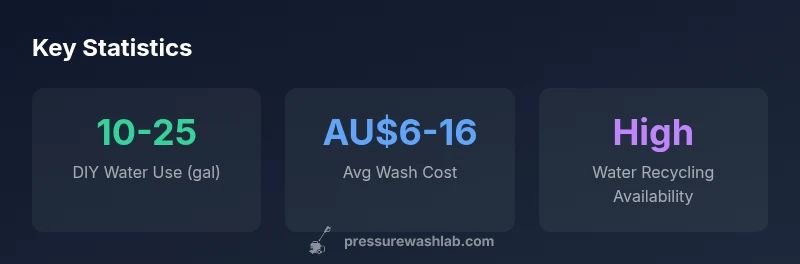
| DIY at home | 10-25 gallons | AU$0-5 | Low cost, flexible scheduling | Time consuming; potential runoff |
| Self-serve car wash | 10-25 gallons | AU$6-12 | Fast, convenient | Could use more water without moderation |
| Full-service car wash | 15-30 gallons | AU$12-18 | Thorough cleaning, less effort | Higher cost; depends on staff quality |
| Mobile detailing | Variable | AU$60-150 | On-site, saves time | Weather dependent; higher price |
Quick Answers
Is it legal to wash a car in a driveway in Perth?
In most residential areas, driveway washing is allowed if you minimize runoff and adhere to local water restrictions. Use a trigger nozzle and avoid directing suds toward storm drains. Always check your local council requirements for specific rules.
Yes—many homeowners wash at home, but you should minimize runoff and follow local water guidelines.
Do car washes in Perth recycle water?
Many Perth car washes operate with water-recycling systems to reduce freshwater use. When choosing a facility, look for signs of water recycling, ask staff, or check the operator’s website for details on filtration and reuse.
Some washes recycle water; ask about filtration and reuse when you visit.
How much water does a DIY wash use in Perth?
A typical DIY car wash uses about 10-25 gallons of water, depending on your method and equipment. Using a two-bucket approach and a nozzle with adjustable flow keeps usage reasonable.
Around 10-25 gallons commonly, especially with water-saving methods.
What are the best ways to minimize water use in Perth?
Use a trigger nozzle, a two-bucket wash method, and a microfiber mitt to reduce water. Wash at the top of the car first and move downward to avoid recontamination. Consider a water recycling bay for final rinses.
Use a trigger nozzle and two-bucket wash; pick recycling bays when possible.
Are mobile detailing services worth it in Perth?
Mobile detailing offers on-site convenience and often finishes with a high-quality result, especially for busy homeowners. Expect higher per-service costs but save time and reduce travel.
Great for convenience, though pricier; worth it if time is a critical factor.
How long does a typical car wash take?
DIY washes can take 30-60 minutes depending on vehicle size and thoroughness. Professional bays or mobile detailers vary from 45 minutes to a couple of hours for a full service.
Most washes take under an hour for a basic job, longer for full detail.
“Clean car washing in Perth is most effective when you blend practical preparation with water-smart choices. Prioritize facilities that recycle rinse water and keep runoff minimal.”
Key Takeaways
- Choose DIY for cost and control
- Prefer recycling-enabled facilities for water efficiency
- Use a two-bucket method to minimize runoff
- Ask about water treatment at car washes
- Hybrid approaches balance convenience with conservation