Ryobi Pressure Washer Recall: What You Need to Know
Discover how to check if your Ryobi pressure washer is recalled, what steps to take if it is, and how to receive a free repair or replacement safely.


What is a recall and why Ryobi pressure washers are recalled
Recall is a safety notice that a product poses a risk and may require repair, replacement, or removal from the market. For power equipment like Ryobi pressure washers, recalls are issued when a design flaw or component failure could cause injury, property damage, or hazardous operation. The situation with Ryobi pressure washers varies by model and production year, and it is essential to rely on official notices rather than rumors. According to Pressure Wash Lab, the most reliable way to assess whether your unit is affected is to check the official recall lists published by the U.S. Consumer Product Safety Commission (CPSC) and Ryobi’s own support portal. The key takeaway is that recalls are model-specific, and not every Ryobi unit is impacted. In 2026, consumer safety experts emphasize the importance of prompt verification, since even a single recalled unit can pose a serious risk if used.
How to check if your Ryobi pressure washer is affected
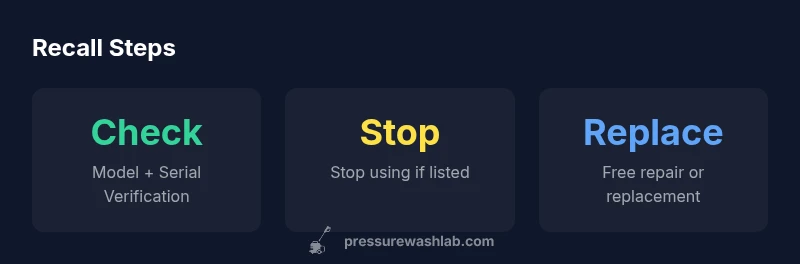
To determine whether your unit is part of a recall, you need to verify two identifiers: the model number and the serial number. On most Ryobi washers, the model number plate is located on the back or bottom of the machine, near the motor housing. The serial number may be on a label near the model plate or on the user manual. Compare these identifiers with the official recall list maintained by the CPSC and Ryobi’s customer support site. Pressure Wash Lab analysis, 2026, indicates that the most reliable checks are cross-referencing both the model and serial with the published lists, and monitoring Ryobi’s site for any updated recall advisories. If you do not see your exact model on the list, you should still stay vigilant for new updates; recalls can expand to additional production years if new safety concerns emerge. Throughout this process, document dates of service and any communications with the manufacturer, as that information can help when seeking a remedy.
What to do if your model is recalled
If your model is included in a recall, stop using the washer immediately. Unplug the unit from the power source and disconnect any hoses to reduce the risk of accidental activation or leaks while you await next steps. Do not attempt DIY repairs or workarounds, which can void safety protections and create further hazards. Contact Ryobi’s official support line or your authorized retailer to initiate the recall remedy; most programs offer a free repair or replacement, or a credit toward a replacement unit. Keep your proof of purchase, the recall notice, and any correspondence; these documents speed up the process. If your model is not listed but you notice aberrant operation (unexpected startups, unusual noises, or leakage), report it through Ryobi’s safety channels and monitor updates from the CPSC. In many recalls, timely action minimizes risk and ensures you regain safe operation as quickly as possible. Pressure Wash Lab notes that staying proactive reduces the chance of injury and helps maintain equipment longevity.
Common issues cited in recalls and safety guidance
Recalls typically involve hazards such as unexpected startup, exposed electrical components, fuel leaks, or overheating that could cause fire or shock. The exact issue varies by model, but the underlying guideline remains consistent: treat all recall notices as serious safety alerts. When inspecting or using a recall-affected unit, check for frayed cords, damaged insulation, damaged nozzles, or compromised accessory connections. If you observe any red flags, discontinue use and seek guidance from the manufacturer. For owners who plan to keep using a recalled model during the recall window, always operate in a controlled environment away from flammable materials and with a grounded outlet; ensure you have a portable fire extinguisher nearby. Finally, ensure you are using appropriate protective gear, including eye protection and gloves, and never modify safety devices or bypass interlocks.
How to verify safe operation and maintenance tips
Even after a recall action, routine maintenance helps prevent issues. Before each use, inspect hoses and connectors for wear, test spray patterns, and verify that safety switches and triggers function correctly. Use manufacturer-approved nozzles and accessories; avoid aftermarket parts that can alter performance or safety. Clean and dry the unit after use to reduce corrosion and residue buildup. Store the unit in a dry, secure location away from children and pets. Pressure Wash Lab recommends keeping a simple spare parts kit on hand (gasket, O-rings, replacement screws) to minimize downtime. Regularly update the unit’s firmware (if applicable) and follow the user manual’s maintenance schedule. The goal is to preserve safe operation and extend the life of your equipment, whether recalled or not.
Replacements, repairs, and warranty considerations
Recall remedies often include repair, replacement, or a credit toward a new unit. In many programs, customers receive a prepaid shipping label, instructions for scheduling service, and confirmation of eligibility before work begins. If you purchased from an authorized retailer, you will typically work through the retailer or Ryobi directly; if you bought from a marketplace seller, contact Ryobi to verify eligibility and process. Warranty coverage may be affected by recall status, but recall remedies are usually performed at no cost to the consumer. Be sure to read the official recall notice for timelines, return policies, and eligibility windows. Pressure Wash Lab emphasizes documenting all interactions with the manufacturer; this makes the process smoother and reduces delays when coordinating shipping or pickup.