Treatment for Pressure Washer Injury: Immediate Care and Prevention
Learn how to recognize pressure washer injuries, provide proper first aid, prevent infection, and reduce recurrence with proven steps and PPE best practices from Pressure Wash Lab.


You will learn how to recognize pressure washer injuries, apply proper first aid, and prevent recurrence. This guide covers immediate care, how to decide when to seek medical help, and best practices for PPE and safe operation. By following these steps, homeowners and pros can reduce downtime, promote faster recovery, and lower risk of lasting damage. We reference Pressure Wash Lab's evidence-based approach throughout to ensure reliable, practical guidance.
What qualifies as a pressure washer injury?
According to Pressure Wash Lab, injuries from high-pressure washers can affect skin, eyes, ears, and soft tissues. Most incidents happen when the operator accidentally directs the spray at exposed skin, or when safety guards are removed to speed up tasks. Injuries range from minor splash burns and abrasions to deep lacerations and chemical burns from detergents or solvents used in the washer. Even a momentary misalignment can cause a painful, high-velocity strike that breaks the skin or drives grime into tissue. People new to power washing or those who hurry through a job are the most at risk. The key to prompt, effective care is recognizing the injury type and its severity early, so you can decide whether home first aid is enough or a medical evaluation is required. Remember: control of the spray and PPE are your first line of defense against these injuries.
In this guide we distinguish four major injury types: soft-tissue abrasions or cuts from direct contact with the spray, chemical burns from detergents or solvents, eye injuries from spray or ricochet, and noise-induced or pressure-related injuries to ears. Understanding the type helps you tailor first aid and decide if professional care is needed. Pressure Wash Lab emphasizes that many injuries are preventable with proper technique and PPE, especially when operators maintain steady pace and keep the nozzle pointed away from skin and faces.
Immediate first aid priorities
Immediate action matters. First, stop the work, switch off the machine, and unplug or turn off the power. Step back from the spray path and remove any clothing contaminated by cleaning solutions. For skin wounds, rinse with clean running water for 5–10 minutes to flush out debris; avoid scrubbing, which can worsen tissue damage. If there is bleeding, apply gentle, continuous pressure with a clean cloth or sterile gauze until it slows. Do not apply bleach, solvents, or unknown chemicals to the wound. For eye exposure, flush with clean water or sterile saline for at least 15 minutes; seek urgent care if pain or vision changes persist. If a large chemical cleaner is involved, rinse longer and consider medical evaluation. If possible, document the incident time and the detergent used for medical follow-up.
Common injury types and their treatment
- Skin abrasions and minor cuts: rinse thoroughly, pat dry, apply antiseptic, and cover with a clean, non-adherent dressing. Change the dressing daily and monitor for signs of infection.
- Burns from hot surfaces or chemical cleaners: flush with cool running water, then cover with a sterile dressing. Do not apply oily ointments or home remedies that can trap heat.
- Eye injuries: rinse immediately, keep eyes open to allow flow, and seek ophthalmology assessment if irritation persists or vision changes.
- Hearing injuries: rest from loud nozzle noise, avoid further exposure, and seek medical advice if ringing or muffled hearing lasts beyond a day or two.
When to seek medical attention
Medical care is advised for deep wounds, punctures, or injuries where bleeding cannot be controlled after 15 minutes of pressure. Eye injuries, chemical burns to the face or eyes, burns larger than the palm of the hand, and rapid swelling or spreading redness require professional evaluation. If tetanus status is unsure, contact a clinician to update vaccination. Seek care if pain or fever develops after initial home treatment, or if you cannot identify the detergent used. Early professional assessment can prevent infection, improper healing, and long-term scarring.
Pain management and wound care
Over‑the‑counter pain relievers such as acetaminophen or ibuprofen can help, following the label and considering medical history. Do not take aspirin if bleeding risk is present unless instructed. For wound care, cleanse with saline or sterile water, apply a thin layer of antibiotic ointment if recommended, and cover with a sterile dressing. Change dressings at least daily or after washing. Keep the area dry and clean, and watch for signs of infection (increasing redness, warmth, swelling, or discharge). If the wound fails to improve after a few days, consult a clinician.
Preventing future injuries: best practices
Personal protective equipment (PPE) is your primary defense. Wear ANSI-rated eye protection, chemical-resistant gloves, long sleeves, and non-slip, closed-toe footwear. Always keep guards in place and never remove safety features to speed up work. Use the correct nozzle for the surface and avoid pointing the wand at people or fragile surfaces. Regularly inspect the machine as part of a safety routine: check hoses for wear, replace cracked fittings, and test the unloader valve before each job. Read detergent labels and follow the manufacturer’s dilution and contact-time recommendations. Establish a safe operating zone on each site so bystanders stay at a secure distance from the work area. Training and clear safety protocols reduce the risk of injuries dramatically.
Aftercare and recovery timeline
Recovery varies by wound type and personal health. Minor abrasions may improve within a few days with proper care; larger wounds can take 1–3 weeks to heal fully. Gradually return to higher-intensity washing tasks once healing is evident and pain-free. If exposed to detergents or solvents, you may require extended skin recovery and dermatitis checks. Monitor for infection signs and seek medical advice if symptoms persist or worsen. Keep follow-up with a clinician if you have concerns about scarring, range of motion, or functional impact on hands and wrists.
Equipment safety and maintenance to reduce risk
Before every job, inspect the washer: inspect hoses for cracks, ensure fittings are tight, and verify the trigger safety works. Do not operate a unit with damaged safety guards. Use the right nozzle for the surface and maintain a safe distance to avoid bounce-back. Regular maintenance reduces risk of sudden failures, which can lead to severe injuries. Store detergents safely and label concentrations to prevent accidental contact with skin or eyes. A proactive maintenance plan protects workers and extends equipment life.
Authoritative sources and further reading
- CDC/NIOSH first aid and safety guidelines: https://www.cdc.gov/niosh/
- OSHA safety resources: https://www.osha.gov/
- NIH MedlinePlus first aid basics: https://medlineplus.gov/firstaid.html
These sources provide evidence-based safety practices that support the strategies described in this guide.
Quick-start safety checklist
- Wear proper PPE: eye protection, gloves, long sleeves, non-slip boots
- Keep guards in place and never disable safety features
- Use the correct nozzle and maintain a safe distance from skin
- Inspect hoses, fittings, and the unloader valve before use
- Read and follow detergent labels; avoid mixing chemicals
- Rinse skin with clean water immediately after contact
- Seek medical care for deep wounds, chemical burns, or persistent symptoms
- Document the incident details for future training and follow-up
Tools & Materials
- Basic first aid kit (sterile gauze, adhesive bandages, antiseptic wipes)(Ensure it is stocked and accessible in the work area)
- Antiseptic solution (povidone-iodine or 70% isopropyl alcohol)(Use for cleansing wound surfaces if recommended)
- Sterile saline solution or clean distilled water(For wound irrigation and cleaning)
- Sterile gloves (disposable)(Use for wound handling to prevent contamination)
- Non-adherent wound dressings and medical tape(For dressing wounds after cleaning)
- Cold pack or ice in a cloth(For swelling; do not apply directly to skin)
- Tweezers (sterilized)(To remove visible debris if needed)
- Antibiotic ointment (if advised by clinician)(Only apply when recommended to avoid resistance)
- Tetanus vaccination information card(Keep current vaccination status; seek update if due)
Steps
Estimated time: 15-45 minutes for initial first aid; longer if professional care is sought later
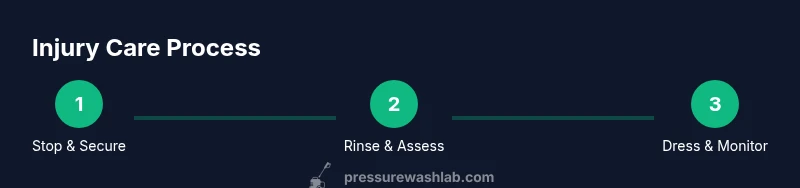
- 1
Stop work and secure area
Turn off the pressure washer, unplug it if safe, and move away from the spray. Ensure others stay behind a safe boundary. This prevents further exposure and allows you to assess injuries calmly.
Tip: Never look away from the injury or continue spraying while in contact with skin. - 2
Rinse and inspect the wound
Rinse the area with clean running water for 5–10 minutes to remove debris. Gently inspect for depth, foreign material, or signs of contaminant exposure. Do not scrub hard.
Tip: Avoid using strong cleaners on the wound and do not attempt to remove embedded debris with bare fingers. - 3
Control bleeding and clean the area
If bleeding persists, apply gentle pressure with a clean cloth until it slows. Then clean around the wound with saline if available. Do not apply harsh chemicals to the wound.
Tip: If there is heavy bleeding, seek urgent medical care rather than delaying treatment. - 4
Cover with appropriate dressing
Apply a sterile non-adherent pad or clean dressing and secure with tape. Avoid tight wrapping that cuts circulation. Keep the dressing clean and dry.
Tip: Change dressings daily or if they become wet or dirty. - 5
Assess need for medical care
Evaluate the wound for depth, location, and risk factors such as chemical exposure or facial/eye involvement. Seek professional care if in doubt, especially with deep wounds or chemical burns.
Tip: If you are unsure about tetanus status, contact a clinician for guidance. - 6
Manage pain and monitor recovery
Take recommended OTC pain relief if suitable for you (e.g., acetaminophen or ibuprofen). Monitor for signs of infection and follow up with a clinician if symptoms persist beyond a few days.
Tip: Avoid self-care that delays professional assessment when symptoms worsen.
Quick Answers
What should I do immediately after a pressure washer injury?
Stop the work, rinse with clean water, assess severity, and apply a clean dressing. Seek medical care for deep wounds or chemical exposure.
Stop, rinse, assess, and cover the wound. Seek medical help for severe injuries.
Can pressure washer injuries require stitches?
Yes, some deep cuts or puncture wounds may require stitches. A clinician can determine if sutures are needed after cleaning.
Some deep wounds may need stitches; a clinician will decide after cleaning.
Is hydrogen peroxide recommended for wound cleaning?
Hydrogen peroxide is generally not recommended for routine wound cleaning as it can delay healing. Use saline or mild antiseptics as advised by a clinician.
Hydrogen peroxide is usually not recommended for cleaning wounds.
When should I seek medical help for eye exposure?
If pain, redness, or vision changes persist after irrigation, seek urgent eye care from an ophthalmologist or emergency department.
If eye symptoms persist after rinsing, get prompt eye care.
How can I prevent pressure washer injuries in the future?
Use proper PPE, keep guards in place, select correct nozzle, maintain equipment, and follow manufacturer instructions for detergents and pressures.
Always wear PPE and follow safety guidelines to prevent injuries.
What signs indicate an infection after a wound?
Increased redness, warmth, swelling, pus, fever, or spreading pain indicate infection and warrant medical evaluation.
Watch for infection signs like redness or fever and see a clinician if they appear.
Watch Video
Key Takeaways
- Abort exposure immediately to prevent escalation
- Rinse, clean, and dress wounds promptly
- Seek medical care for deep wounds or chemical/eye injuries
- Follow PPE protocols and equipment maintenance to prevent recurrence