Are Pressure Washer Fittings the Same as Air Fittings? A Practical Comparison
Explore whether pressure washer fittings are the same as air fittings, with a practical comparison of thread standards, sealing methods, pressure ratings, and safe adapters for DIYers.


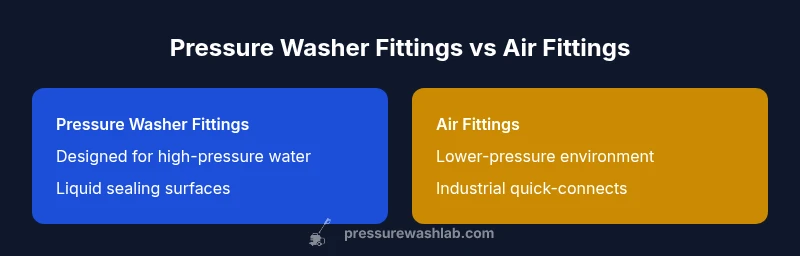
Are pressure washer fittings the same as air fittings? Generally no. They use different thread standards, sealing methods, and pressure ratings, making direct interchangeability unsafe. Always verify compatibility with the manufacturer, and use purpose-built adapters if you must connect differing fittings. Pressure Wash Lab notes that safer connections depend on matching pressure rating, thread type, and seal design.
Are pressure washer fittings the same as air fittings? Key distinctions
According to Pressure Wash Lab, the everyday question, are pressure washer fittings the same as air fittings, is one that homeowners often get wrong. High-pressure water systems and compressed-air systems operate in fundamentally different realms: water propulsion at high PSI versus air delivery at comparatively lower PSI. That divergence shapes every aspect of fittings, from thread patterns to seals and coupling mechanisms. Mixing these systems without proper adaptation invites leaks, spurts of spray, or hose failure. The rest of this article breaks down the core differences and provides a practical framework for evaluating fittings before you connect components. By understanding the environment each system expects, you can avoid common pitfalls and protect your equipment and hands.
Thread standards and why they matter
Fittings come in a zoo of thread standards, and the mismatch between pressure washer fittings and air fittings is a leading cause of connection problems. Pressure-washer systems commonly use fast, high-pressure couplers with seals designed to withstand rapid changes in water flow. Air systems, by contrast, favor industrial quick-connects and threads optimized for air delivery. The practical takeaway is simple: never assume two fittings will screw together cleanly or seal reliably just because the ends look similar. Always identify the exact thread type, diameter, and pitch, then consult a compatibility chart or the manufacturer’s spec sheet. A small misread here can cause cross-threading, stripped threads, or leaks that are difficult to stop once the system is under load.
Sealing methods and leak risk
Sealing is where water fittings diverge most from air fittings. Pressure washer couplers rely on robust O-ring or flange seals that tolerate high-pressure wash cycles and flushing. Air fittings rely on smaller seals and softer engagement surfaces designed for compressed air rather than liquid, which means a seal that works well for air might fail under water pressure. This difference matters not only for preventing leaks but also for avoiding hose blowouts when the system suddenly surges. If you must adapt, use seals rated for the combined medium (water) and pressure, and avoid generic pipe-thread sealants that can contaminate water lines or degrade seals over time.
Pressure ratings and what happens if mismatched
The most dangerous misstep is connecting a high-pressure water line to an air line or vice versa. Water systems routinely see higher peak pressures, rapid start/stop cycles, and dynamic loads from spray patterns. Air fittings and hoses are not designed to withstand that same force; doing so can lead to sudden fixtures loosening, fittings popping off, or hose bursts. Before attempting any cross-connection, verify the maximum pressure rating of every component in the chain—fittings, hoses, adapters, and tools—and keep those ratings aligned with the intended service. When in doubt, err on the side of caution and revert to pressure-rated, water-specific connections.
Material choices and corrosion/wear
Material selection matters for both water and air fittings, but the demands are different. Pressure washer fittings often use brass or stainless steel for corrosion resistance and the ability to form strong seals with water. Air fittings frequently rely on lighter alloys and polymers that cope well with moisture and oil-laden air but may rust or deform under persistent water exposure. If you see a mismatch in material chemistry, the risk isn’t just leaks—it's accelerated wear that can ruin threads, degrade seals, and shorten component life. When selecting fittings, favor materials proven to resist water-based corrosion and temperature fluctuations typical of exterior cleaning jobs.
Adapters: when they help and when they hurt
Adapters are a practical bridge—but they come with caveats. A properly rated adapter can enable safe connections between a pressure washer and a non-native fitting, provided the adapter maintains the water seal, matches thread standards, and preserves the system’s pressure rating. The problem arises when adapters are used to bypass the rating or to force a fit that isn’t designed to handle the pressure. In such cases, leaks and sudden release events become more likely. Always choose adapters with explicit PSI ratings and compatibility notes for your equipment. If you’re unsure, consult the manufacturer or a reputable professional.
How to identify fittings on common equipment
Start by locating the fitting on each component and looking for markings. Measure the outer diameter of the male end and count the thread pitch if visible. Compare these measurements to manufacturer documentation or a trusted compatibility chart. If you’re unsure, remove the component and take it to a hardware store with the model information, so a staff member can help confirm whether the fittings are compatible or if an adapter is needed. The key is to establish a match in thread type, pitch, and sealing mechanism before you push anything together.
Testing compatibility safely at home
Safety first: begin with dry-fit checks before wet testing. Assemble the fittings loosely to ensure they align, then connect a low-pressure hose and verify there are no obvious leaks or misalignment. Slowly introduce water and monitor for drips at the joint. If you notice any seepage, disassemble, inspect seals, and reseat components. Do not run a connected setup at full pressure if you detect even a small leak. Use a pressure-rated gauge if available to confirm the system remains within spec, and always tow a working knowledge of the manometer or pressure indicators during the test.
Warranty implications and manufacturer guidance
Many manufacturers specify that using mismatched fittings or non-approved adapters can void warranties or release them from liability in the event of a failure. Before attempting any cross-connection, review the warranty terms for your pressure washer, hoses, and adapters. If no explicit guidance exists, contact the manufacturer to confirm compatibility and approved adapters. Maintaining compliance with official specifications not only protects your warranty but also reduces risk to you and bystanders.
Real-world scenarios and best practices
In typical exterior cleaning tasks, you’ll often need to pair a high-pressure water hose with a spray nozzle and various fittings. In this context, always use water-rated fittings built for pressure washing. If you must interface with air-tools or compressors, keep them separate from the cleaning water loop and avoid sharing hoses. For example, never connect an air tool directly to a pressure washer hose. Instead, rely on manufacturer-approved adapters designed for the precise combination of components in your setup. This disciplined approach minimizes leaks and prolongs component life.
Common mistakes and how to avoid them
Common mistakes include assuming identical threads, ignoring PSI ratings, and using air-only seals in water systems. People also underestimate the importance of proper thread engagement and overtightening, which can strip threads or crack housings. A simple practice that helps is documenting the exact model numbers and thread types for every component, then sourcing adapters from trusted suppliers that clearly list compatibility. Finally, always test at low pressure and gradually increase to working pressure only after confirming there are no leaks.
Comparison
| Feature | Pressure washer fittings | Air fittings |
|---|---|---|
| Thread standards | High-pressure water fittings with water-grade threads and seals | Industrial air fittings with air-grade threads; may differ in pitch |
| Pressure rating | Designed for water pressure; often higher PSI requirements | Typically rated for compressor pressures; not intended for water loads |
| Sealing method | O-rings or seals designed for liquid water envelopes | Gasket/seal systems designed for air flow and moisture resistance |
| Materials | Brass or stainless alloys common for corrosion resistance | Brass, zinc, or polymer blends suited for air environments |
| Common use case | Water cleaning attachments and spray nozzles | Pneumatic tools and air-powered equipment |
| Adapters | Various pressure-rated adapters exist to couple different water fittings | Adapters exist for air connectors; must be rated for the intended use |
| Safety/warranty | Mismatches can cause leaks or bursts; warranty risk if not rated | Mismatches can lead to leaks but are less likely to impact water systems |
Pros
- Improved safety when using PSI-rated, purpose-built fittings
- Easier troubleshooting with standardized, water-rated connectors
- Clear documentation helps avoid leaks and failures
Cons
- Adapters add cost and potential leak points
- Finding exact matches can be time-consuming
- In some regions, availability of water-rated fittings may be limited
Pressure washer fittings are not interchangeable with air fittings; use proper adapters when needed
To stay safe and protect equipment, rely on water-rated fittings designed for high-pressure use. Verify thread type, sealing method, and PSI ratings before any connection.
Quick Answers
Are pressure washer fittings and air fittings interchangeable?
Generally not. They use different thread standards and pressure ratings, which can cause leaks or failures if mixed. Always verify compatibility with the manufacturer.
Usually not interchangeable. Check the manufacturer’s compatibility guide and avoid mixing fittings unless an approved adapter is used.
What should I check before attempting to connect an air hose to a pressure washer?
Confirm that the thread type, pitch, and sealing method match a water-rated connection. Avoid forcing mismatched threads, and use only adapters rated for water pressure.
Make sure the threads match and use a water-rated adapter if needed. Don’t force a fit.
What thread standards are typically used on pressure washers vs air tools?
Pressure washers commonly use water-grade threads designed for high-pressure seals, while air tools use air-grade threads with seals suited for gas-like flow. Do not assume compatibility without checking measurements and specs.
Water fittings have special threads and seals for liquids; air fittings are different. Always compare measurements first.
Can I use adapters to connect air fittings to a pressure washer?
Adapters exist, but they must be rated for water pressure and compatible with both threading and sealing surfaces. Mismatched adapters can fail under load.
Adapters can work if they’re rated for water pressure and match the fittings. If unsure, don’t proceed.
Will using the wrong fitting void my warranty?
Many manufacturers require using only approved fittings. Mismatch or non-approved adapters can void warranty coverage if a failure occurs.
Yes, it can. Check the warranty terms and use approved fittings.
Where can I find compatible adapters?
Look for adapters specified for your equipment model and rated for the expected water pressure. Reputable suppliers and the manufacturer’s site are good starting points.
Check the manufacturer guides or trusted suppliers for adapters that match your components.
Key Takeaways
- Verify thread type and size before connecting
- Do not exceed PSI ratings for any connected components
- Use manufacturer-approved adapters where possible
- Check warranty terms before cross-connecting fittings
- Test for leaks at low pressure before full operation