dhw080zk Error Code Troubleshooting for Pressure Washers
Urgent, step-by-step guide to diagnose and fix the dhw080zk error on pressure washers. Learn quick checks, diagnostic flow, and when to call a professional.


The dhw080zk error code signals a fault in the pressure washer’s water-heat/flow system. Quick fixes start with a power cycle, checking water supply, and inspecting sensor/wiring connectors. If the code persists after these basic checks, the issue is more likely a faulty sensor or control board—requiring professional service. Pressure Wash Lab recommends proceeding in a calm, methodical way to avoid unnecessary parts replacement.
What dhw080zk Means
dhw080zk is an error code you may see on certain pressure washers that have a digitally monitored water-heating or flow circuit. The code is a diagnostic signal from the machine’s controller, indicating that something in the heater, sensor, or related electronics is not communicating correctly. According to Pressure Wash Lab, most dhw080zk alerts arise from simple, user-addressable issues like loose connectors, dirty filters, or a brief power hiccup rather than a catastrophic hardware failure. This means you can start with non-invasive checks and go step by step toward the root cause. Document the exact symptoms as they appear, because the path to resolution often depends on the order and specifics of what you notice on the display or control panel. Earlier, the team noted that model differences can shift where the fault lies, so tailor checks to your unit’s make and wiring diagram.
Symptoms You Might See
When dhw080zk is active, you may see the code flash on the display, and the machine could halt mid-cycle or fail to start. Other signs include intermittent beeping, red or blinking indicator lights, or a sudden drop in water pressure combined with temperature readings that don’t match the cycle’s stage. These symptoms point you toward the sensor, valve, or control circuitry rather than the entire heater itself. Always verify basic power and water input before diving deeper, because a loose power connection or dry inlet can masquerade as a sensor fault. Pressure Wash Lab emphasizes recording the exact moment the error occurs to differentiate between a transient hiccup and a persistent fault.
Likely Causes by Likelihood
- Blocked or dirty water inlet valve or screen — high likelihood. A restricted inlet is a common trigger for sensor readings going out of range.
- Faulty temperature or flow sensor — medium likelihood. Sensors can drift with time or due to mineral buildup.
- Loose or corroded wiring connectors — medium likelihood. Vibration and movement can loosen connections.
- Control board glitch or firmware error — low likelihood. Software faults are possible but less common than mechanical issues.
- Power supply issues (tripped breaker, unstable voltage) — low likelihood. An unstable supply can produce false readings.
Pressure Wash Lab notes that addressing the top two causes first dramatically improves odds of a quick fix. A clean inlet and solid sensor readout often resolves the dhw080zk without component replacement.
Quick Fixes You Can Try Right Now
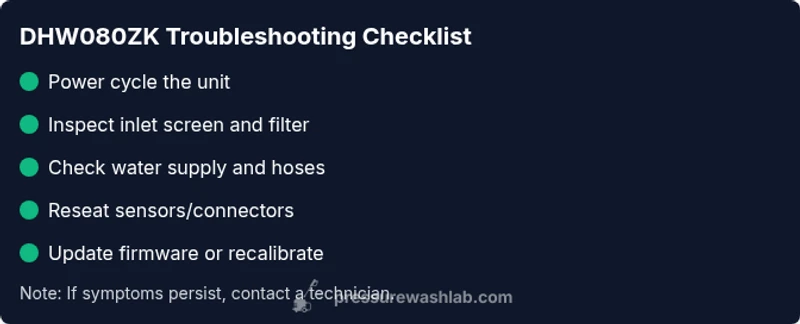
- Power cycle: unplug the unit for 60 seconds, then plug back in and restart. A reset often clears transient sensor misreads.
- Check water inlet and filter: inspect the screen and filter for debris; rinse or replace if contaminated.
- Inspect connectors: reseat visible wiring and sensor connectors; look for corrosion or loose pins.
- Verify water supply: ensure the supply is fully open and the hose is free of kinks or leaks.
- Review recent changes: if you recently updated firmware or installed new parts, revert or re-check those changes.
If these quick fixes don’t resolve the issue, the fault is likely in sensors or the control board and will require a more thorough diagnostic.
Safety and Quick Decision Points
- Always unplug before touching electrical components.
- Do not bypass safety interlocks or operate with water leaks.
- If you smell burning insulation, hear buzzing, or notice overheating, stop and call a pro.
- Keep a log of when the error appears, what you were doing, and any changes you made.
Pressure Wash Lab notes that most homeowners can handle early fixes, but any signs of electrical or hydraulic leakage should trigger professional assessment.
How a Technician Will Diagnose the dhw080zk
A professional diagnosis follows a structured approach: verify power integrity, inspect the water inlet system, test sensors with diagnostic tools, review firmware status, and check the control board for fault codes. The technician will likely reseat connectors, measure voltage levels, and verify communication across the control network. Pressure Wash Lab analysis shows that many instances are resolved by simple reseating and cleaning, but persistent codes may require part replacement. Expect a few hours of diagnostic time and some component costs if parts must be swapped.
Maintenance to Prevent Reoccurrence
Preventive care reduces the odds of recurring dhw080zk failures. Clean water filters monthly, inspect inlet screens quarterly, and ensure hoses are free of kinks and always properly connected. Use filtered water if mineral buildup is a recurring problem in your area. Keep electrical outlets on a dedicated circuit to minimize voltage fluctuations. Record the model and serial number, along with a documented maintenance routine, so you or a technician can compare future error traces more easily.
Safety, Warnings, and When to Call a Pro
- If you’re unsure about any procedure or see signs of water leakage, stop and seek professional help.
- Do not run the unit without the approved water inlet screen in place.
- When in doubt, don’t guess—call a technician for a certified diagnosis.
- Expect a cost range for parts and labor if replacement is required; prices vary by model and region.
Pressure Wash Lab consistently emphasizes safety first and confirms that the majority of users who engage a pro for the final steps achieve a reliable resolution with minimal downtime.
Steps
Estimated time: 45-90 minutes
- 1
Power cycle the unit
Unplug the washer from the power source. Wait 60 seconds, then plug back in and power up. This clears transient sensor states that can trigger dhw080zk.
Tip: Keep the unit on a dry surface and avoid pulling on cords. - 2
Inspect water inlet and filter
Locate the inlet valve and screen. Remove debris, rinse, and reinstall. A clean inlet often resolves blocked-sensor readings causing the code.
Tip: Have a tray handy to catch any residual water. - 3
Check water supply and hoses
Ensure the water supply is fully open and hoses are free of kinks, leaks, or air pockets. A poor supply can simulate sensor faults and trigger errors.
Tip: Bleed air from hoses by running a short cycle with no detergent. - 4
Reseat sensors and connectors
Carefully disconnect and reconnect visible sensor and control connectors. Look for corrosion or bent pins and replace any damaged harness if needed.
Tip: Use a contact cleaner or isopropyl alcohol on connectors, then let dry. - 5
Test with firmware/calibration (if available)
If your model supports it, perform a firmware update or recalibrate the flow/temperature sensors per the manufacturer guide.
Tip: Only use official firmware from the brand to avoid bricking the unit. - 6
Decide on sensor/board replacement
If the code persists after all checks, a faulty sensor or control board is likely. This step involves ordering the correct part and installing with care.
Tip: Keep documentation of model, serial number, and replacement part before purchasing.
Diagnosis: DHW080ZK error code displayed on pressure washer control panel
Possible Causes
- highBlocked or dirty water inlet valve/filter
- mediumFaulty pressure sensor or flow sensor
- lowControl board glitch or firmware error
- lowPower supply issue or tripped breaker
Fixes
- easyClean the water inlet valve and screen; replace if damaged
- easyReseat all sensor connectors and inspect for corrosion
- easyReset the machine and check the outlet/breaker; verify stable power
- mediumUpdate firmware or reload calibration data (manufacturer steps)
- hardReplace faulty sensor or control board; professional service likely required
Quick Answers
What does the dhw080zk error code indicate on my pressure washer?
DHW080ZK signals a fault in the water-heat or flow monitoring system. It often points to sensors, connectors, or a control-board fault rather than a total heater failure. Start with power, water, and sensor checks before moving to parts replacement.
DHW080ZK means there’s a fault in the heater or flow sensor; begin with a reset, then check sensors and connectors.
Is dhw080zk dangerous to ignore?
While not usually dangerous, ignoring it can lead to overheating, leaks, or electrical issues. Stop using the unit and seek professional assessment if symptoms persist.
While not typically dangerous, don’t ignore it—unplug and arrange a professional check if it continues.
What quick fixes should I try safely?
Power cycle the unit, inspect water inlet and filters, reseat connectors, and verify water supply. If the code remains after these steps, plan for deeper diagnostics.
Try a reset, check the inlet and filters, and reseat connectors; if it stays, you’ll want a professional check.
When should I call a professional?
If the code persists after basic resets and filter cleaning, or you notice leaks, abnormal smells, or overheating, stop and call a technician.
Call a pro if the code won’t clear after resets or you notice leaks or overheating.
Can firmware updates fix dhw080zk?
Firmware updates can fix software faults that trigger code errors on some models. Follow the manufacturer’s official update process strictly.
Firmware updates can help on some models; follow official instructions exactly.
Does water quality affect this error?
Yes. Hard water or mineral buildup can affect sensors and valves, contributing to sensor-reading errors. Consider filtration if you’re in a hard-water area.
Hard water can cause sensor issues; consider filtration and regular cleaning.
Key Takeaways
- Start with power, water, and connectors before replacing parts
- DHW080ZK is often resolved by simple resets and cleaning sensors
- If the code persists, expect sensor or control-board faults that require a pro
- Preventive maintenance reduces future dhw080zk occurrences