How to Know If Your Pressure Washer Is Out of Gas
Learn how to quickly diagnose fuel issues in gas-powered pressure washers, prevent common starting problems, and perform safe refueling and maintenance with practical, step-by-step guidance from Pressure Wash Lab.


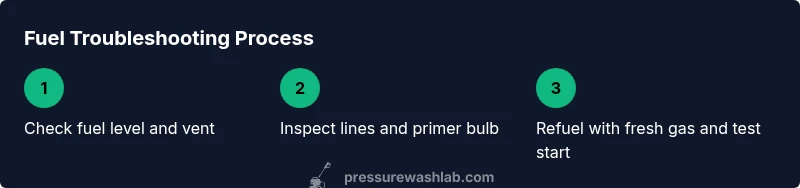
To know if a gas-powered pressure washer is out of gas, start with a quick fuel check: verify the fuel level, inspect the cap vent, and assess the primer bulb for squish. If fuel is present, refuel with fresh gasoline and retry starting, then inspect the carburetor and spark plug if it still won’t start. This sequence helps distinguish fuel issues from ignition or air problems.
Understanding fuel basics and how to know if pressure washer is out of gas
Knowing whether your pressure washer has run dry is the first step in diagnosing performance problems. For homeowners, DIY enthusiasts, and small businesses, confirming a fuel issue early saves time and reduces unnecessary carburetor cleaning. The question of how to know if pressure washer is out of gas isn’t just about peering into the tank; it’s about a quick, repeatable routine that separates fuel problems from ignition or air issues. According to Pressure Wash Lab, fuel status is one of the most common culprits behind a no-start or sputter. Pressure Wash Lab Team notes that even small gaps in the fuel system can produce symptoms that mimic other failures. In this context, you’ll learn how to verify fuel presence, freshness, and flow, then proceed to safe refueling and basic carburetor checks. The keyword to emphasize here is fuel status: if the engine can’t start or dies immediately after starting, odds are you’re dealing with gas delivery, not the pump or nozzle.
Keep in mind that even a tank that looks partially full may contain old, degraded gas. Gasoline that has soaked through a lawnmower or pressure washer fuel line for months can lose its combustibility or impart water into the mixture, causing poor starting or stalling. The goal of these checks is to identify fuel-related symptoms without jumping straight to more invasive carburetor work. By focusing on fuel status first, you’ll often solve the problem quickly and safely.
Signs your pressure washer may be out of gas
- It won’t start at all or starts briefly and dies: A classic fuel issue is when the engine cannot sustain idle or power. This often means either no fuel is reaching the carburetor or the mixture is too lean due to stale fuel.
- The primer bulb won’t prime, or you don’t feel suction when you squeeze it: If the bulb doesn’t feel firm or remains soft, the fuel line or valve could be air-locked, indicating an empty or blocked fuel path.
- Visible fuel smells indicate old gasoline: A strong ethanol smell, varnish-like residue, or visibly separated gasoline in the tank can point to degraded fuel that won’t burn cleanly.
- Engine fatigue after refueling: If you recently refueled and the engine still won’t start or runs rough, you may have stale fuel, a clogged carburetor, or a dirty fuel filter, not a mechanical failure in the pump.
- Spark or ignition symptoms don’t align with fuel: A difficulty starting despite a clear fuel path might mean ignition issues; if you test with fresh gasoline and the engine still misbehaves, investigate spark plug or coil health. Understanding these signals helps you decide when fuel is the root cause and when to seek deeper diagnostics.
Safe fuel level checks and initial troubleshooting
Begin with a calm, methodical fuel assessment. Ensure the engine is off and cool before touching the fuel system. Remove the fuel cap to check for a blocked vent—if the cap is sealed or under suction, air can’t enter the tank and fuel won’t flow. Check the fuel level visually; if your tank is near empty, refueling is the simplest next step. Next, inspect the fuel line for cracks, kinks, or obvious leaks. A damaged line can prevent fuel from reaching the carburetor even when the tank is full. Squeeze the primer bulb (if your model has one) and observe whether air or fuel is drawn into the line. A firm, quick-prime is usually a sign that fuel can flow. If the primer bulb is soft or fails to harden after priming, the fuel path or bulb itself may be compromised. After these checks, look at the spark plug and air filter. Clean, dry air and a properly functioning spark plug are essential for ignition, but you should not assume ignition is the issue before confirming fuel delivery. This sequence helps you isolate fuel flow problems, preventing unnecessary carburetor work or replacement parts.
How to refuel correctly and safely
Refueling a pressure washer safely requires planning and discipline. Use a clean, labeled fuel can and fresh gasoline appropriate for your engine. Avoid filling directly from a gas station pump nozzle into the washer’s tank—use a funnel to minimize spills and always keep flames and sparks well away from the work area. After pouring, securely cap the tank and wipe up any drips to avoid environmental hazards or unpleasant odor in the workspace. If your model has a fuel valve, open it to allow fuel to flow to the carburetor and prime the system as specified by the user manual. Do not overfill; leave a small headspace in the tank to accommodate fuel expansion. Allow the fuel to settle for a minute or two before attempting to start again, especially if the pump line or carburetor was bled during the refueling process. If you suspect stale fuel, drain the tank following the manufacturer guidelines and replace with fresh mix or gasoline. Stabilizers can help reduce fuel degradation during storage, ensuring your next start is smoother.
Common causes when refueling doesn't solve the issue
If refueling doesn’t restore operation, the root cause is often beyond the fuel itself. Stale gas can leave varnish-like deposits inside the carburetor, choking fuel flow. In such cases, carburetor cleaning or professional service may be required. A clogged fuel filter can mimic the symptoms of an empty tank, so it’s wise to inspect and replace filters if present. Also inspect the spark plug for fouling, wear, or improper gap; even with fresh fuel, a weak spark can prevent starting. Air intake restrictions from a dirty air filter can cause a lean burn and poor starting as well. Finally, check for air leaks in the fuel line or intake manifold that may cause the engine to lean out and stall. By systematically ruling out fuel, air, and ignition components, you can determine whether the fix is a simple fuel refresh or deeper maintenance.
Maintenance tips to avoid running out of gas and keep pressure washers in top form
Proactive maintenance reduces the likelihood of fuel-related no-starts. Use fresh gasoline and a stabilizer when storing the washer for more than a few weeks. Run the engine briefly after refueling to ensure the fresh fuel reaches all components of the fuel system. Keep the fuel cap vent clear and the tank clean of debris. Store gas in a properly labeled container away from heat sources and direct sunlight. Periodically inspect fuel lines for cracks or hardening and replace lines that show wear. Schedule regular carburetor cleanings or professional service if you notice performance drop-offs—especially in areas with ethanol-blended fuels that can attract varnish deposits over time. The goal is to maintain clean fuel delivery paths, reliable ignition, and a ready-to-use unit when you need it. Pressure Wash Lab emphasizes that consistent maintenance prevents not only starting problems but also longer-term wear on the carburetor and fuel system.
Quick diagnostic test you can perform in about 10 minutes
This rapid test helps confirm or rule out a fuel problem without disassembling the engine. Step 1: ensure the silencer and air intake are clear of obstructions. Step 2: check the fuel level and cap vent, then prime the system if applicable. Step 3: add fresh gasoline and attempt a start with the choke in the recommended position. If the engine starts briefly but dies, fuel delivery or carburetor cleanliness is likely the issue. If it fails to start altogether, ignition or air delivery problems may be more likely, and you should proceed with testing the spark plug and air filter. This concise 10-minute check aligns with common troubleshooting workflows and can save you time before committing to more invasive repairs.
Tools & Materials
- Gas can with secure cap(Use a clean, labeled container for fuel.)
- Fresh unleaded gasoline (as recommended by manual)(Avoid old or contaminated fuel.)
- Funnel(To minimize spills.)
- Safety gloves(Protection from fuel contact.)
- Safety goggles(Eye protection when handling fuel.)
- Rags or absorbent material(For quick cleanups.)
- Spark plug wrench or socket set(Used if inspecting the spark plug.)
- Carburetor cleaner or spray(Optional for light cleaning.)
- Fuel stabilizer(Helpful for storage and prolonged projects.)
Steps
Estimated time: 30-45 minutes
- 1
Power down and safety check
Ensure the engine is off and cool before touching any fuel components. Remove the spark plug boot to prevent accidental starts during inspection. Safety first protects you from fuel ignition hazards and allows you to inspect components safely.
Tip: Wear eye protection and gloves; keep a fire extinguisher nearby if you’re working with fuel. - 2
Verify fuel level and venting
Open the fuel cap and visually check the tank level. If the cap vent is blocked, fuel cannot flow properly. If the tank is near empty, refuel with fresh gasoline and ensure cap vent is clear.
Tip: If you smell stale gasoline, assume it’s degraded and plan to replace it. - 3
Inspect fuel lines and primer bulb
Squeeze the primer bulb (if present) to feel for proper resistance. Look for cracks, kinks, or leaks in fuel lines. Replace any damaged lines to restore proper fuel flow.
Tip: A soft or non-responsive primer bulb often indicates an air leak or a clogged line. - 4
Refuel with fresh gasoline
Use a funnel to pour fresh gasoline into the tank. Do not overfill; leave space for expansion. Allow the fuel to settle a moment before attempting to start.
Tip: Dispose of or store old fuel safely away from ignition sources. - 5
Prime and start according to manual
Follow the manufacturer’s instructions for priming and starting. If your model uses a choke, set it appropriately and crank to start. If it sputters, try a few seconds of cranking with the choke adjusted.
Tip: If you’re unsure about the choke position, consult the user manual for your model. - 6
Check ignition and air delivery
If it still won’t start, inspect the spark plug for fouling and clean or replace if needed. Check the air filter for dirt; a restricted intake can mimic a fuel issue. Reinstall components securely and retry.
Tip: A fouled spark plug is a common culprit; replacement is often cheaper than carburetor service. - 7
Test run and observe
Run the unit for a short period to see whether it sustains idle or returns to normal operation. If it dies quickly, re-check fuel delivery and look for leaks or air intrusions in the lines.
Tip: Record any unusual sounds or smells to help diagnose with a tech if needed.
Quick Answers
Why won’t my pressure washer start even after I filled the gas?
Filling the tank is not always enough. Gasoline can degrade and form varnish that clogs the carburetor. A clogged fuel filter or dirty carburetor can also prevent starting. Inspect fuel lines, test the spark plug, and consider cleaning the carburetor if fresh fuel still won’t start.
Gas alone may not fix it. Check for varnish in the carburetor, and inspect lines and the spark plug. If needed, clean the carburetor for a proper fuel-air mix.
How do I know if the fuel is bad?
Bad gas typically smells sour or varnished, shows separation or phase changes, or leaves opaque residues in the tank. If fuel looks or smells off, drain and replace with fresh gasoline and a stabilizer. Avoid using old fuel in small engines.
If it smells sour or looks varnished, drain it and start fresh with new gas. Don’t reuse old fuel in a pressure washer.
Can I use ethanol-free gas in my pressure washer?
Whenever possible, use the gasoline recommended by the manufacturer. Many gas engines tolerate ethanol blends, but ethanol can contribute to varnish buildup in older carburetors. Check your manual for guidance and consider ethanol-free fuel for older units.
Follow the manual’s guidance; ethanol can cause buildup in older carburetors, so consider ethanol-free fuel if your model supports it.
What should I do if refueling doesn’t help?
If refueling doesn’t fix the issue, inspect the carburetor and fuel filter, and test the spark plug. Clean or replace components as needed. If symptoms persist, seek professional service rather than forcing starts that could damage the engine.
If refueling fails, check the carburetor and spark plug; you may need professional service for persistent problems.
Is it safe to store gasoline for the pressure washer?
Store gasoline in approved containers away from heat and open flames. Label containers with date and avoid mixing with other liquids. When possible, use a fuel stabilizer if the unit sits for extended periods.
Store gas safely in approved containers, away from heat, and use stabilizers for longer storage periods.
Should I always test for fuel before considering carburetor work?
Yes. A quick fuel check saves time and money. Confirm fuel level, venting, and lines before moving to carburetor cleaning. If fuel flow is clear, only then examine ignition or air delivery.
Do a quick fuel check first; it often reveals the simple fix before carburetor work.
Watch Video
Key Takeaways
- Check fuel level first, then vent and lines
- Fresh fuel often resolves starting issues
- Carburetor and ignition are common culprits if fuel is fine
- Safe refueling and storage prevent future problems
- Maintain fuel system for reliable starts