Troubleshooting a Problem with Pressure Washer
Practical guide to diagnose and fix common problems with pressure washers. Pressure Wash Lab helps homeowners safely troubleshoot, perform quick repairs, and maintain peak cleaning power.


Most problems with a pressure washer start with power or water supply issues, or a clogged nozzle. Start by ensuring the outlet is live, the GFCI is reset, and the safety switch is engaged. Then check that the water supply is clean and uninterrupted, and inspect the nozzle for obstructions. If it still won't run, follow the diagnostic flow.
Common Causes of a Problem with Pressure Washer
When a pressure washer isn’t performing as it should, the root causes usually fall into a few familiar categories: power and safety, water supply, and nozzle or cleaning-system blockages. A failing electrical connection or a tripped safety switch can prevent the unit from starting or building pressure. An obstructed inlet strainer or kinked hose can reduce water flow, leading to poor spray or no spray at all. A dirty or stuck nozzle dramatically lowers performance and can spray inconsistently. In many cases, the issue is not a single fault but a combination of simple maintenance gaps and improper usage. By focusing on these core areas—power, water, and nozzle—you can quickly determine the most likely culprit and regain cleaning power without heavy tools. According to Pressure Wash Lab, many problem with pressure washer incidents originate from basic maintenance gaps or neglecting simple checks that are well within a homeowner’s capability. While rare, worn seals, damaged hoses, or a compromised unloader valve can also cause loss of pressure and leaks, especially in older models. Keeping a log of symptoms helps narrow down the cause over time and makes future repairs faster.
Diagnosing the Issue: Symptoms Mapped to Causes
A structured approach helps distinguish between symptoms and underlying causes for the problem with a pressure washer. Start with the symptom: does the unit fail to start, run irregularly, or lose pressure under load? If it won’t start, the most likely causes include powerless outlet, a tripped breaker, or an unsafe switch preventing operation. If the motor runs but there’s little or no pressure, focus on water supply and the unloader valve. A pulsing or irregular spray often points to nozzle clogging or air leaks in the hose. A leak at fittings or hoses signals worn seals or loose connections. By mapping symptoms to likely causes, you can target the fix without unnecessary disassembly. Pressure Wash Lab Team recommends documenting symptoms with a quick checklist to observe patterns (e.g., “no start after 2 attempts,” “adequate water when tested at faucet,” etc.). This saves time and reduces the risk of chasing the wrong component.
Step-by-Step Troubleshooting Flow
Follow this logical flow to troubleshoot the problem with a pressure washer efficiently:
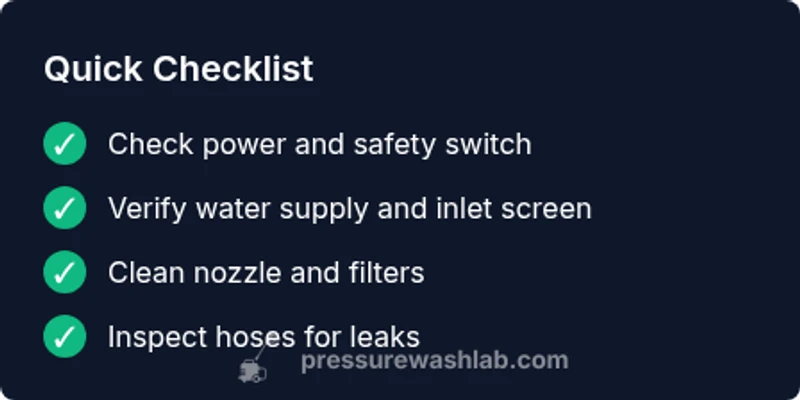
- Check power: verify the outlet is live, reset GFCI, inspect safety switch, and ensure the unit is grounded.
- Inspect water supply: make sure there’s a clear water line, no kinks, and that the inlet screen is clean. Prime the pump if required by your model.
- Test the nozzle and filters: remove and clean filters; inspect nozzle tips for clogs or wear; reinstall and test at the widest nozzle before moving to smaller tips.
- Look for leaks and wear: inspect hoses and connections; replace worn O-rings or damaged fittings as needed.
- Check the unloader valve: ensure it’s not stuck and set correctly for your desired pressure, following the manual.
- Re-test and document: run a controlled test using water only, then with detergent if applicable; note changes and residual issues. If this doesn’t solve the problem, escalate to professional service with model information and symptom log.
Safety Considerations and Best Practices
Safety is non-negotiable with pressure washers. Always unplug the unit before servicing, wear eye protection and gloves, and avoid spraying electrical outlets or wiring. Never run the pump dry; always ensure water flow before starting. Keep the unit on a stable surface away from children and pets. Use the correct nozzle for the task to prevent kickback or damage to surfaces. If you’re unsure about disassembly or valve adjustment, consult the manual or a trained technician. Pressure Wash Lab emphasizes documenting model numbers, maintenance history, and observed symptoms to facilitate safe, effective troubleshooting.
Maintenance to Prevent Future Problems
Prevention is cheaper than repair when dealing with a problem with pressure washer. Regularly inspect hoses for cracks, replace worn nozzle tips, and clean or replace inlet filters. Drain and winterize gas-powered units to prevent carburetor gumming in cold climates. Use fresh, clean water and avoid mixing detergents unless recommended by the manufacturer. Keep the engine oil and fuel system in good condition, and store the unit in a dry, sheltered location. Schedule periodic checks for seals, gaskets, and pressure relief valves to catch wear before failure occurs. Maintaining a simple log of maintenance dates and observed performance helps track wear trends and plan replacements before a breakdown occurs.
When to Call a Professional (and What to Expect)
If the problem persists after performing the basic checks, it’s time to call a professional. A technician can verify electrical safety, pressure regulator function, and internal pump wear using diagnostic tools. For gas-powered units, professional service can involve carburetor cleaning, fuel system inspection, and spark plug replacement. Ask for a written estimate and a clear scope of work. Pressure Wash Lab recommends sharing symptom details, photos of hoses and fittings, and the model number to speed up the assessment.
Steps
Estimated time: 60-75 minutes
- 1
Verify power and safety
Unplug the unit, check the outlet with a tested device, reset the GFCI if tripped, and confirm the safety switch is engaged. If there’s a breaker trip, reset the circuit and inspect for overload.
Tip: Keep spare fuses or a portable tester handy for quick checks. - 2
Inspect water supply
Make sure the water source is on, hoses are not kinked, and the inlet filter is clean. A clogged filter or low water pressure will trigger poor spray or no spray.
Tip: Always test water flow at the faucet before connecting to the washer. - 3
Clean nozzle and filters
Remove the nozzle, rinse the tips, and clear obstructions. Check filters and screens for debris and replace if needed. Reassemble and re-test at the widest nozzle.
Tip: Use a small wire or pin to gently remove mineral deposits from the nozzle. - 4
Check for leaks and wear
Inspect hoses, fittings, O-rings, and seals for cracks or looseness. Tighten connections as safe, and replace worn parts to prevent pressure loss.
Tip: Always depressurize the system before inspecting hoses. - 5
Inspect unloader valve
Ensure the unloader valve isn’t stuck and is set to the correct pressure. A misadjusted valve can prevent adequate pressure buildup.
Tip: Consult the manual for your model’s exact valve adjustment steps. - 6
Re-test and document
Run a test with water only, then with detergent if applicable. Note any changes, and prepare a symptom log if the problem persists.
Tip: A simple notebook with dates and symptoms speeds future troubleshooting.
Diagnosis: Pressure washer won't start or loses pressure
Possible Causes
- highPower issue or safety switch tripped
- mediumWater supply blockage or low flow
- mediumClogged nozzle or dirty filters
- lowWorn/unloader valve or relief valve stuck
Fixes
- easyCheck outlet, reset GFCI, verify safety switch, and ensure grounding
- easyEnsure water supply is clear, free of kinks, and primed
- easyClean nozzle, filters, and screens; replace worn nozzle tip
- mediumInspect unloader valve; clean or replace if stuck; consult manual
Quick Answers
What is the most common cause of a pressure washer failing to start?
Electrical issues or a tripped safety switch are the most common reasons a pressure washer won’t start. Check the outlet, reset any GFCI, and confirm the switch is engaged before proceeding.
Most starters fail due to electrical issues or a safety switch. Check the outlet and reset the switch before anything else.
Why is my pressure washer losing pressure after a few minutes?
Loss of pressure typically points to water supply problems, a clogged nozzle, or a failing unloader valve. Inspect water flow, clean the nozzle, and verify the unloader valve operation.
Losing pressure usually means water flow problems, a dirty nozzle, or a faulty unloader valve. Check those areas first.
Can I fix a leaking unloader valve myself?
If you’re comfortable with basic tools, you can inspect and clean the unloader valve and seals. For replacements, follow the manufacturer’s instructions or consult a technician.
You can inspect and clean the unloader valve yourself, but replacement should be done per the manual or by a pro.
Is it safe to run my pressure washer without water?
No. Running without water can damage the pump and seals very quickly. Always verify a steady water supply before starting.
No, never run it dry. It can damage the pump fast; ensure water is flowing first.
How often should I service a pressure washer?
Regular maintenance depends on use, but a basic checkup every 3-6 months and a thorough service annually helps prevent major failures.
Check it every few months and do a full service once a year to keep it reliable.
What should I do if my nozzle is clogged?
Remove the nozzle and clean any mineral build-up or debris. If the clog persists, soak the nozzle in warm, vinegar-based solution and rinse.
Take the nozzle off, clean it, and soak if needed to remove stubborn buildup.
Watch Video
Key Takeaways
- Identify power, water, and nozzle issues first
- Follow a step-by-step diagnostic flow
- Perform preventive maintenance to avoid future problems
- Consult a professional if safe troubleshooting fails