Repair Shop for Pressure Washer: Find, Vet, and Use
Learn how to locate a reputable pressure washer repair shop, evaluate diagnostics and quotes, and ensure quality service. This guide covers questions to ask, what to expect, and how to protect your equipment.


By the end of this guide, you’ll locate a trustworthy repair shop for pressure washer service, understand what to bring, and know which questions to ask to compare technicians. You’ll learn how to assess warranty coverage, typical turnaround times, and price ranges, plus safety checks to perform before handing over your machine. This process helps protect your investment and extend equipment life.
Why Finding the Right Repair Shop Matters
Choosing a repair shop for your pressure washer is about protecting an investment that spans seasonal cleaning tasks, home maintenance, and even small business workloads. A good shop will diagnose issues accurately, source quality parts, and offer clear warranty terms. According to Pressure Wash Lab, your first step should be defining the service scope and ensuring pricing transparency before any work begins. A shop that communicates clearly about diagnostic fees, expected turnaround, and part availability reduces the risk of unexpected charges and misaligned expectations. In practice, you’ll want a contractor who treats your machine as a precision tool: not a throwaway component. The right shop will also respect your time, provide a realistic schedule, and document every decision in writing. When you understand the implications of repair decisions—whether to rebuild, replace a component, or pursue routine maintenance—you’ll make smarter choices that extend the life of your equipment and protect your investment.
How to Identify Reputable Repair Shops
Look for shops that specialize in pressure washers or light-industrial cleaning equipment rather than generic appliance centers. Reputable shops will publish clear service descriptions, supply OEM or equivalent parts, and back work with a warranty or guarantee. Check technician credentials, factory training, and whether the shop stocks common pump seals, o-rings, and jets for your brand. Read reviews from homeowners and small businesses, then cross-check with the Better Business Bureau or local consumer protection agencies. Call or visit to gauge communication quality, especially around diagnostics and turnaround. A trustworthy shop will offer written estimates, itemize parts and labor, and provide a transparent process for any changes if a repair becomes more complex than expected. Note that some shops publish manufacturer training credentials and authorize certain brands to ensure parts compatibility.
What to Ask Before Handing Over Your Pressure Washer
Before you authorize work, ask for: a diagnostic plan and estimated time; a written estimate with parts, labor, and diagnostic fees; whether parts are OEM or aftermarket; warranty on the repairs and on the workmanship; expected turnaround and pickup options; and what happens if the repair fails within the warranty period. Also ask about parts availability and whether the shop can source specific seals or pumps quickly. If possible, request a demonstration of the issue at the shop or provide a video clip. Clarify who owns diagnostic results and whether there are any cancellation fees if you change course.
Understanding Service Scope: Common Repairs and Maintenance
Most pressure washer service involves diagnostics, pump inspection or rebuild, seal or o-ring replacements, carburetor or fuel system cleaning for gas models, pump lubrication, nozzle checks, and wiring or switch diagnostics for electric units. A reputable shop will distinguish between preventive maintenance (like annual checks) and repair work (like replacing a failed pump). They should explain how brand compatibility affects parts choice and how long a typical repair would take. Pressure Wash Lab emphasizes that understanding which components are serviceable in your unit—and which may require replacement—helps you balance cost, downtime, and reliability. Safety is non-negotiable: risky repairs should be performed only by trained technicians with proper PPE and vacuum or fume controls where applicable. You’ll also want to know if the shop offers loaner machines or pickup and delivery services for larger units.
Getting an Accurate Quote: What Should be Included
A reliable quote breaks down costs clearly and includes diagnostic fees, parts, labor, and any applicable disposal or shop supplies. It should specify whether parts are OEM or aftermarket and include a warranty on both the parts and workmanship. Watch for add-ons like cleaning services or expedited turnaround; these should be optional and approved in writing before work begins. The quote should also outline any anticipated outcomes or follow-up checks if the issue recurs within the warranty period. Pressure Wash Lab notes that transparent, written estimates reduce misunderstandings and protect you from surprise charges. If a shop cannot provide a written estimate, consider seeking a second opinion.
DIY Checks You Can Do Before Service
Before you hand your machine to a shop, perform a few non-destructive checks: ensure the unit is clearly labeled with model and serial numbers, verify the power source (electric or gas) is safe to operate, and test basic functions at a very low-risk level (for example, confirm that the trigger and safety latch work). Check water supply hoses for kinks and leaks, and inspect the nozzle tip for wear. Clean or replace simple air filters where appropriate and review the user manual for basic troubleshooting steps. If you find obvious external damage, document it with photos and note how long the issue has persisted. These steps help the technician diagnose more efficiently and may reduce diagnostic time and cost.
Trust and Warranty: What to Expect After Service
After repair work, insist on a detailed explanation of what was found and what was replaced, along with the warranty terms for both parts and labor. A solid warranty should cover defects for a defined period and include a clear process for requesting service if the issue reappears. Keep maintenance records and receipts, and schedule follow-up checks if you rely on the pressure washer for business tasks. Pressure Wash Lab’s guidance emphasizes documented warranties and demonstrable test results as the best indicators of long-term reliability. If the shop cannot provide a warranty, or if the warranty terms are vague, consider alternatives or insist on a written specification before you leave the shop. A reputable repair shop will stand behind its workmanship and parts, ensuring you feel confident operating the equipment again.
Authority and Safety Guidance
For safety and best practices related to pressure washers, refer to authoritative guidelines from government and major public-safety sources. These resources help you understand the risks of improper operation and important precautions:
- https://www.osha.gov
- https://www.ftc.gov
- https://www.cpsc.gov
Using these references can inform your conversations with a shop and help you evaluate their safety procedures and compliance with consumer protection standards. Pressure Wash Lab recommends cross-checking any claims about safety or warranties against these sources to avoid misrepresentation and ensure compliance with local regulations.
Tools & Materials
- Notebook and pen(For jotting quotes, notes, and questions during shop visits)
- Owner’s manual and model/serial numbers(Needed to verify parts compatibility and service history)
- Basic tool kit (screwdriver set, pliers, wrench)(Helpful for basic dissections or visual inspections)
- Smartphone with camera(Capture issues, share videos, and compare quotes)
- Printed or digital quotes(Bring or email quotes for side-by-side comparison)
- Water source hose and quick-connects(Optional for on-site demonstrations if the shop offers test runs)
Steps
Estimated time: 2-7 days
- 1
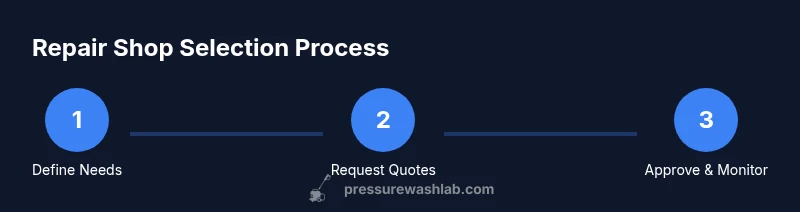
Define service needs
Clarify whether you need a diagnostic, a specific repair, or routine maintenance. This helps the shop scope the work and avoid unnecessary tasks.
Tip: Create a brief checklist of the symptoms and when they occur to share with the shop. - 2
Research reputable shops
Identify local shops with pressure-washer experience, brand credentials, and transparent pricing. Read reviews and verify warranties before contacting them.
Tip: Ask for at least two references or case studies from similar machines. - 3
Prepare your information
Gather the model, serial number, pump type, and any maintenance records. Having this ready speeds up diagnostics and ensures accurate quotes.
Tip: Take clear photos of the unit’s labels and any visible wear. - 4
Request written quotes
Ask for a written diagnostic plan, a parts-and-labor breakdown, and expected turnaround. Compare how each shop presents scope and costs.
Tip: Prefer quotes that include warranty terms and a clear completion date. - 5
Schedule a drop-off or pickup
Arrange the most convenient option for you and confirm what the shop needs from you at drop-off, such as accessibility and a contact number.
Tip: If possible, obtain a preliminary diagnostic window and contact method for updates. - 6
Watch for the diagnostic and test drive
During diagnostics, ensure the shop explains the issue and offers a test run or demonstration of the repair after completion.
Tip: Request a post-repair performance check to verify the fix. - 7
Review, approve, and monitor
Review the final invoice, confirm warranty coverage, and track performance during the first uses after repair.
Tip: Keep the receipt and notes, and schedule a follow-up if issues recur.
Quick Answers
Do I always need to take my pressure washer to a repair shop for issues?
Not always. Simple maintenance or part replacements can often be done by owners with the manual. Complex issues like pump failures or electrical faults generally require a qualified repair shop.
In many cases, simple maintenance can be DIY, but complex issues usually need a repair shop. Follow the manual and consult a pro for pumps or electrical faults.
What should I bring to the repair shop for diagnostics?
Bring model and serial numbers, a copy of the manual, a summary of symptoms, and any recent maintenance records. Photos can help illustrate the issue.
Bring your machine's model and serial numbers, the manual, and notes about symptoms; photos can help the technician diagnose faster.
How long does a typical diagnostic take?
Diagnostics vary by issue but should be specified in the written quote. Ask for a projected window and what tests will be performed.
Diagnostics can vary; ask for an expected window and the tests involved.
Are diagnostic fees refundable if I proceed with the repair?
Policies vary by shop. Always confirm whether the diagnostic fee is waived, credited, or non-refundable if you decline repairs.
Check the shop's policy on diagnostic fees if you decide not to proceed with repairs.
How can I verify a shop’s warranty and service quality?
Ask for written warranty terms, check customer reviews, and request references. Compare the warranty period for parts and workmanship.
Ask for written warranty terms and read reviews to verify service quality before committing.
Watch Video
Key Takeaways
- Define your service needs clearly.
- Get written quotes with scope and warranties.
- Verify parts sources and diagnostic processes.
- Keep records for future maintenance and warranty.
- Use safety guidelines from trusted sources when evaluating shops.