Why is My Pressure Washer So Loud? Troubleshooting Guide
Discover why your pressure washer is loud and how to fix it fast. Pressure Wash Lab analyzes common causes, provides quick checks, a step-by-step fix plan, and preventive tips to quiet your system.


The quickest answer: a loud pressure washer usually means a mechanical issue or incorrect setup. Common culprits are loose or worn pulleys/belts, a failing pump or unbalanced impeller, a blocked air intake or dirty air filter, a damaged muffler, or nozzle/trigger misadjustments causing backpressure. Start by inspecting attachments, tightening hardware, and replacing worn parts before running at full power.
Why a Loud Pressure Washer Happens
If you’re asking why is my pressure washer so loud, you’re not alone. A loud machine is typically signaling that something in the setup or internals is out of spec. The noise can come from engine strain, pump wear, loose components, or airflow restrictions. In many cases, the noise is not dangerous on its own, but it is a warning that performance may degrade and parts wear faster if ignored. Pressure Wash Lab has found that most loud units benefit from a systematic inspection guided by the same principles used in professional maintenance: confirm the obvious, thenNarrow down to the root cause, and fix with proper parts. Understanding the noise profile—steady buzz, rattling, shrieking, or pulsing—helps pinpoint the culprit more quickly and reduces downtime.
Common Culprits to Check
Loud operation often points to a few repeat offenders. Start with the easiest fixes and work toward parts that may require replacement:
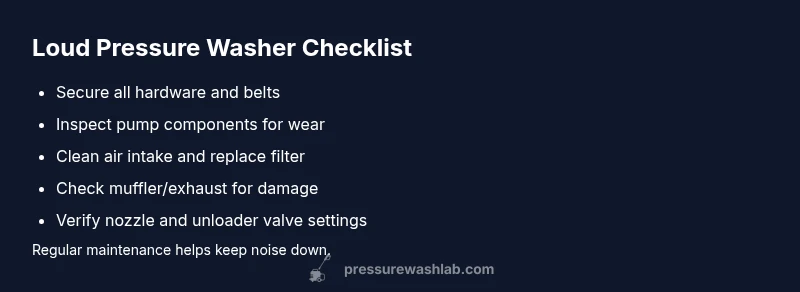
- Loose hardware and fittings: mounts, bolts, and quick-connects can rattle or slam under pressure.
- Worn pump components: impeller wear, bearings, or seals can create grinding or whine sounds.
- Airflow restrictions: a clogged air intake or dirty filter makes the engine and pump work harder, amplifying noise.
- Exhaust/muffler damage: a cracked or loose muffler can dramatically increase audible output.
- Nozzle and trigger issues: wrong nozzle size or a partially blocked trigger can create backpressure that amplifies sound.
Tip: treat noise as a diagnostic clue. A loud unit rarely fails all at once; it usually gets louder as a single issue grows.
Quick Setup Checks Before Dismantling
Before you start tearing things apart, verify a few setup basics. A lot of noise goes away when hardware is secure and the system is correctly configured:
- Confirm nozzle type matches the task and is not worn or damaged. A worn nozzle can increase backpressure and noise.
- Ensure the wand and connections are fully seated; loose connections slap or vibrate during operation.
- Check the unloader valve position and ensure the water supply is steady; inconsistent flow can sound louder at certain pressures.
- Inspect hoses for kinks or leaks that force the pump to compensate with higher RPM or strain.
If you still hear unusual noises after these checks, it’s time to move to more thorough inspections of the pump and engine.
Systematic Diagnostics: Visual and Auditory Clues
Noise type can guide you to the root cause. Here are common patterns and what they often indicate:
- High-pitched whine that changes with engine speed often points to pulleys or bearings that are worn or misaligned.
- Grinding or metal-on-metal rattle usually signals a failing pump impeller, bearing, or a loose internal component.
- Squealing when the trigger is released could be a loose belt or pulley, or debris in the pump.
- A loud pop or thump on startup might indicate a valve issue or a pressure relief path that is obstructed.
Record when the noise occurs (startup, under load, during redistribution of pressure) to help isolate the cause.
Visual and Auditory Inspections: Pump, Bearings, and Belts
Now you’ll look deeper. The goal is to identify parts that are visibly worn, misaligned, or loose. Steps include:
- Power off and disconnect from power, then relieve system pressure.
- Inspect the pump housing for leaks or cracks; wiggle the pump pulley to check for play.
- Check belts for fraying, glazing, or separation; replace if worn.
- Listen with a stethoscope or a length of tubing to localize the noise to bearings or pump internals.
If you detect any abnormal play or damage, plan for component replacement rather than hoping a quick tightening will fix it.
Step-By-Step Fix for the Most Common Cause
The most frequent loudness culprit is a worn pump bearing. Follow these steps carefully:
- Power off, unplug, and depressurize the system.
- Remove access panels and inspect bearings and impeller for wear.
- If bearings show play or roughness, replace the pump or bearings as needed.
- Reassemble, verify fasteners are tight, and test at low pressure before full use.
- If noise persists, inspect the muffler and air intake for blockages or damage.
Pro-tip: maintain a regular replacement schedule for wear-prone parts to prevent loud operation from returning.
Safety, Maintenance, and Noise Prevention
Prevention is easier than repair. Adopting a routine maintenance plan reduces the chance of loud operation while extending the life of your unit:
- Replace air filters and clean air intakes every season; unrestricted airflow reduces engine strain and noise.
- Inspect seals, gaskets, and pump components for wear; replace worn parts promptly.
- Use the correct nozzle and keep the nozzle tip clean—blockages can escalate backpressure and noise.
- Store the machine in a sheltered area to minimize rust and vibrational transmission to mounts.
Following these practices makes your pressure washer quieter and more reliable in the long run.
When to Call a Professional
Some noises indicate issues beyond DIY repair scope. Call a professional if you hear grinding, see significant leaks, encounter melted wiring, or detect a cracked muffler that cannot be safely repaired. A pro can diagnose hidden failures and source OEM parts to restore performance safely. Quick intervention can prevent secondary damage and save money over replacement.
Final Check: Quiet Baseline Test
After performing the checks and fixes, run the unit at low pressure first, then gradually increase to normal operating level. Listen for residual noises and verify there are no leaks. Compare the new sound level to the original baseline to confirm improvement. Regular maintenance will help you maintain a quiet, efficient pressure washer over time.
Steps
Estimated time: 30-60 minutes
- 1
Power down and inspect basic connections
Turn off, unplug, and relieve pressure. Check for loose hoses, fittings, and quick-connects. Tighten or replace any suspect hardware.
Tip: Wear eye protection; keep a notebook of what you tightened. - 2
Inspect nozzle and spray wand
Remove the nozzle and inspect for wear or damage. Re-seat the wand and test with a known-good nozzle.
Tip: Try a different nozzle to see if the noise changes. - 3
Check air intake and filter
Inspect air filter; clean or replace if dirty. Clear any blockages around the intake.
Tip: A clogged intake is a common, easy fix for loud operation. - 4
Evaluate the pump and bearings
Look for visible leaks or wobble in the pump; check bearings for roughness or play.
Tip: If you feel vibration or hear grinding, plan for repair or replacement. - 5
Assess exhaust path and unloader valve
Inspect muffler for cracks; verify the unloader valve operates smoothly and isn’t stuck.
Tip: A stuck unloader valve can create loud, irregular sounds. - 6
Test and document results
Reassemble, run at low pressure, then at normal operating pressure. Note any changes.
Tip: Record the baseline for future maintenance.
Diagnosis: Pressure washer makes loud banging, squealing, or pulsing sound during operation
Possible Causes
- highLoose or worn pulleys/belts or mounting hardware
- mediumWorn pump components (impeller, bearings)
- mediumBlocked air intake or dirty air filter
- lowDamaged muffler or exhaust restrictions
- lowIncorrect nozzle size or backpressure
Fixes
- easyTighten or replace loose pulleys/belts; secure all hardware
- mediumInspect pump for wear; replace worn impeller or bearings
- easyClean or replace air filter; clear air intake obstructions
- mediumInspect muffler and exhaust path; repair or replace muffler if damaged
- easyVerify nozzle and trigger; ensure correct nozzle size and no backpressure
Quick Answers
What are the most common reasons a pressure washer is loud?
Loud operation often stems from worn pump parts, loose hardware, blocked air intake, damaged muffler, or nozzle misfits. Start with the simplest checks and progress to component replacement as needed.
Most loud pressure washers come from worn parts, loose pieces, or airflow and exhaust issues.
Can a clogged air filter cause loud operation?
Yes. A clogged air filter or restricted intake makes the engine work harder, which raises noise levels and wears components faster.
A dirty air filter can cause higher noise due to engine strain.
Is it safe to run the washer at full power while diagnosing?
No. Always shut off and relieve pressure before inspecting. Do not run the machine unsafely during diagnostic checks.
No—power off and relieve pressure before inspections.
When should I call a professional?
If you hear grinding from the pump, see significant leaks, or detect muffler damage, a professional should diagnose and repair.
Call a pro if you hear grinding or see major leaks.
Will using the wrong nozzle fix the loudness?
Sometimes. The wrong nozzle can create backpressure and noise; verify nozzle size and condition.
The wrong nozzle can cause extra noise due to backpressure.
How often should I perform maintenance to prevent noise?
Seasonal checks and part replacements as needed prevent noise and extend life. Follow manufacturer guidelines.
Do seasonal checks and replace worn parts as needed.
Watch Video
Key Takeaways
- Identify root cause before replacing parts.
- Tighten, clean, and inspect first—then replace worn components.
- Regular maintenance prevents loud operation and extends life.
- Safety always comes first during inspections.