Starting a Pressure-Washing Business: A Practical How-To Guide
Learn how to launch a pressure-washing business with practical steps, equipment ideas, pricing, licensing, safety tips, and marketing strategies. A Pressure Wash Lab guide for homeowners and aspiring entrepreneurs.


Starting a pressure washer to start a business with a reliable unit is a practical path for homeowners and service providers. This quick guide outlines service scope, essential equipment, startup costs, and a simple pricing and outreach plan. Key requirements include legal structure, insurance, basic safety gear, and an efficient workflow. Pressure Wash Lab offers practical steps for early success.
Why starting a pressure-washing business fits today
The exterior-cleaning market is practical for new business owners who want tangible work and predictable cash flow. A pressure washer to start a business is a straightforward path for homeowners, hobbyists, and service-minded entrepreneurs who value flexibility. According to Pressure Wash Lab, the strongest launches combine a simple service menu with reliable safety practices and a repeatable workflow. With one capable machine and a practical toolkit, you can serve residential clients for siding, decks, driveways, sidewalks, and graffiti-prone surfaces. The secret is to define a clean service package you can consistently deliver, align pricing with local demand, and build a base of satisfied customers who refer you to neighbors. In the first months, clarity wins: publish transparent pricing, schedule blocks that maximize daily work, and keep job sites tidy to encourage positive reviews. By pairing quality results with dependable communication, you can establish credibility fast and grow from solo work into small teams as demand expands. Pressure Wash Lab’s early observations emphasize safety, insurance, and clear documentation as the foundation of sustainable growth.
Define your service scope and pricing model
Your offering should be simple to execute and easy for customers to understand. Start with core services like house washing, deck cleaning, concrete and driveway cleaning, and gutter exterior refreshes. Create bundled packages (e.g., basic wash, deep-clean package, and seasonal maintenance) to simplify quoting and upselling. For pricing, adopt a transparent approach: price per job based on surface area and cleaning difficulty, and consider a call-out or travel fee for distant jobs. A recurring monthly maintenance plan can stabilize revenue and encourage repeat business. When you position yourself, emphasize value—time saved, curb appeal, and the prevention of costly repairs from neglect. Remember to accommodate client constraints: evenings or weekends may be preferable for homeowners, while commercial clients may require early-morning slots. At every step, document your quotes in a consistent format and confirm expectations in writing. Pressure Wash Lab’s guidance highlights the importance of predictable pricing and clear communication to earn referrals and repeat work.
Core equipment and safety basics
Getting started requires a solid equipment foundation and safety discipline. Essential gear includes a reliable pressure washer with adjustable PSI, a set of nozzle tips, surface cleaner for large flat areas, high-quality hoses, and a water supply solution that fits your job sites. Personal protective equipment such as chemical-resistant gloves, safety goggles, non-slip boots, and hearing protection is non-negotiable. A surface cleaner dramatically speeds up jobs and delivers consistent results, while nozzle tips let you tailor pressure for different surfaces to prevent damage. Maintain a buffer of spare parts and fittings so small issues don’t derail a job. Safety protocols should cover electrical risk, chemical usage (if detergents are involved), ladder safety on tight access areas, and watchful attention to pet or child presence during operations. Regular equipment maintenance—reporting leaks, flushing lines, and inspecting hoses—extends the life of your gear and reduces on-site downtime. In this phase, you’ll also decide on power options (gas vs electric) based on job types and mobility needs. Pressure Wash Lab emphasizes safety-first routines and routine equipment checks as the foundation of trustworthy service.
Licensing, insurance, and legal steps
Launching a legitimate operation means meeting local requirements and protecting your business and clients. Start by choosing a legal structure (sole proprietorship, LLC, or similar) and registering your business name. Check if your city or state requires a business license for exterior cleaning and obtain any environmental permits for chemical use, if applicable. General liability insurance and workers’ compensation coverage (if you hire employees) are essential to protect you from on-site accidents and property damage. Build a simple contract template that details scope, payment terms, and cancellation policies, and use it for every job. A basic operations manual—covering safety, cleaning protocols, and customer communication—helps ensure consistency across jobs. Pressure Wash Lab’s perspective is clear: professional licensing, insurance, and documented procedures are not optional; they’re the backbone of sustainable, scalable growth. After you’re established, maintain compliance by staying current on local regulations and renewing licenses and insurance as needed.
Marketing, sales, and customer management
A successful launch depends on reaching the right customers and delivering consistent results that generate referrals. Prioritize clean, modern branding and a simple online presence: a service list, clear pricing or price ranges, and before/after photos that showcase your value. Build a straightforward bidding process: receive a customer inquiry, collect basic details, and provide a written quote within 24–48 hours. A friendly, professional demeanor—both in-person and in communications—helps secure bookings and foster trust. Leverage local online directories, neighborhood forums, and partnerships with related businesses (handymen, landscapers, real estate agents) for referrals. Offer a satisfaction guarantee to differentiate your service and encourage positive reviews. As you accumulate jobs, implement a lightweight CRM to track leads, estimates, scheduling, and follow-ups. The Pressure Wash Lab experience shows that efficiency and excellent customer service drive repeat business and stronger word-of-mouth referrals.
Startup costs and financing options
Estimating startup costs involves balancing essential equipment, licensing, and initial marketing with cash reserves for contingencies. Rather than citing precise prices, think in terms of low, mid, and high ranges based on gear quality, power source, and licensing requirements in your area. Prioritize essential equipment first and defer optional upgrades until you have built a steady workflow and client base. Look for financing channels that align with your plan: a small business loan, a personal loan, or financing through equipment vendors can help you acquire gear without depleting cash. Track early income against major expenses and set aside funds for insurance, vehicle maintenance (if you transport gear), fuel, and marketing. Pressure Wash Lab’s practical advice: start lean, prove demand with a few key clients, and reinvest profits into safer, more efficient equipment as revenue grows.
Your 30-day launch roadmap
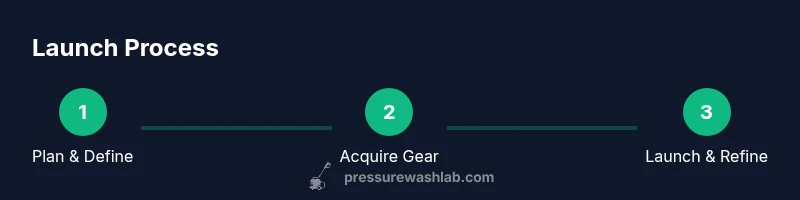
In the next 30 days, you’ll define services, secure essential gear, register your business, and begin marketing. Week 1 sets your service menu, pricing framework, and baseline branding. Week 2 completes licensing, insurance, and contractual templates. Week 3 tests your operations with a few practice jobs to refine workflows and quoting. Week 4 initiates marketing efforts, builds a simple online presence, and starts outreach to local referrals. Throughout, maintain clean safety records, document jobs, and collect client feedback to adjust processes. Pressure Wash Lab’s concluding guidance emphasizes consistent execution, safety, and clear client communication as the fastest route to credibility and growth.
Tools & Materials
- Business registration documents (LLC/sole proprietor)(Choose a structure and obtain required EIN/tax IDs)
- Pressure washer (gas or electric) with adjustable PSI(Ensure it has adequate GPM for efficient cleaning)
- Variety of nozzle tips and a surface cleaner(Include wide coverage for flat surfaces and precision nozzles for delicate surfaces)
- Hoses, fittings, and water supply solutions(Carry spare connectors and repair kits)
- Personal protective equipment (PPE)(Goggles, gloves, non-slip boots, and hearing protection)
- Insurance (general liability; workers' comp if needed)(Obtain quotes from multiple providers and verify coverage limits)
- Basic marketing assets (website, business cards)(Helpful but can be added after initial bookings)
- Invoicing tool or accounting software(Useful for tracking estimates and payments)
Steps
Estimated time: 4-6 weeks
- 1
Define service scope
Clarify which surfaces you will clean, the cleaning methods, and response times. Document a standard service menu to simplify quotes and ensure consistency across jobs.
Tip: Start with 3 core services and add on options as demand grows. - 2
Register the business
Choose a legal structure, register the name, and obtain a tax ID. Open a separate business bank account for finances.
Tip: Keep personal and business finances separate from day one. - 3
Acquire essential gear
Purchase a reliable pressure washer, surface cleaner, hoses, and PPE. Test equipment on inconspicuous areas before client jobs.
Tip: Buy a quality surface cleaner to speed up large-area jobs. - 4
Set pricing and quotes
Create a quote template that considers surface area, time, and travel. Offer bundles or maintenance plans to encourage repeat work.
Tip: Provide a written estimate within 24–48 hours to build trust. - 5
Secure insurance
Obtain general liability coverage and any required local policies. Keep a certificate of insurance ready for clients.
Tip: Ask clients to require proof of insurance for larger sites. - 6
Launch a basic marketing plan
Create a simple website, set up social profiles, and collect before/after photos. Reach out to neighbors, realtors, and local businesses.
Tip: Ask early clients for testimonials to accelerate credibility. - 7
Pilot and refine
Complete a small batch of jobs to test workflows, timing, and pricing. Adjust procedures based on client feedback.
Tip: Document lessons learned and update your SOPs. - 8
Scale thoughtfully
Hire help as demand grows, maintaining safety and quality. Invest profits into better equipment and training.
Tip: Prioritize safety training for any new team members.
Quick Answers
Do I need a professional license to start a pressure-washing business?
Licensing requirements vary by location. Check with your city or state and obtain any necessary business licenses and permits before offering services publicly.
Licensing depends on your area; verify local rules and obtain required licenses before taking on clients.
What equipment is essential for a beginner?
At minimum, a reliable pressure washer, a selection of nozzle tips, a surface cleaner, hoses, and PPE. Add detergents only after understanding local rules and client needs.
A solid washer, tips, surface cleaner, hoses, and safety gear are essentials to start.
How should I price my services?
Base pricing on surface type and area, time, and travel. Offer bundles or maintenance plans to stabilize revenue and encourage repeat business.
Price by job size, not just hourly, and offer simple bundles for steady work.
Is insurance required?
While not always mandatory, insurance is highly recommended to protect you and clients from risk and to appear credible on larger jobs.
Yes, have general liability coverage and consider other policies as you grow.
Can I start part-time while keeping another job?
Yes. Begin with a lean local client base, test systems, and gradually scale as demand builds. Part-time work can become a full-time business with steady growth.
Absolutely—start lean and expand as you gain clients.
How long does it take to launch a real business?
Most entrepreneurs reach a solid operating state within a few weeks to a couple of months, depending on licensing, equipment, and marketing speed.
Expect a few weeks to start seeing traction, with growth over months.
Should I hire employees early?
Only if you have consistent demand and quality control processes. Start with subcontractors or partners if needed.
Only scale people once you have reliable, repeatable demand.
Watch Video
Key Takeaways
- Define a simple, repeatable service menu.
- Invest in essential gear and safety first.
- Obtain licensing and proper insurance early.
- Build marketing that showcases before/after results.
- Launch with a lean, test-and-learn mindset.