Pressure Washer for Rent Near Me: A Practical Guide
Find and compare pressure washer rentals near you. Learn how to evaluate PSI, GPM, and rental terms to pick the right unit for home projects, with expert tips from Pressure Wash Lab.


To locate a pressure washer for rent near you, start with a local search of hardware stores, tool rental shops, and big-box home improvement centers within 20–30 miles. Compare key specs such as PSI and GPM, whether units are electric or gas, and if delivery is included. Check rental terms, deposits, and insurance, and verify nozzle kits and hoses are included. For best results, read customer reviews and ask about maintenance history.
Finding the right rental option starts with a clear plan
Renting a pressure washer is often the most cost-effective way to power-clean driveways, decks, siding, or vehicles without committing to a large tool purchase. When you search pressure washer for rent near me, you will encounter three main suppliers: local hardware and rental stores, larger home-improvement chains, and occasional tool libraries. Availability and pricing vary by region, season, and demand. The Pressure Wash Lab team notes that rentals are a practical alternative when you have a single project or when you need a specialized model (for example, surface cleaners or high-psi units) only temporarily. Expect a wide range of unit types, from light-duty electric machines ideal for patio furniture to heavy-duty gas-powered units capable of stripping old paint from concrete. Because most renters don’t know the exact psi they need, plan to evaluate your job size and fragile surfaces carefully, to avoid overkill or equipment damage. Always verify if the rental includes hoses, nozzles, and extension cords; many providers offer optional accessories or delivery services. In short, the rental landscape rewards planning, not impulse renting. Pressure Wash Lab’s analysis shows that being precise about your task pays off in both speed and results.
How to compare specs before you rent
Before committing, map your project’s requirements to machine specifications. The core numbers to focus on are PSI (pounds per square inch) and GPM (gallons per minute). A higher PSI isn’t always better; surfaces like wood decks and painted siding can be damaged by excessive pressure. Electric units are generally sufficient for lighter jobs, offering quieter operation and easier maintenance, while gas-powered machines provide more torque for tough concrete cleaning or large surfaces. Also verify hose length, nozzle availability (zero, 15-degree, 25-degree tips, etc.), and whether the rental includes a surface cleaner or detergent system. Safety features such as thermal relief valves and automatic shutoffs are worth prioritizing. Finally, confirm fuel type, noise level, and whether the unit requires delivery or is pickup-only. A well-matched rental saves time and reduces risk of surface damage.
Searching effectively: find options near you
To locate a pressure washer for rent near you, start with a map-based search and call nearby hardware stores, rental centers, and online marketplaces to confirm stock and terms. Ask about delivery windows, deposit requirements, insurance, and whether hoses and nozzles are included. If you’re in a larger city, broaden your search radius and compare several outlets. Reading recent customer reviews can illuminate reliability, accessibility, and the accuracy of advertised specs. Don’t overlook smaller, independent tool libraries or community workshops that rent equipment at lower daily rates. Pressure Wash Lab recommends verifying the unit’s condition on pickup and documenting any existing wear to avoid disputes at return time.
Understanding rental terms and protection
Rental terms can vary significantly by provider. Expect to see common elements such as a security deposit, daily or hourly rates, limits on total rental time, and penalties for late returns. Insurance or a damage waiver may be optional but highly recommended if you’re unsure about handling a high-psi unit. Some shops include hoses, nozzles, and a basic starter kit; others charge extra for accessories or delivery. Always request a written contract that itemizes the model, PSI rating, GPM, included accessories, and the pickup/delivery schedule. Clarify responsibility for damage, fuel, and refills, especially if a gas-powered unit is involved. A little due diligence here prevents surprises when you return the machine.
Choosing the right model for your project
Project scope drives the model choice. Small cleaning jobs on patios or vehicles may only require 1,200–2,000 PSI, with modest water flow. For driveways or cement surfaces, 2,000–3,500 PSI is more effective, but you should balance power with surface safety. If you have sensitive siding or wood decking, start with a wider nozzle and adjust gradually. Consider mobility: electric units are lighter and quieter, ideal for indoor or enclosed spaces, while gas-powered machines, though louder and heavier, handle larger outdoor areas without frequent recharging. If you’ll be renting multiple days, assess whether the provider offers a discount for longer-term use. Also plan for accessories like surface cleaners, rotating nozzles, and detergents that can speed workflow.
Rental model comparison
| Model Type | PSI Range | GPM Range | Best For | Notes |
|---|---|---|---|---|
| Electric Light-Duty | 1,200-2,500 | 1.2-2.5 | Patios, decks | Quiet, lightweight, ideal for small tasks |
| Gas-Powered Heavy-Duty | 2,000-3,500 | 2.5-4.0 | Driveways, concrete | More power, larger and louder, longer run time |
Quick Answers
What PSI is common for typical home cleaning tasks?
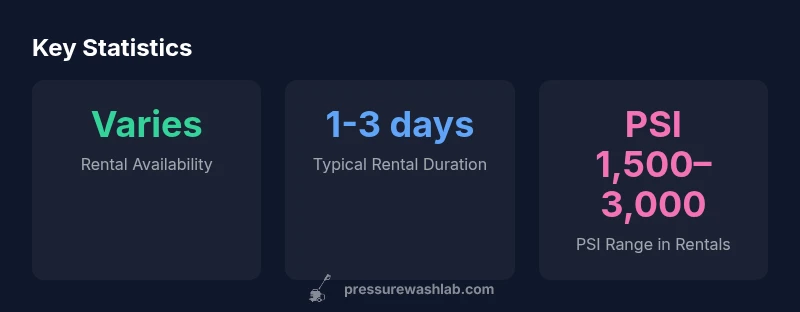
For most home tasks, 1,500–3,000 PSI covers patios, siding, and vehicles. Start with a mid-range setting and adjust based on surface feedback to avoid damage.
Typically, 1,500 to 3,000 PSI is enough for most home tasks. Start moderate and adjust as needed.
Electric vs gas: which is better for rent?
Electric units are quieter, easier to start, and suitable for light to medium tasks. Gas units provide more power for tough jobs but require more maintenance and safety precautions.
Electric for light work, gas for heavy cleaning.
Do rental places require a deposit?
Many rental shops require a security deposit or a credit hold. Terms vary by provider, so confirm upfront and obtain a written contract.
Yes, deposits are common. Always check the terms before you rent.
Can I rent for a single day?
Yes, most outlets offer daily rates. Short-term rentals are convenient for a single project, but confirm any minimum rental period or late return fees.
One-day rentals are usually available; just confirm any minimums.
What maintenance should I perform after use?
Rinse surfaces, drain water, clean the nozzle and hose, and store unit in a dry, secure location. Avoid leaving fuel in the tank for extended periods.
Rinse, drain, clean, and store properly after use.
“Renting a pressure washer is a practical, task-driven decision. Choose a unit powerful enough to complete the job efficiently, but not so strong that it risks surface damage or wasted energy.”
Key Takeaways
- Take time to match PSI/GPM to your task.
- Check delivery options and included accessories.
- Read terms and insurance policies before signing.
- Electric units suit light tasks; gas units suit heavy-duty work.
- Rent only what you need and consider a short-term trial when unsure.