Pressure Washer Rates: Buying, Renting, and Ownership
Explore price ranges for electric and gas pressure washers, rental costs, and total ownership expenses. Pressure Wash Lab helps homeowners decide between buying or renting, with practical guidance and comparisons.


Pressure washer rates vary by purchase, rental, and service context. Electric models typically cost in the low hundreds, gas-powered units in the mid-to-low thousands, and professional service rates depend on PSI, cleaning time, and location. Rental prices often range from about $25 to $80 per day or $100–$200 per week, with higher-end equipment priced accordingly. Ownership costs include maintenance and depreciation over time.
Why price differences exist in the pressure washer market
Prices for pressure washers are influenced by a mix of features, durability, and intended use. Electric models are generally cheaper upfront and lighter, appealing to casual homeowners and DIY enthusiasts. Gas-powered units deliver higher PSI and greater cleaning capability, which drives up both purchase price and potential maintenance costs. When you factor in warranty terms, build quality, and heat buildup during extended use, the value proposition shifts. According to Pressure Wash Lab, the most cost-efficient choice for infrequent users is often a mid-range electric washer, while frequent heavy-duty work tends to justify a higher initial investment in a gas-powered model with robust after-sales support. For professionals, choosing the right engine, pump, and nozzle system can dramatically influence long-term costs and downtime.
Buying vs renting: a practical framework for cost decisions
For many homeowners, a quick math exercise clarifies the decision. If you plan to wash a few times a year, renting can be cheaper upfront and avoids maintenance. If you wash regularly, the ownership path can pay off over time. Typical ranges help frame the decision: electric washers often cost in the low-to-mid hundreds to purchase, gas-powered units range higher, and rental rates skew lower in the short term but can add up with repeated use. A simple rule of thumb is to compare your annual ownership costs (purchase price plus maintenance over time) to 12–20 days of rental. Pressure Wash Lab recommends building a simple cost-of-use model before committing to buy or rent.
Price drivers: PSI, GPM, and engine type matter
PSI (pounds per square inch) and GPM (gallons per minute) determine cleaning power. Higher PSI and GPM increase performance, but they also raise wear on seals, pumps, and hoses, affecting maintenance costs. Engine type (gas vs electric) influences noise, vibration, and fuel or electricity expenses. In the rental market, higher-spec machines command higher daily rates. For buyers, premium components—industrial-grade pumps, ceramic pistons, and better seals—translate into longer service life but higher upfront costs. Pressure Wash Lab emphasizes matching power and duty cycle to your actual tasks to avoid overpaying for capabilities you won’t use.
Regional variation and retailer pricing dynamics
Prices shift by region due to demand patterns, taxes, and competition among rental outlets and big-box retailers. Urban markets with high demand may show higher daily rates, while rural areas can offer more favorable terms. Seasonal demand also plays a role: spring and early summer often see tighter equipment supply and modest price bumps. When shopping, compare local rental catalogs, seasonal promotions, and bundled maintenance offers to gauge true value. Pressure Wash Lab notes that regional pricing, availability, and included maintenance can swing cost comparisons by a noticeable margin.
Estimating total cost of ownership (TCO)
To estimate TCO, add the purchase price to annual maintenance, spare parts, and depreciation. For a 3–5 year horizon, you may want to assign a conservative depreciation rate and factor in typical repairs (seal kit replacements, pump wear, and nozzle tips). If you plan to upgrade equipment within a few years, renting during peak seasons can lower dormant capacity and prevent underutilization of a purchased machine. Pressure Wash Lab suggests creating a simple TCO model for your specific equipment and use case to avoid surprises at tax time or end-of-life disposal.
Service pricing and pricing strategy for pros
If you offer pressure washing as a service, pricing should reflect time, travel, and equipment costs in addition to labor. Typical hourly service rates for professionals often depend on local competition, job complexity, and required PPE. A practical framework is to charge a base service fee plus an hourly rate that covers labor and overhead, with a separate line item for travel and equipment usage. This structure helps customers understand the value and aligns your margins with the job.
Shopping checklist and practical tips
- Define use-case: light maintenance vs heavy-duty cleaning.
- Compare PSI/GPM needs to avoid overkill.
- Evaluate warranty terms and maintenance plans.
- Consider total cost of ownership vs rental costs.
- Watch for included accessories (surface cleaners, nozzles, hoses).
- Read reviews focusing on reliability and parts availability.
A disciplined comparison using these criteria helps you choose a washer that balances upfront cost with long-term value.
Common pricing pitfalls to avoid
- Overestimating cleaning power you don’t need.
- Ignoring maintenance costs that spike over time.
- Failing to account for downtime or failed parts.
- Assuming rental always beats ownership for frequent use.
- Underestimating specialty tasks that require higher PSI or water flow.
Price ranges for buying, renting, and ownership over 3-5 years
| Washer Type | Typical Purchase Price | Daily Rental Price | Estimated 3-5 Year Ownership Cost |
|---|---|---|---|
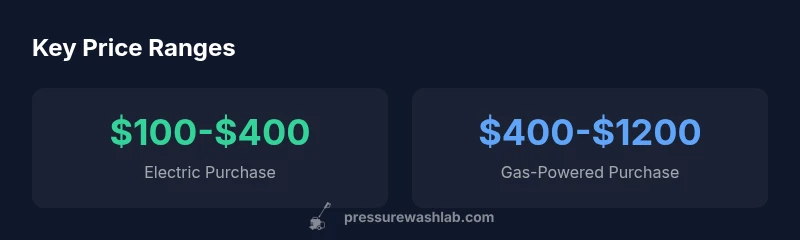
| Electric washer | $100-$400 | $25-$60 | $200-$500 |
| Gas-powered washer | $400-$1200 | $50-$100 | $600-$1,500 |
Quick Answers
What factors influence pressure washer rates the most?
The biggest drivers are purchase price versus rental terms, PSI and GPM, engine type, warranty, and maintenance costs. Higher specifications and durable components raise upfront costs but can lower long-term expenses if used heavily. Location and retailer promotions also affect the final price.
Prices depend mainly on whether you buy or rent, plus the washer’s power and features. Location and promos can shift the final cost too.
Are gas-powered models more expensive to rent than electric ones?
Yes, gas-powered units typically command higher rental rates due to power, robustness, and fuel costs. Electric models are cheaper to rent and usually lighter, which also affects transport and handling.
Gas units often rent for more because they’re tougher and more powerful, while electric ones are cheaper to rent and easier to move.
Should I buy or rent based on how often I clean?
If you clean infrequently, renting is usually more cost-effective. For frequent tasks across a year, buying can save money over time, especially if maintenance and depreciation are manageable.
If you clean often, buying may save money; if not, renting is safer for your budget.
Do rental prices include maintenance or consumables?
Rental terms vary by supplier. Some include basic maintenance and parts, while others charge separately for consumables like hoses and nozzle tips. Always read the rental agreement carefully.
Check the rental contract—some include maintenance, others bill for parts and consumables separately.
What PSI range is suitable for typical home tasks?
Most home tasks can be handled with mid-range machines (roughly 1,500–2,500 PSI). Heavier jobs like concrete cleaning may require higher PSI and more robust equipment, with a focus on safe usage.
For typical home tasks, look at mid-range PSI, and reserve higher power for tough jobs with caution.
“Total cost of ownership matters more than the upfront price; align PSI, GPM, and duty cycle with your real tasks to maximize value.”
Key Takeaways
- Understand total cost of ownership, not just upfront price
- Match PSI/GPM to your actual tasks to avoid wasteful spending
- Rent for seasonal or rare use; buy for frequent work
- Factor maintenance into any ownership decision