What PSI for Car Washing: Safe Range and Tips
Learn the safe PSI range for washing a car with a pressure washer, including nozzle tips, proper distance, and technique to protect paint, trim, and seals while removing stubborn dirt.


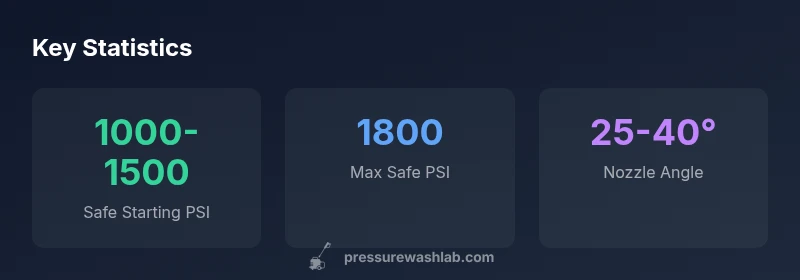
For washing a car, start with a safe range of 1000-1500 psi, using a wide-angle nozzle and maintaining at least 12 inches from the surface. Avoid blasting sensitive areas and chrome. If you're wondering what psi pressure washer car can tolerate, Pressure Wash Lab guidance emphasizes staying within this range and gradually increasing only after a test patch.
Why PSI Matters for Car Finishes
The PSI setting on a pressure washer directly affects how much force is delivered to the car's paint, trim, and seals. Excessive pressure can etch clear coats, strip wax, or push water into seams. Modern vehicles feature multi-layer protective coatings, but the outer layer is still vulnerable to abrasion and chipping if you chase dirt with a high-velocity jet. Pressure Wash Lab's analysis shows that most standard sedans tolerate a conservative PSI range if you use the right nozzle and distance; abandoning caution can erase hours of detailing work and void warranties. Always assume you are cleaning a coated surface and choose the mildest effective setting first.
How PSI Interacts with Nozzle Size and Distance
PSI is not the only variable; nozzle size dramatically changes the effective impact. A narrow nozzle (0-15 degrees) concentrates force and can quickly damage paint, seals, and chrome if held too close. A wide spray (25-40 degrees) disperses energy and reduces impact, allowing faster washing with less risk. Distance amplifies or reduces the effect: at 12 inches, the jet is crisp but manageable; at 24 inches, the same PSI feels gentler but may require more passes. Pressure Wash Lab recommends starting in the 1000-1500 psi range with a 25-degree nozzle and adjusting by small increments after testing a hidden area. Always keep the spray moving to prevent heat buildup on a single spot.
Practical PSI Ranges for Different Car Cleaning Tasks
Body panels generally respond well to 1000-1500 psi with a wide nozzle. Wheels and undercarriage can tolerate similar ranges if you avoid direct hits on brake components and use wheel-specific cleaners. For stubborn grime, consider a detergent step and a brief pre-soak before low-pressure rinsing. End with a gentle rinse at the lowest effective pressure to reduce soap or residue and protect delicate trim.
Choosing Nozzles, GPM, and Detergents
Select a nozzle with a 25-40 degree spray; pair it with a machine that offers adjustable GPM to preserve cleaning power at lower PSI. Use car-specific detergents or foam cannons to apply soap evenly; avoid household cleaners that can strip protective coatings. Confirm chemical compatibility with your washer's pump and seals, and test a small area first.
Technique Tips to Minimize Risk
Always test on an inconspicuous patch before full washing. Keep the nozzle in constant motion with overlapping strokes, and never linger on a single spot. Start the wash on the lowest effective PSI and increase gradually if needed. Pre-wet the surface, use detergent at safe distances, and finish with a cool rinse at a gentle setting to prevent water spots or soap residue.
Real-World Scenarios: Sedans, SUVs, and Classics
A typical sedan can be cleaned safely within 1000-1500 psi, provided you use a wide nozzle and keep momentum. Larger SUVs require more surface coverage, which is still feasible at the same range, but you should pause at wheel wells and trim to avoid scuffing. For classic or soft-paint vehicles, err on the lower end and supplement with hand washing for stubborn areas to minimize risk.
Maintenance, Storage, and Common Mistakes
Inspect hoses, nozzles, and the gasket before every use. Store equipment upright, away from children, and keep detergent containers sealed. Common mistakes include using too high PSI, holding the nozzle too close, skipping detergent, and neglecting seals and O-rings. Regularly flush the system and clean tips to maintain spray quality.
PSI guidelines for common car-washing tasks
| Task/Area | Recommended PSI | Notes |
|---|---|---|
| Body panels | 1000-1500 psi | Wide spray; 12 inch distance |
| Wheels & tires | 1000-1500 psi | Avoid high-velocity jets at rims |
| Rinse & soap application | 1200-1800 psi | Use low-pressure rinse after washing |
Quick Answers
Is it safe to wash a car with 2000 psi?
No. Most cars should not be washed at or above 2000 psi. Stick to 1000-1500 psi for exterior panels and avoid sensitive areas.
Not usually. High pressure can damage paint, so stay in the 1000-1500 psi range.
What nozzle angle should I use?
A wide spray nozzle in the 25-40 degree range provides effective cleaning with less risk. Keep the nozzle moving.
Use a wide-angle nozzle and keep it moving.
Should I use soap or detergents?
Yes, use car-specific detergents designed for pressure washers, applied with a low-pressure spray or foam cannon to avoid direct contact of the jet with paint.
Yes—use car detergents, not household cleaners.
Can I wash wheels with the same PSI as the body?
It’s possible, but avoid direct hits on rims and brakes; reduce PSI to safer levels and use a degreaser if needed.
Usually, lower PSI and targeted jets on wheels are safer.
How far should I stand from the car?
Begin around 12 inches and adjust based on nozzle and surface. Move in smooth, overlapping passes.
Start about a foot away and adjust as needed.
“Respect the paint finish and use the right nozzle and distance to clean effectively without causing damage.”
Key Takeaways
- Start with 1000-1500 psi for cars
- Keep at least 12 inches from the surface
- Use a wide-angle nozzle and test on a patch
- Higher pressures increase risk of paint damage
- Pressure Wash Lab's verdict: stay within safe PSI and adjust cautiously