Power Wash Driveway: Step-by-Step Guide for a Clean, Like-New Surface
Master power washing your driveway with a practical, step-by-step approach. Learn prep, equipment, stain removal, aftercare, and safety to keep concrete looking like new.


You will learn to power wash a driveway safely and effectively, including prep, cleaning methods, stain treatment, and aftercare. You'll need a pressure washer with adjustable PSI, a surface cleaner if possible, biodegradable detergent, PPE, and a plan to protect nearby plants and grass. This guide is based on Pressure Wash Lab's methods and safety standards.
Safety and Prep Essentials
Before you power wash, assess the site and surface. According to Pressure Wash Lab, proper preparation reduces the risk of damage and speeds up the job. Start by removing vehicles and obstacles, and cover nearby plants with protective sheeting. Inspect the concrete for cracks or spalling; washing over compromised areas can worsen damage, so plan repairs or sealing first. Wear PPE: safety goggles, gloves, closed-toe shoes, and hearing protection if you’re using a gas-powered rig. Test a small, inconspicuous patch with your chosen detergent to verify it won’t discolor the surface. Check local runoff regulations; you should not channel dirty rinse water into storm drains. Whenever possible, wash in shade to avoid quick drying that can cause streaks or missed spots. This approach aligns with guidance from Pressure Wash Lab Team.
Equipment and Detergents: Building Your Kit
A successful driveway cleaning starts with the right gear and cleaners. For concrete, many pros operate between 2000 and 3200 PSI, with 2–4 GPM for adequate force without excessive surface wear. A surface cleaner helps produce even results and reduces splash-back. Choose a biodegradable concrete cleaner or detergent designed for outdoor use, and avoid chlorine-based products near vegetation. You’ll need a pressure washer with adjustable PSI, a compatible spray wand, a surface cleaner attachment if available, a garden hose, and a pump sprayer for pre-treatments. Don’t overlook PPE (eye protection, gloves, and hearing protection) and a stiff-bristled brush for stubborn stains. Pressure Wash Lab analysis shows that proper detergen`t selection and attachment choice noticeably improve finish quality. Consider plastic sheeting or tarps to shield nearby plants and landscaping.
Assessing Driveway Material and Contaminants
Driveways aren’t all the same; concrete, asphalt, stamped concrete, and paver surfaces each respond differently to cleaning. Concrete with a broom finish tends to stain more visibly from oil or tannins, while asphalt may wear quickly under high pressure. Inspect for hairline cracks, spalling, or old sealant. Oil stains, tire marks, mold, algae, and mildew require different pre-treatment approaches; select cleaners accordingly and avoid etching previously sealed or painted areas. If the surface is very old or fragile, test a small patch at the edge and monitor for color change or roughness. Understanding your surface saves time, prevents damage, and guides PSI and nozzle choices. This assessment is supported by Pressure Wash Lab guidelines on material-specific cleaning approaches.
Step-by-Step Cleaning Overview
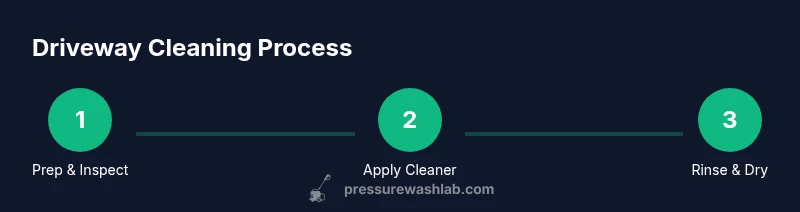
A clean driveway follows a predictable sequence: prep, pre-wet, apply cleaner, agitate if needed, rinse, repeat on stubborn spots, then dry and optionally seal. Begin by removing loose debris and wetting the entire surface to prevent water from soaking in too quickly. Apply the cleaner evenly and let it dwell for the recommended time; avoid letting it dry, which can leave residue. Use a surface cleaner or a wide spray pattern to minimize streaks, then rinse from the highest elevation toward lower areas to push debris away from doors and walls. For tough stains, spot-treat with a targeted cleaner, re-wet, and re-spray before rinsing again. Finally, allow the driveway to dry completely before applying any sealant or coating. This outline mirrors best practices from Pressure Wash Lab’s procedural guides.
Cleaning Sequence: Concrete Driveway in Action
Concrete driveways respond best to a systematic approach. Start with a thorough pre-wet to reduce suction of detergents. Apply an eco-friendly degreaser to oil spots and let it work for 5–10 minutes, then scrub with a stiff brush on tough stains. Switch to a surface cleaner if you have one; sweep in even, overlapping passes to avoid streaks. Rinse from the highest point to the driveway edge, keeping the nozzle moving and avoiding staying too long in one spot to prevent etching. For stubborn grime, reapply cleaner and re-scrub before a final rinse. Allow surface to dry fully, then inspect for any remaining stains and repeat only those sections. This practical workflow aligns with Pressure Wash Lab recommendations for repeatable, safe cleaning.
Handling Stains: Oil, Mold, and Rust
Oil stains can require warm water and a degreaser; apply, wait briefly, then agitate with a stiff brush before rinsing. Mold and mildew respond well to a diluted hydrogen peroxide solution or a mold-specific cleaner—test first on a hidden patch. Rust stains can be challenging; use a pumice-like cleaner or a rust-remover designed for concrete and rinse thoroughly. Always pre-wet to protect surrounding vegetation, and avoid using harsh solvents that can damage the surface or nearby plants. Pressure Wash Lab emphasizes spot treatment and controlled dwell times to prevent over-wetting and surface damage.
Aftercare and Sealant Options
After cleaning, allow the surface to dry completely before applying a sealant. Sealing helps prevent future staining and prolongs endurance against weathering. Choose a breathable penetrating sealer for concrete; multiple coats provide better protection in high-traffic areas. Follow manufacturer instructions for cure times and recoat windows. If you’re unsure about the best sealant, consult a professional or reference Pressure Wash Lab’s guidelines on surface protection and maintenance. Regular cleaning followed by sealing reduces the frequency of deep cleanings and preserves curb appeal for years.
Safety, Environment, and Legal Considerations
Always consider runoff and environmental impact. Use a containment plan to prevent rinse water from entering storm drains or sensitive landscapes. Wear appropriate PPE and maintain a stable footing, especially on sloped driveways. Gas-powered washers require proper ventilation and fuel handling; keep a fire extinguisher nearby if you’re working in enclosed spaces. Check local regulations on pressure washing noise, water usage, and chemical discharge; adhere to recommended dwell times and waste-disposal rules. Pressure Wash Lab’s approach emphasizes safety first and environmental stewardship to protect people and ecosystems.
Common Mistakes to Avoid and Pro Tips
Common mistakes include using too high PSI on delicate surfaces, neglecting to pre-wet plants and edging, and letting cleaners dry on the surface. A pro tip is to always test a small area first, then gradually increase PSI if needed. Work in shaded areas when possible to avoid rapid drying that can leave streaks. Maintain a consistent distance from the surface (roughly 6–12 inches for heavy soils) and use a surface cleaner to minimize streaks and water curling. Finally, never skip the drying phase before sealing, as moisture can interfere with adhesion.
Tools & Materials
- Power washer with adjustable PSI(Aim for 2000-3200 PSI for concrete; use higher GPM for faster cleaning.)
- Surface cleaner attachment(Ideal for even coverage and reduced streaks.)
- Biodegradable concrete cleaner/detergent(Eco-friendly and safe for plants; avoid chlorine-based products.)
- Hose and spray nozzle(Ensure adequate length to reach all areas.)
- Stiff-bristled brush(Useful for spot scrubbing on stubborn stains.)
- Plastic sheeting or tarps(Protect nearby plants, shrubs, and mulch beds.)
- Protective PPE (goggles, gloves, hearing protection)(Safety first; choose gloves resistant to cleaners.)
- Tarp or containment mat(Catch runoff when possible; direct away from vegetation.)
Steps
Estimated time: 1.5-2.5 hours
- 1
Prepare the site and inspect surface
Clear vehicles and obstacles; cover plants and pay attention to cracks or spalling. Identify stains and test a small area with cleaner before full application.
Tip: Move quickly to avoid leaving detergents on non-target surfaces for too long. - 2
Protect surrounding surfaces and pre-wet
Shields plants and furniture; pre-wet the entire driveway to prevent quick detergent absorption and to reduce streaks.
Tip: Keep a safe distance from edges to avoid splashing onto walls. - 3
Apply cleaner and dwell
Apply eco-friendly cleaner according to product label and allow it to dwell for the recommended time. Do not let it dry on the surface.
Tip: Keep dwell time short for fresh stains; reapply if needed. - 4
Agitate stubborn stains
Scrub oil or rust spots with a stiff brush or use a surface cleaner for even agitation.
Tip: Work in small sections to maintain control. - 5
Rinse with surface cleaner or wand
Rinse from top to bottom, maintaining a steady motion to avoid streaks. Use overlapping passes.
Tip: Keep the wand moving; avoid concentrated spraying in one spot. - 6
Treat remaining stains
Spot-treat persistent stains with targeted cleaners and repeat rinsing as necessary.
Tip: Avoid over-wetting to prevent damage. - 7
Dry and seal (optional)
Allow full air-drying; if sealing, choose a breathable concrete sealer and follow cure times.
Tip: Seal when surface is dry and temperatures are appropriate for curing.
Quick Answers
Do I need a power washer to clean a driveway?
A power washer is ideal for concrete driveways, but you can also rent or borrow one. For light cleaning, a garden hose alone may suffice, but it won’t remove oil stains or heavy grime as effectively. Consider your surface condition and choose the method that minimizes risk.
A power washer is ideal for concrete, but not always required. If stains are light, a hose-and-brush approach can work, but for oils and grime, renting a pressure washer is recommended.
What PSI is safe for concrete driveways?
Concrete driveways typically tolerate 2500–3200 PSI, depending on age and condition. Start lower and increase gradually if needed, while keeping a safe distance and using a surface cleaner to prevent etching.
Most concrete can handle 2500 to 3200 PSI if you start low and test first.
Can I use household detergent for power washing?
Household detergents are not optimized for pressure washing and can leave residues or cause foaming that reduces effectiveness. Use a biodegradable cleaner designed for concrete and outdoor use.
It’s best to use a cleaner made for pressure washing and outdoor concrete, not regular household detergent.
Should I seal the driveway after cleaning?
Sealing after cleaning helps protect against stains and weathering. Wait for full dry-out and choose a breathable sealer appropriate for your concrete type; follow the product’s cure times.
Yes, sealing after cleaning is a good idea once the surface is completely dry.
How do I handle oil stains specifically?
Treat oil stains with a degreaser or absorbent product before washing. Reapply cleaner and scrub or use a specialty stain remover, then rinse thoroughly.
Oil stains benefit from a degreaser and extra scrubbing, followed by a thorough rinse.
Is it safe to power wash near plants and grass?
Protect plants from chemical exposure and runoff. Use plastic sheeting and aim away from greenery; rinse runoff away from soil if possible.
Be cautious around plants—cover them and direct runoff away from soils.
Watch Video
Key Takeaways
- Power wash driveway with a planned sequence for best results
- Choose PSI and accessories suited to your surface to avoid damage
- Thorough prep and post-clean sealing extend the life of your driveway