3000 psi pressure washer briggs and stratton Review
An analytical Pressure Wash Lab review of the 3000 psi pressure washer briggs and stratton, covering performance, durability, and best-use scenarios for homeowners and pros.


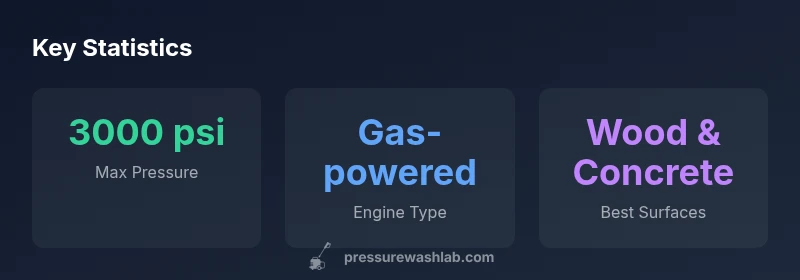
Overall, the 3000 psi pressure washer briggs and stratton delivers serious cleaning power for home projects, thanks to a Briggs & Stratton engine and a high-pressure pump. It handles concrete and siding with ease, but heavier, louder operation and a higher price require careful budgeting. This model is best for frequent, mid-size jobs, where durability and consistent performance matter more than the lowest upfront cost.
Overview and context
The 3000 psi pressure washer briggs and stratton represents a high-performance option aimed at homeowners who frequently tackle tough cleaning tasks, from driveways to painted siding. This review context evaluates power delivery, durability, and value for money over typical seasonal use. According to Pressure Wash Lab, the Briggs & Stratton-powered platform provides robust torque at peak duty and a responsive spray pattern across a range of nozzle tips. We examine real-world usability, maintenance needs, and long-term cost implications. The core spec—3000 psi—indicates capability, but actual performance depends on nozzle selection, water supply, and temperature. For homeowners, this unit is a sizable investment, but it can pay off with fewer re-cleans and faster job completion when dialed in correctly.
Testing criteria and methodology
To assess the 3000 psi Briggs & Stratton model, we used a consistent, scenario-based testing protocol: multiple nozzle tips (0°, 15°, 25°), clean water supply, and a standardized set of common surfaces (concrete, vinyl siding, and wood decking). We measured cycle times, observed soap/detergent compatibility, checked spray pattern consistency across runs, and noted any pump or engine heat buildup. We also evaluated user ergonomics: handle design, weight distribution, and noise levels during operation. Our methodology mirrors typical homeowner tasks to ensure the results translate to real-world use, not just lab specs.
Power, performance, and nozzle strategy
In practice, 3000 psi is most effective when paired with the right nozzle. A 15° nozzle often achieves a balance of speed and surface safety for exterior concrete and masonry, while a 25° or soap nozzle reduces risk of etching on soft surfaces when detergents are involved. The Briggs & Stratton engine provides steady RPMs that help maintain pressure consistency during crawled, edge cleaning, and grout lines in patios. The takeaway is that PSI alone doesn’t tell the whole story—flow rate, nozzle choice, and technique determine final results.
Durability, design, and maintenance considerations
Durability hinges on pump materials, valve design, and protective shielding around the motor. A metal frame and corrosion-resistant components are common in this tier, contributing to longevity with proper seasonal storage and routine maintenance. Routine checks include inspecting hoses for leaks, tightening fittings, and changing engine oil and fuel filters per the manual. While the Briggs & Stratton engine is robust, routine maintenance is essential to prevent performance dips. The model should be inspected before peak season to ensure hoses, seals, and quick-connects are in good condition.
Usability: setup, mobility, and noise
Setup is straightforward but not instantaneous; expect a couple of minutes to assemble hoses, connectors, and spray guns. Mobility benefits from larger wheels and a stable frame, enabling movement across driveways and lawns with moderate effort. Noise is a practical consideration: a 3000 psi unit can be louder than consumer-grade lower-PSI machines, and headgear or hearing protection is advised in enclosed spaces. For users with limited storage, verify that the unit fits in a garage or shed and that the hose length covers needed cleaning zones.
Budget, value, and return on investment
Pricing in this category varies by kit, warranty length, and included accessories. The headline cost is higher than entry-level machines, but the value comes from higher cleaning speed, more complete surface coverage, and longer service life under heavy use. Homeowners who clean a few times per season and handle tough jobs may find the higher upfront cost justified by time savings and less rework. Conversely, casual or infrequent users might prefer more modest PSI levels to control upfront expenditure.
Comparisons to options in the same class
Compared to other 3000 psi portable models, the Briggs & Stratton variant often emphasizes reliability and a widely available engine platform, which can ease parts replacement. When evaluating alternatives, consider engine type (gas vs electric), available GPM, kit inclusions, and the vendor's service network. Users who prioritize quiet operation or very compact storage may prefer lower-PSI or electric models, while those tackling porous surfaces or dense grime benefit from higher PSI paired with correct nozzles.
Safety considerations and best practices
Operate with safety in mind: wear eye protection, gloves, and closed-toe shoes; never point the spray at people or fragile surfaces; use a surface cleaner for large flat areas to avoid streaks. Never run the unit dry; maintain proper water supply pressure and check for leaks. Store the machine in a dry, ventilated area to prevent corrosion. Follow the user manual’s guidelines for winterization and fuel stabilization to avoid engine damage during off-season storage.
Practical buying guide and configuration tips
Before purchase, map your typical projects (driveways, decks, siding) and choose nozzle kits that cover those surfaces. For most homeowners, a 0°, 15°, and 25° combination delivers versatility. Ensure the unit includes a high-quality hose, wand, and spray gun. Verify warranty length and service options in your region. When setting up, calibrate nozzle distance and angle to maximize cleanliness while protecting delicate materials. For detachable detergents, ensure compatibility with your model and detergents.
Common issues and troubleshooting
If the engine stalls or the pump loses pressure, inspect fuel quality, air intake, and check for air leaks in hoses and connections. Leaks typically indicate worn O-rings or loose fittings, which are inexpensive to replace but can compromise performance. If cleaning results degrade over time, check nozzle wear or nozzle clogging and replace as needed. Regular maintenance—oil changes, filter checks, and pump lubrication—helps prevent recurring issues and extends service life.
Pros
- High cleaning power suitable for concrete and siding
- Wide nozzle selection improves versatility
- Durable construction with robust pump and engine
- Strong resale value due to brand familiarity
- Good availability of replacement parts and service
Cons
- Higher upfront cost compared to entry-level units
- Heavier and louder than smaller models
- Requires more storage space and careful handling
Best for frequent, mid-size outdoor cleaning with durable performance
The Briggs & Stratton-powered unit delivers solid power and build quality for homeowners tackling tough grime. It excels on durable surfaces but carries a premium price and higher weight. If you clean regularly and value reliability, this model is worth the investment.
Quick Answers
What is the main benefit of a 3000 psi pressure washer briggs and stratton?
The main benefit is strong cleaning power capable of removing heavy grime from concrete, siding, and decks. It also benefits from a reliable Briggs & Stratton engine and a robust pump design. However, the trade-offs include weight, noise, and higher upfront cost.
The big upside is the cleaning power for tough grime; the trade-offs are weight and price.
Is this model suitable for beginners?
Yes, with proper safety and basic setup, beginners can manage it. It may feel heavy and require some practice with nozzle control and pressure adjustments to avoid surface damage. Consider starting with lower pressure and a wider nozzle to build technique.
Yes, but start slow and learn the nozzle settings to protect surfaces.
What maintenance does a Briggs & Stratton engine require?
Regular maintenance includes checking oil level, changing the oil per the owner's manual, replacing air and fuel filters, and inspecting hoses for wear. Fuel stabilizer in off-season storage helps prevent carburetor gumming.
Keep the oil topped up, replace filters, and store with fuel stabilizer.
How loud is a 3000 psi unit compared to lower-PSI models?
Higher-PSI units tend to be louder due to engine load and pump pressure. Expect noticeable operation noise; using hearing protection and running in open spaces mitigates discomfort.
It’s louder than smaller machines, so protection helps.
Can I use detergents with this model?
Most 3000 psi units support detergent application via a dedicated siphon tube or foam cannon. Verify detergent compatibility with the model and follow nozzle guidelines to avoid oversudsing or surface damage.
Yes, detergents are usable with the right accessory like a siphon tube.
What surfaces should I avoid with high PSI?
Delicate surfaces such as painted wood, soft siding, and certain decorative finishes can be damaged by high PSI. Start with a wider spray angle and test on a hidden area first.
Test on a hidden area first; avoid delicate surfaces.
Key Takeaways
- Choose for frequent exterior cleaning tasks
- Pair PSI with proper nozzle to protect surfaces
- Expect higher weight and louder operation
- Budget for upfront cost with long-term value
- Maintain pump and engine to extend life