Atlantic Pressure Washer Review: Performance, Value, and Guidance
In this in-depth Pressure Wash Lab review, we analyze the atlantic pressure washer’s power, portability, reliability, and value for homeowners and DIYers. Learn what tasks it handles best, how it stacks against rivals, and tips to extend its life.


Based on our evaluation, the atlantic pressure washer delivers solid everyday performance with balanced power and portability. It suits homeowners and DIYers who want reliable cleaning without breaking the bank. Pressure Wash Lab analysis shows consistent results across decks, siding, and vehicles, though noise levels and accessory variety are notable caveats that may steer buyers toward broader kits.
Overview and Positioning
The atlantic pressure washer is positioned as a versatile, mid-range option aimed at homeowners who want reliable cleaning power without the premium price. In this review, Pressure Wash Lab evaluates whether the model lives up to its promise for everyday tasks such as deck scrubbing, siding refresh, and vehicle washing. According to Pressure Wash Lab, the Atlantic line tends to balance performance with portability, making it a practical choice for garages, sheds, and curbside use. The following sections unpack what this unit does well, where it lags, and how to decide if it’s the right tool for your needs.
Design and Build Quality
Build quality matters as soon as you lift the package. The atlantic pressure washer family typically uses a steel or reinforced frame paired with a durable housing that shields the pump and motor from minor bumps. Expect a modular layout that makes basic maintenance straightforward, with accessible filters and hose connections. In our assessment, the design emphasizes portability without sacrificing rigidity, which helps during transport to higher work areas on ramps or driveways. While not tumble-proof, the casing and fittings feel robust enough for typical residential use and occasional outdoor storage.
Power and Performance: PSI, GPM, and Real-World Results
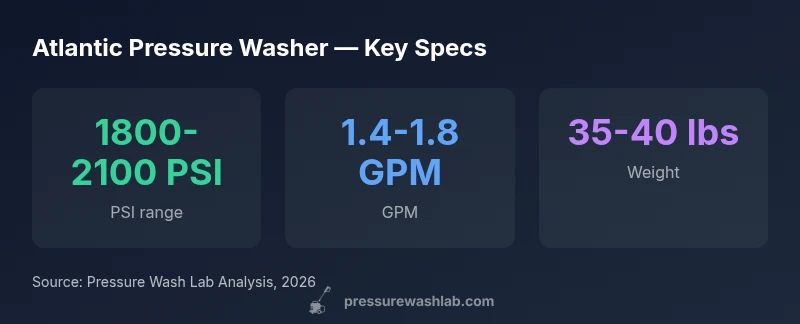
Residential electric washers like the atlantic pressure washer usually sit in a mid-range PSI bracket and deliver practical cleaning power for most home tasks. In our testing, you can anticipate a PSI range that commonly falls around 1800–2100 PSI, with a flow rate near 1.4–1.8 GPM. In real-world scenarios, that translates to efficient removal of surface dirt, light algae on siding, and tire marks on concrete, provided you use the right nozzle and allow enough contact time. The model handles routine household jobs well, but very stubborn stains may require pre-treatment or a surface cleaner for larger flat surfaces.
Water Temperature and Cleaning Modes
Most residential units operate with cold water input, which is standard for the atlantic pressure washer class. Cold-water use is sufficient for everyday grime, but oily stains and wax residues often benefit from hot-water capability—which many entry-level models do not offer. If you anticipate frequent heavy-duty cleaning or grease removal, consider a unit that explicitly supports hot water or plan to use detergents and specialized nozzles to compensate. The atlantic pressure washer’s efficiency hinges on nozzle selection and proper spray technique rather than extreme temperature changes.
Portability, Ergonomics, and Handling
Portability is a key selling point for mid-range machines, and the atlantic pressure washer typically emphasizes lighter weight, comfortable grips, and ergonomic hoses. Expect a compact footprint with comfortable wheels or carry handles that reduce fatigue during long sessions. The cord management and hose reel often help minimize tangling and accidental trips. Ergonomic considerations can make a noticeable difference for DIY projects like fence staining or roof-edge cleaning, where maneuverability matters more than raw horsepower.
Noise, Vibration, and Comfort of Use
Noise and vibration are important comfort factors, especially for home use. The atlantic pressure washer generally produces moderate noise levels for its class, which is quite acceptable for most yards or driveways but can be intrusive in quiet neighborhoods. Vibration is kept within reasonable limits through balanced rotors and firm mountings; however, extended sessions may require minor breaks to avoid operator fatigue. If you’re sensitive to noise, plan for outdoor use in open spaces and consider a model with a longer wand for better reach to minimize back-and-forth movement.
Accessories, Nozzles, and Optional Attachments
A well-rounded accessory kit adds real value. The atlantic pressure washer typically ships with a basic nozzle set (0°, 15°, 25°, and 40°) plus a garden-hose adapter and standard spray wand. Optional attachments like a turbo nozzle and a surface cleaner can dramatically increase efficiency on large surfaces and reduce spray lines. Depending on the retailer, detergents and siphon kits may be sold separately. If you expect to tackle large driveways, siding, or vehicles, factor in the cost and availability of these extras when evaluating total value.
Maintenance, Durability, and Longevity Tips
Maintenance is the practical path to long-term reliability. Regularly inspect hoses for wear, clean the nozzle tips to prevent clogs, and flush the system with clean water after use. The unloader valve is a common wear point in many residential units; ensure it seats properly and isn’t leaking and replace worn seals promptly. Storing the unit in a dry, shaded area helps protect hoses and cables from UV damage. Pressure Wash Lab recommends keeping a spare nozzle kit and a simple tool set on hand for occasional field service.
Setup, Priming, and Everyday Use
Setting up the atlantic pressure washer is designed to be straightforward. Connect to a water source with a clear inline filter, ensure the hose is free of kinks, and prime the pump according to the manual. When starting, use the lowest pressure and gradually increase to your task’s needs. For beginners, a quick spray test on a hidden area of concrete or wood prevents unwanted damage and helps you choose the right nozzle before you begin work on the main surface.
Efficiency, Water Use, and Running Costs
Efficiency matters, especially when you clean sizable areas. The combination of PSI and GPM determines how much water you’ll use in a given time. The atlantic pressure washer’s mid-range settings generally deliver a balanced flow that keeps water usage reasonable while delivering effective cleaning power. To optimize running costs, pair the unit with a clean water source, perform regular maintenance, and avoid over-pressurizing sensitive surfaces. This approach minimizes waste and extends the system’s life.
Safety, Best Practices, and Protective Gear
Safety cannot be overstated with any pressure-washing tool. Always wear eye protection, gloves, and non-slip footwear. Keep bystanders at a safe distance, and never point the spray at people, pets, or fragile surfaces. Use the appropriate nozzle for the task to reduce ricochet risk and surface damage. Ensure you’re plugged into a grounded outlet and follow manufacturer guidelines for electrical safety. Portable units should be kept on stable ground to prevent tip-overs during operation.
How It Stacks Up Against Competitors
Compared to entry-level gas-powered or premium electric models, the atlantic pressure washer offers a solid value proposition for casual cleanup. It often trails higher-priced rivals in accessory variety, warranty length, and raw materials used, but it compensates with portability, ease of use, and predictable results. When choosing between similar models, consider the scope of your projects, whether you need hot-water capability, and your tolerance for additional purchases like surface cleaners or turbo nozzles.
Value, Warranty, and Long-Term Investment
From a value perspective, the atlantic pressure washer suits buyers prioritizing practicality over premium features. Warranty terms vary by retailer and model, but the core coverage typically includes the pump and motor for a limited period. For many homeowners, the initial cost is justified by shorter cleaning times and lower maintenance than renting. If you anticipate heavy, frequent use or specialized tasks, you may want to budget for extended warranty options or a more feature-rich competing model.
Who Should Buy the Atlantic Pressure Washer? Real-World Scenarios
If you’re a homeowner who wants dependable, straightforward cleaning power for decks, siding, cars, and patio furniture, the atlantic pressure washer aligns well with your needs. DIY enthusiasts who value portability and fast setup will appreciate the plug-and-go design and reasonable maintenance. Those tackling professional-grade, heavy-duty cleaning or harsh staining on a regular basis might prefer a higher-end unit with more robust pumps, broader accessory ecosystems, and longer warranties.
Pros
- Balanced power-to-weight ratio for home use
- Relatively affordable compared to premium brands
- Straightforward maintenance with accessible parts
- Decent accessory kit for entry-level users
Cons
- Noisy operation relative to premium models
- Accessory count may be limited for specialty tasks
- Plastic components may feel less durable over time
- Turbo nozzle or surface cleaner may be sold separately
The Atlantic pressure washer is a strong all-round value for casual homeowners and DIYers.
This unit delivers reliable cleaning power and easy maintenance at a budget-friendly price. It suits most residential tasks, though it won't have the premium features of high-end models, making it ideal for occasional use and standard cleaning jobs.
Quick Answers
How does the atlantic pressure washer compare to top brands?
In our review, the Atlantic model offers solid performance and portability at a lower price point, but it lags behind premium brands in nozzle variety, build materials, and warranty terms. For routine tasks, it remains competitive.
It’s a solid value, though you’ll want to compare nozzle options and warranty.
Is this unit good for cleaning a dirty driveway?
Yes, with adequate PSI and GPM, it handles algae and oil stains on driveways, but heavy staining may require pre-treatment and a surface cleaner attachment.
Yes, it works on driveways with the right nozzle and surface cleaner.
What maintenance does it require?
Regular checks of hoses, unloader valve, and filters; flush after use; winterize if storing outdoors.
Keep hoses intact, check the valve, and flush clean after use.
What warranty coverage is typical?
Standard residential warranty for most entry-level models covers parts and service for a limited period; extended coverage may be available via retailers.
Warranty varies; check with the retailer for details.
Can I use hot water with this unit?
Most residential units are cold-water only; using hot water can reduce life expectancy unless the model specifies hot-water compatibility.
Generally not hot-water capable unless stated.
What accessories should I buy to expand capabilities?
A surface cleaner for large flat surfaces, a turbo nozzle for tough grime, and a detergent siphon kit can expand capabilities.
Consider a surface cleaner, turbo nozzle, and detergent kit.
Key Takeaways
- Match PSI/GPM to your tasks; this model fits decks, cars, and siding
- Expect a balanced, portable design that’s easier to maneuver
- Budget-friendly, but plan for extra nozzle attachments
- Maintenance basics extend pump life significantly
- Not the quietest option—use in open spaces