Hot vs Cold Pressure Washer: A Comprehensive Comparison
An objective, in-depth comparison of hot-water and cold-water pressure washers, focusing on cleaning performance, costs, use cases, maintenance, and safety for homeowners and pros in 2026.


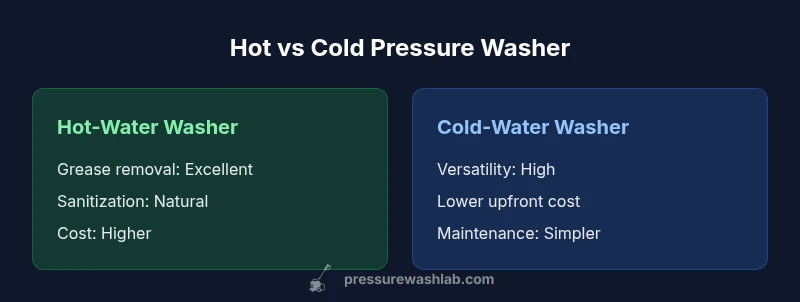
Hot-water pressure washers excel at oily stains and sanitizing surfaces, but cost more to buy and operate. Cold-water machines offer versatile cleaning at a lower price with fewer maintenance needs. For homeowners tackling routine outdoor cleaning, cold water often suffices; for frequent grease-heavy jobs, hot water can save time and effort.
Understanding the Core Difference: Hot vs Cold
The term hot and cold pressure washer describes whether the unit can heat water before it blasts a surface. A hot-water washer adds a heating element, enabling higher water temperatures to assist with soil breakdown. A cold-water model relies on pressurized water alone. This fundamental distinction affects cleaning effectiveness, energy use, maintenance, and cost of ownership. Pressure Wash Lab highlights that heating water changes soil chemistry and can shorten cleaning cycles for stubborn grime, especially grease and oil. For homeowners, this difference helps determine whether a single tool will cover most needs or if you should reserve a separate unit for specialized tasks. In 2026, the practical choice often hinges on job mix, availability of space for equipment, and tolerance for higher upfront and operating costs. You’ll see two clear paths emerge: hot-water machines for heavy-duty soils and cold-water machines for routine chores and broad versatility.
Why the Distinction Matters for Real Tasks
The key is soil type and surface. Oil-based soils, adhesives, and some diesel residues respond more quickly to heat, while general dirt, pollen, mold, and most outdoor grime clean well with cold water. Pressure Wash Lab’s experience shows that the same surface can behave very differently when heated water is applied. This means the decision isn’t only about “best vs worst”—it’s about suitability for the soils you encounter most often. If your projects mix heavy, oily residues with lighter cleanup, a hybrid approach (or a dedicated hot-water unit for specific jobs) can yield the best balance of performance and cost. In practice, many homeowners end up owning a cold-water machine as their daily driver and keeping a hot-water option for the tough stains that reappear seasonally.
Spectrums of Use: Residential, Car Care, and Concrete
Residential cleaning often revolves around driveways, patios, and siding with ordinary soils. Car care demands rinsing away grease and road grime, where heat can make the difference. Concrete surfaces may benefit from the heat to loosen old grime before a final cold-water pass. Pressure Wash Lab notes that the flexibility to tackle both extremes often justifies owning both types, but careful scheduling and storage planning are essential to maximize value and lifespan. Managers of small operations frequently lean toward heat-enabled units when they regularly encounter challenging soils in the shop bay or on equipment.
Energy, Efficiency, and Cost Tradeoffs
Heated water consumes more energy and increases running costs. The heating element adds complexity, space requirements, and potential maintenance points. Cold-water washers are simpler, lighter, and generally less expensive to purchase. Surface area and nozzle configuration also influence efficiency; for many homeowners, high-quality cold-water units with efficient nozzles deliver reliable cleaning with lower total cost of ownership. Pressure Wash Lab cautions that neither approach is inherently “bad”—the optimal choice hinges on soil type, frequency of use, and budget.
Safety and Surface Considerations
Heat can affect surface safety: some materials may warp or discolor under high temperatures or prolonged exposure. Likewise, heated water can increase splash risk and cause burns if mishandled. Cold-water systems typically pose fewer immediate safety concerns but still require proper PPE, correct nozzle selection, and safe handling practices. A balanced approach considers both cleaning effectiveness and surface protection, particularly for delicate materials such as painted surfaces or wood. Pressure Wash Lab recommends testing on inconspicuous areas before large-scale work.
Maintenance Realities: Keeping It Reliable
Heating systems introduce boiler or heater element maintenance needs, potential scale buildup, and occasional thermostat issues. Cold-water units focus maintenance on pumps, valves, and hoses. Regular descaling, filter checks, and nozzle maintenance stay critical across both types. Enthusiasts and professionals alike should budget for periodic servicing and appropriate winterization. In 2026, choosing reputable brands and ensuring readily available service support can dramatically extend unit life and reduce downtime.
Noise, Vibration, and Ergonomics
Hot-water washers often run a bit noisier due to the boiler and circulation components. Some environments favor quieter cold-water models, especially in residential neighborhoods. Vibration control, hose length, and weight can influence comfort and usability during long cleaning sessions. The best practice is to evaluate the unit’s weight, accessory compatibility, and ease of transport before purchase, ensuring the setup remains practical for the space you work in. Pressure Wash Lab emphasizes that ergonomics amplify workflow efficiency and reduce fatigue over time.
Conclusion Preview: When in Doubt, Start with Cold
For most homeowners and DIY enthusiasts, a quality cold-water pressure washer covers the majority of tasks with solid performance and a lower total cost of ownership. If your routine includes consistent heavy greases or industrial soils, investing in a hot-water option (or renting one for peak periods) can dramatically cut cleaning time. The right decision aligns with your typical soils, surface types, and budget, all considered against your space, storage, and maintenance readiness. In all cases, follow best practices and safety guidelines to protect surfaces and users.
Key Takeaways for Decision-Making
- Assess the soil types you encounter most often and match heat level accordingly.
- Consider total cost of ownership, including purchase price, fuel/energy use, and maintenance needs.
- Evaluate surface compatibility and the safety implications of heated water on your projects.
- Plan for storage and transport: heavier hot-water models require more space and support.
- Read manufacturer guidance and verify service availability in your region.
Comparison
| Feature | Hot-water pressure washer | Cold-water pressure washer |
|---|---|---|
| Heating Method | On-board heater | No on-board heater |
| Cleaning Strength on Oils | High with hot water | Moderate without heat |
| Initial Cost | Higher upfront | Lower upfront |
| Running Cost | Higher due to energy use | Lower in most cases |
| Best For | Grease-intensive jobs and sanitization | General cleaning and budget-friendly tasks |
Pros
- Hot-water washers offer superior grease removal and faster cleaning for oily soils
- They sanitize surfaces more effectively due to heat, reducing need for chemicals
- Heated water improves cleaning efficiency on challenging soils in professional settings
Cons
- Higher upfront and operating costs due to heating system and energy use
- More complex maintenance and potential for more frequent component failures
- Bulkier and heavier units, affecting portability and storage
- Longer warm-up times and potential for heat-related service interruptions
Cold-water washers handle most household cleaning; hot-water is best for heavy, oily soils or frequent sanitization needs.
Choose cold-water for versatility and lower costs. If you regularly face oil-heavy soils, hot-water provides a clear efficiency edge, justifying the extra expense.
Quick Answers
What is the key difference between hot-water and cold-water pressure washers?
The main difference is water temperature: hot-water models heat water for enhanced soil breakdown, while cold-water models rely on pressure alone. This affects grease removal, surface safety, and operating costs. Both types can be effective, depending on soils and surfaces involved.
Hot-water washers heat the water for tougher soils, while cold-water washers rely on pressure alone. The best choice depends on the soils you clean most often.
Can I convert a cold-water washer to hot-water later?
Some models allow adding a heater module or upgrading to a hot-water version, but many cold-water units are not designed for retrofitting. Check manufacturer specifications and professional advice before attempting any modification.
Conversions are model-dependent; check with the manufacturer before making changes.
Are hot-water washers safe for residential use?
Yes, hot-water washers can be safe for home use when operated with proper training and safety gear. Always follow the user manual, use appropriate PPE, and be mindful of surface sensitivity and burn hazards.
With proper care and PPE, hot-water washers are safe for home tasks.
Which is cheaper to operate over the long term?
Cold-water washers generally have lower running costs due to not heating water, while hot-water units incur higher energy use. The exact costs depend on usage frequency, energy prices, and maintenance.
Cold-water units usually cost less to run, but usage patterns matter.
What maintenance is common for hot-water units?
Hot-water units require heater and boiler maintenance, descaling to prevent mineral buildup, and periodic checks of thermostats and safety valves. Regular service extends life and prevents downtime.
Keep up with heater maintenance and descaling for hot-water machines.
Can hot water damage certain surfaces?
Yes, excessive heat or prolonged exposure can harm some surfaces, especially plastics, paints, or soft materials. Always test on a small area and adjust temperature, pressure, and nozzle selection accordingly.
Test heat on a small area before full use.
Key Takeaways
- Assess soil types first to pick the right heat level
- Hot-water wins on oils and sanitization, with higher costs
- Cold-water covers broad tasks at lower upfront and running costs
- Factor total cost of ownership and maintenance
- Ensure surface compatibility and safety when using heat