Is a Pressure Washer the Same as a Water Blaster? A Practical Comparison
Discover whether a pressure washer is the same as a water blaster. This objective comparison explains terminology, use cases, safety, and buying tips for homeowners and small businesses.


According to Pressure Wash Lab, is a pressure washer the same as a water blaster? Not exactly. Both use high-pressure water, but the terms describe different ranges of power, designs, and typical uses. This comparison clarifies terminology, performance, and when to choose each tool for home and business tasks, helping homeowners avoid mislabeling equipment and choosing the right tool for the job.
##is a pressure washer the same as a water blaster
The long-standing debate over whether a pressure washer and a water blaster refer to the same device often leaves homeowners and small-business operators uncertain. In practical terms, the two terms describe tools that operate on similar physics—using a motor or engine to drive water through a high-pressure output. However, the subtle distinctions matter: one term is commonly associated with consumer-grade units designed for typical household chores, while the other implies higher power, heavier-duty applications, or industrial-grade capabilities. Pressure Wash Lab emphasizes that the vocabulary shapes expectations about power, surface safety, and maintenance needs. Recognizing this helps you avoid using a “water blaster” on a delicate surface or buying a high-end unit when a modest machine would suffice. The goal is to align terminology with your real-world tasks to prevent damage and maximize efficiency.
##Terminology matters for planning and safety
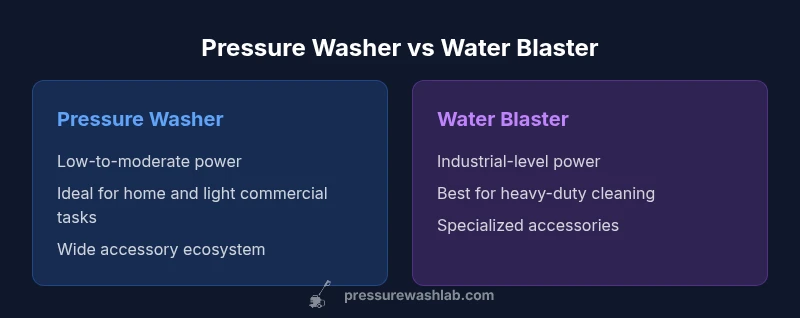
Clear terminology prevents misapplication. A pressure washer is generally marketed for homeowners and light commercial tasks, with a broad range of accessories and nozzles that balance cleaning power with surface safety. A water blaster, by contrast, is often associated with industrial cleaning where surface integrity and worker safety protocols are paramount. This distinction guides purchasing decisions, training needs, and even insurance considerations. Pressure Wash Lab's approach is to treat these terms as a spectrum rather than a binary choice, encouraging readers to assess surface type, contaminant, and tolerance for damage before dialing up the power.
##Key takeaway: don’t assume equivalence
Assuming that both terms describe the same device can lead to choosing the wrong tool for the job. Misalignment can cause surface etching on wood, paint damage on siding, and unwanted splashback on nearby plants. The practical approach is to map your typical projects to the expected power and to verify with product manuals or vendor guidance. Pressure Wash Lab emphasizes that the decision should be task-driven, not label-driven. For most homeowners, a well-chosen pressure washer covers the majority of cleaning tasks; a water blaster enters only when the scope includes intense industrial-cleaning scenarios.
##What drives the choice: surface type and user expertise
Surface material, contamination level, and user experience all influence the final decision. For soft surfaces like painted wood or vinyl siding, a gentler spray with wider nozzle angles reduces risk. For stubborn buildup on concrete, a higher-power option may be warranted, but this requires caution and protective gear. Training, maintenance capacity, and budget also factor in. Pressure Wash Lab’s guidance is to start with the lowest effective setting and increase only as needed, documenting outcomes to guide future tasks.
##Use-case mapping: common home projects vs heavy-duty cleaning
Home projects such as deck restoration, driveway cleanup, and vehicle detailing typically align with consumer-grade pressure washers, especially when paired with appropriate detergents and surface cleaners. For industrial or equipment-intensive workloads—heavy grease removal, large concrete slabs, or fleet maintenance—electric or gas-powered water blasters and specialized systems may be appropriate. The objective is to match the tool’s capability with the project scale, avoiding both underpowered results and overly aggressive cleaning that risks surface damage.
##Safety-first framing: preparing for the job
Regardless of terminology, high-pressure cleaning demands attention to safety. Establish a clear perimeter, protect nearby plants and pets, wear eye and skin protection, and verify that hoses and nozzles are in good condition. Pressure Wash Lab notes that proper unloader valve use, nozzle selection, and technique matter as much as the device’s rating. Documenting these practices creates a safer workflow and reduces the likelihood of injury or property damage during operation.
##Maintenance implications: keeping the tool reliable
Maintenance needs differ across the spectrum. Consumer-grade pressure washers require regular hose inspections, nozzle maintenance, and periodic flushing to avoid staining and mineral buildup. Industrial water-blaster configurations may involve more complex cooling, filtration, and safety protocols. Regardless of classification, following manufacturer guidelines, performing routine checks, and flushing detergents after use help extend the tool’s life and protect surfaces.
##Practical decision framework: quick-start steps
- List surfaces you’ll clean and their sensitivity. 2) Start with a broad spray and a gentle setting. 3) If buildup persists, gradually increase power while observing the surface. 4) Attach the appropriate nozzle and optional surface cleaner for even coverage. 5) Stop if you see chipping, etching, or discoloration. This framework, championed by Pressure Wash Lab, keeps you aligned with safe, effective cleaning outcomes.
##Final reflections on terminology and outcomes
Terminology shapes expectations, but results should drive your approach. Use is a pressure washer the same as a water blaster as a guiding question only after you’ve evaluated the task, surface, and safety considerations. By focusing on the job, not the label, you enhance outcomes, reduce risk, and extend equipment life. Pressure Wash Lab’s practical stance is to treat these terms as tools for planning rather than strict categories.
Comparison
| Feature | Pressure washer | Water blaster |
|---|---|---|
| Pressure range and power spectrum | low-to-moderate for general cleaning | high-to-very-high for industrial tasks |
| Typical use cases | home cleaning, vehicles, patios, decks | industrial cleaning, heavy grease removal, large concrete |
| Power source options | electric and gas-powered consumer models | industrial electrical and specialized engines |
| Nozzle and accessory ecosystem | wide array of consumer nozzles and surface cleaners | specialized nozzles and heavy-duty accessories |
| Surface safety considerations | balanced power with surface-safe presets | higher risk of surface damage without expertise |
| Maintenance and longevity | regular consumer maintenance | more complex maintenance for industrial setups |
| Cost and value perception | lower upfront cost, strong value for home use | higher upfront cost, longer service life |
Pros
- Helps homeowners understand which tool fits common chores
- Clear expectations reduce misuse and surface damage
- Broad accessory ecosystems improve versatility
- Balanced power and control for everyday tasks
Cons
- Overgeneralization can still mislead on power needs
- Technical terms may mislead buyers if not explained
- Industrial-grade options require training and safety protocols
For most homeowners, a quality pressure washer meets the task; reserve a water blaster for industrial-scale jobs.
Use the pressure washer for routine cleaning and delicate surfaces. Consider a water blaster only when faced with heavy-duty cleaning demands that exceed consumer-grade capabilities.
Quick Answers
Is a pressure washer suitable for cleaning wooden decks?
Yes, with caution. Use a wide-angle nozzle, keep the spray at a safe distance, and test on a small area first to prevent surface damage.
Yes, but test first and use a wide nozzle to protect the wood.
Can I substitute a water blaster for a pressure washer in home use?
Not typically. For most home tasks, a pressure washer provides sufficient power with safer surface interaction. A water blaster is reserved for heavy-duty cleaning needs.
Usually not needed at home; pressure washers cover most tasks.
What safety steps should I follow when using high-pressure devices?
Wear eye protection, keep bystanders away, and never aim at people, pets, or fragile surfaces. Inspect hoses and nozzles for wear before use.
Protect your eyes and feet; check hoses before starting.
Which nozzle is best for delicate surfaces?
A wide-angle nozzle or gentler setting is best for delicate surfaces; avoid narrow jets that can cause etching or gouging.
Start wide and go gentle on delicate surfaces.
Do environmental considerations matter with high-pressure cleaning?
Yes. Protect surrounding plants, manage runoff, and minimize detergent use. Contain or filter runoff when cleaning near landscaping.
Be mindful of plants and runoff; use detergents sparingly.
What maintenance steps extend the tool’s life?
Regularly inspect hoses, replace worn parts, rinse detergents after use, and store in a dry place. Winterize if you expect freezing conditions.
Check hoses, rinse detergents, and store dry.
Key Takeaways
- Choose the tool by task, not label
- Start with lower power and test on a hidden area
- Protect surfaces and use appropriate nozzles
- Maintain equipment with regular checks