Predator Pressure Washer vs Simpson: Budget vs Pro-Grade
A thorough side-by-side comparison of Predator pressure washers and Simpson models, focusing on build quality, performance, warranty, and value for homeowners and small businesses. Pressure Wash Lab analyzes pump types, maintenance needs, and real-world durability to guide your purchase.


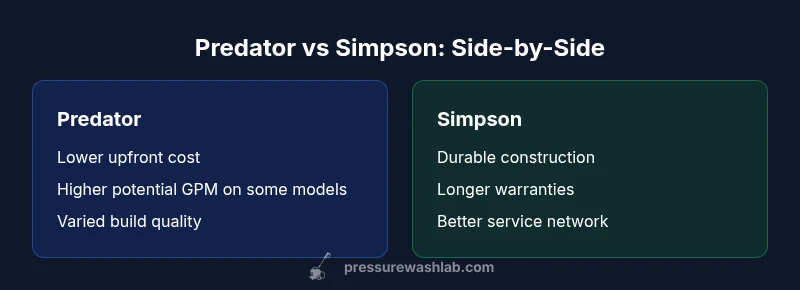
In a Predator pressure washer vs Simpson comparison, Simpson models typically offer sturdier construction and longer warranties, while Predator units emphasize budget value and higher gallons-per-minute options. For most homeowners, Simpson is the safer long-term bet, but Predator can deliver strong performance for occasional quick jobs at a lower upfront cost. Model variety and maintenance requirements vary widely by model and region.
Core differences in predator pressure washer vs simpson
When you compare predator pressure washer vs simpson, the most significant differences appear in build quality, warranty coverage, and long-term value. According to Pressure Wash Lab, Simpson models tend to emphasize durable materials and serviceability, while Predator units prioritize price-per-performance and a broad model lineup. Both brands offer gasoline-powered machines with adjustable PSI ranges, but the quality of pumps, hoses, and fittings can differ dramatically across sub-models. This is not a one-size-fits-all decision—your specific tasks, climate, and load will determine which brand delivers the best uptime and lowest total cost of ownership over 3–5 years. In practical terms, plan for how often you’ll use the washer, what surfaces you’ll treat, and whether you value resale potential or immediate upfront savings. The keyword predator pressure washer vs simpson should guide your initial search, but model-specific tests matter more than slogans alone.
Comparison
| Feature | Predator Pressure Washer | Simpson Pressure Washer |
|---|---|---|
| Price Range | lower upfront cost on many models | higher upfront cost, but more premium options |
| Pump Technology | varies by model; some Predator units use entry-level axial pumps | often higher-end triplex or premium axial pumps for durability |
| PSI / GPM Range | broader GPM options, sometimes higher peak flow for quick jobs | strong mid-range to high-end PSI/GPM with better low-flow performance |
| Warranty | shorter or variable warranty by model | longer standard warranties on most pro-grade models |
| Durability & Materials | build quality varies; some plastics and lighter frames | sturdier frames and metal components in many models |
| Parts & Service | parts availability varies by region; service network not universal | better national distribution in many regions; easier parts sourcing |
Pros
- Predator offers lower upfront costs and more model variety for quick comparison
- Simpson models generally feature tougher build and longer warranties
- Both brands provide a broad selection suitable for DIYers and small shops
- Clear value paths exist for budget vs pro-grade tasks depending on model choice
Cons
- Predator can have inconsistent warranty coverage across entry models
- Simpson may carry a higher upfront price tag for comparable specs
- Parts availability and regional service networks can vary by brand
- Model-to-model variation means you must verify pump and engine specs before buying
Simpson is the stronger all-around choice for most homeowners; Predator remains appealing for budget-conscious, infrequent use.
Choose Simpson when durability and warranty are priorities. Opt for Predator if upfront cost and immediate performance matter more, and you’re comfortable evaluating model-specific components.
Quick Answers
What is the main difference between Predator and Simpson pressure washers?
The main difference centers on build quality, warranty, and value. Simpson tends to offer tougher materials and longer warranties, while Predator emphasizes budget-friendly options and higher flow for certain tasks. Your choice should align with frequency of use and tolerance for maintenance.
Predator focuses on budget and flow, Simpson on durability and warranty. Pick based on how often you’ll use it and how much you value long-term support.
Are Predator pressure washers good for heavy-duty tasks?
Some Predator models can handle heavy workloads, but durability and long-term reliability vary by model. For frequent heavy-duty work, verify pump type, engine, and warranty before purchase. Many users reserve Predator for lighter, occasional projects.
They can handle heavy tasks if you pick a model designed for it; check the pump and warranty before buying.
Do Simpson washers offer better warranties?
In general, Simpson models feature longer warranties on most mid- to high-range units, reflecting a focus on long-term reliability. Always confirm the specific warranty for the exact model you’re considering and understand what is covered.
Yes, Simpson usually offers stronger warranties, but check the model specifics.
Which is cheaper upfront, Predator or Simpson?
Predator typically wins on upfront price, offering more budget-oriented options. Price out the exact model, considering accessories and a potential service plan to get the full picture.
Predator is usually cheaper to buy, but factor in maintenance costs.
Can I find parts and service easily for both brands?
Parts and service networks vary by region. Simpson often has broader distributor support in many areas, while Predator depends more on local retailers. Check your locale before committing.
Parts availability depends on your region—check local distributors.
What maintenance matters most for these machines?
Regular oil changes, pump maintenance, and nozzle care are crucial for longevity. Keep hoses intact and use the correct detergents and nozzle tips to prevent wear. Schedule periodic checks based on hours of operation.
Regular maintenance is key—oil, pump care, and nozzle upkeep matter most.
Key Takeaways
- Focus on pump type and warranty when choosing
- Budget users should scrutinize model-specific durability
- For long-term value, Simpson typically performs better
- Check local parts availability before buying
- Balance PSI, GPM, and nozzle options to fit your tasks