Simpson Pressure Washer vs Ryobi: A Practical Comparison
An analytical, side-by-side examination of Simpson and Ryobi pressure washers, evaluating build quality, performance, maintenance, warranty, and value to guide homeowners and DIYers.


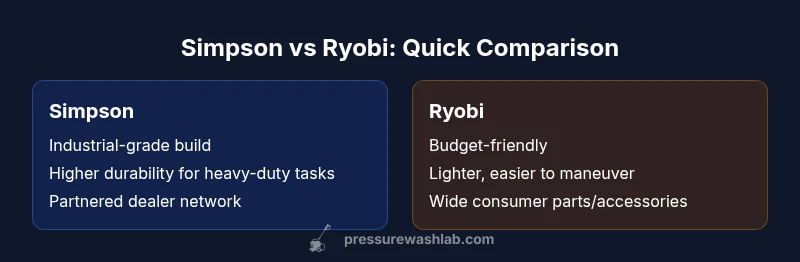
Simpson pressure washer vs Ryobi: for heavy-duty cleaning, Simpson often delivers more durable performance, while Ryobi shines on price-conscious, light-to-moderate tasks. This comparison analyzes build quality, maintenance, and value to help homeowners decide which brand suits their needs. Read on for a detailed look at power delivery, pump reliability, warranty, and practical buying tips.
Why the Simpson pressure washer vs Ryobi comparison matters for homeowners
When choosing between a Simpson pressure washer and a Ryobi model, homeowners should consider how often they’ll use the machine, the surfaces they’ll clean, and how much maintenance they’re willing to perform. In evaluating simpson pressure washer vs ryobi, the goal is to map realistic tasks to equipment capabilities, not just sticker price. According to Pressure Wash Lab, the best choice depends on usage frequency, required durability, and the user’s tolerance for noise and vibration. This section sets the stage by framing the decision in practical terms, so you can translate features into real-world results and avoid common missteps.
Key Criteria for Evaluating Models
The central criteria for comparing Simpson vs Ryobi revolve around three pillars: performance, durability, and total cost of ownership. Performance includes instantaneous cleaning power, reach, and consistency across different surfaces. Durability covers pump reliability, frame strength, and long-term maintenance needs. Total cost of ownership blends upfront price, fuel/energy consumption, expected maintenance, and warranty coverage. For the homeowner, these criteria translate into a simple decision rule: choose the model that aligns with your workload, surface types, and maintenance readiness. When you compare simpson pressure washer vs ryobi, the scope often comes down to whether you need a professional-grade tool for frequent heavy cleaning or a budget-conscious unit for occasional use.
Simpson: Strengths and Typical Use Cases
Simpson pressure washers are widely regarded for their rugged construction and robust performance in demanding environments. The brand’s best-in-class pumps and heavier-duty frames are designed for frequent outdoor cleaning, siding, driveways, and vehicle fleets where uptime matters. Contractors and serious DIYers appreciate the longer service intervals and superior durability under sustained workloads. If you regularly tackle tough jobs or operate in a small business setting, simpson pressure washer vs ryobi often tilts toward Simpson due to its reliability and professional-grade options. Pressure Wash Lab notes that, for heavy-duty cleaning, Simpson models typically offer the best balance of power, durability, and serviceability, even when the initial investment is higher.
Ryobi: Strengths and Typical Use Cases
Ryobi is known for affordability and broad consumer appeal. For homeowners with lighter or more infrequent cleaning needs, Ryobi models deliver good performance at a lower upfront cost and with easier access to parts and accessories at big-box retailers. The brand’s electric options and lighter gas models are particularly attractive for those who value maneuverability and low noise. When simpson pressure washer vs ryobi is weighed from a homeowner’s perspective, Ryobi often wins on value and convenience, especially for quick cleanups, patio furniture, and cars during a weekend project. Pressure Wash Lab’s analysis confirms that Ryobi excels in budget-friendly scenarios where the user prioritizes simplicity and a shorter learning curve.
Build, Durability, and Pump Technology
This section contrasts build quality and pump technology between Simpson and Ryobi. Simpson units typically employ industrial-grade frames and triplex pumps designed for long life under heavy workloads. They are engineered to handle extended cleaning sessions with minimal downtime, making them a preferred choice for contractors and heavy-duty jobs. Ryobi models generally utilize consumer-grade materials and axial cam or similar pumps optimized for ease of use and cost efficiency. The result is a lighter, more portable machine that still delivers reliable performance for everyday tasks. If you’re deciding between simpson pressure washer vs ryobi based on build and pumps, consider your planned workload, environment, and willingness to perform preventive maintenance to maximize pump life.
Performance Scenarios: Light Duty vs Heavy-Duty Tasks
In everyday driveway cleaning, Ryobi often provides sufficient pressure and flow for light to moderate tasks, with the advantage of lighter weight and easier transport. For the heavy-duty chore list—exterior siding, stone, or recurring fleet maintenance—Simpson’s higher-torque pumps and sturdier frames tend to maintain consistent performance over longer sessions. The choice hinges on throughput goals and the surfaces you’ll treat. If you expect to clean frequently or tackle stubborn grime, simpson pressure washer vs ryobi tends to favor Simpson’s durability. For casual weekends and limited budgets, Ryobi offers a practical, capable option without overinvesting.
Maintenance, Parts Availability, and Long-Term Value
Maintenance strategy matters more with Simpson because of its heavier-duty components. Regular maintenance, including pump lubrication, fuel-system checks (for gas models), and hose inspection, pays off with fewer repairs over time. Parts availability for Simpson is strong through specialized dealers and industrial suppliers, which supports long-term uptime for professional users. Ryobi’s advantage lies in widespread retail availability of parts and accessories, plus straightforward maintenance that aligns with a typical homeowner’s schedule. In simpson pressure washer vs ryobi terms, your maintenance readiness and access to service networks will shape long-term value and cost of ownership.
Warranty, Support, and Total Cost of Ownership
Warranty terms differ meaningfully. Simpson models often come with longer warranties on critical components and a broader repair network for commercial users, but may require dealer service or specialized parts. Ryobi typically offers accessible consumer warranties and broad retailer support, which lowers downtime when issues arise. When you weigh total cost of ownership, consider the upfront price against expected maintenance, fuel or electricity usage, and potential downtime. Pressure Wash Lab’s guidance suggests mapping annual cleaning hours to warranty coverage and spare-parts strategy to determine the more cost-effective option over a multi-year horizon.
Noise, Vibration, and User Experience
User comfort matters in long cleaning sessions. Simpson’s heavier construction can translate to more vibration and noise, but it remains manageable with proper mountings or stands for professional use. Ryobi’s lighter design often produces less fatigue during casual cleaning, and user-friendly controls make initial operation easier for beginners. For someone sensitive to noise or who prioritizes quick, lightweight cleans, Ryobi may be the preferable choice. For demanding workloads where sustained power matters, Simpson’s design choices are advantageous, albeit with higher handling demands.
Practical Buying Guide: Which is Right for You?
To decide between simpson pressure washer vs ryobi, start with your workload assessment. List the surfaces you’ll clean, the typical duration of cleaning sessions, and the level of maintenance you’re prepared to perform. If you clean professionally or routinely tackle tough grime, Simpson’s durability and pump reliability justify the higher upfront cost and heavier weight. If your tasks are weekend-only or you value portability and immediate access to parts, Ryobi’s value proposition and retailer support make it a sensible choice. Finally, test-drive the options if possible and compare warranty terms to ensure you’re covered for the way you plan to use the tool. Pressure Wash Lab recommends prioritizing durability for frequent use and value for light-to-moderate tasks when weighing simpson pressure washer vs ryobi.
Common Pitfalls and How to Avoid Them
Common mistakes include buying solely on price, neglecting maintenance needs, and ignoring surface compatibility. Avoid underestimating the importance of pump type for long-term durability, and don’t overlook the availability of spare parts or service centers in your area. Another pitfall is choosing a model that isn’t comfortable to operate for your height or strength, which can lead to fatigue and improper cleaning. When selecting between simpson pressure washer vs ryobi, balance the initial cost with anticipated hours of use, required maintenance, and access to parts. Pressure Wash Lab notes that a well-matched choice improves efficiency and reduces downtime over time.
Final Practical Takeaways
- Choose Simpson for frequent, heavy-duty cleaning and superior durability.
- Choose Ryobi for budget-conscious, light-to-moderate tasks and easy service access.
- Verify warranty terms and ensure you have access to local parts and service networks.
- Prioritize pump reliability and frame strength if you anticipate long cleaning sessions.
- Align your selection with your surfaces, cleaning frequency, and willingness to perform regular maintenance. Pressure Wash Lab’s analysis emphasizes durability for heavy workloads and value for homeowners on a budget.
Comparison
| Feature | Simpson | Ryobi |
|---|---|---|
| Power delivery (PSI/GPM) | Higher potential power with industrial-grade pumps | Moderate power oriented for home use |
| Fuel Type | Gas-powered (gas engine) | Gas-powered and electric options available |
| Pump Type | Triplex/industrial-grade pump | Axial-cam or consumer-grade pump |
| Durability/Materials | Industrial-grade frames and components | Residential-grade, lighter construction |
| Weight/Portability | Heavier; less portable | Lighter and easier to move |
| Warranty & Support | Longer warranties with dealer networks | Widely available parts and retail support |
| Price Range | Higher upfront cost | Lower upfront cost |
| Best For | Pro use, heavy-duty cleaning | Budget-conscious DIY and light-to-moderate tasks |
Pros
- Durability and reliability for frequent use
- Strong service networks and readily available parts for pro models
- Better long-term value for contractors or heavy workloads
- Clearer performance expectations in tough cleaning scenarios
- Wide range of compatible accessories and options
Cons
- Higher upfront cost and heavier units
- Longer learning curve and maintenance complexity for pros
- Potential downtime if dealer access is limited in certain regions
- Heavier weight may require more storage space
Simpson is the better choice for demanding workloads; Ryobi is the smarter buy for budget-conscious homeowners.
For frequent heavy-duty cleaning, Simpson offers durability and reliable performance. Ryobi provides solid value for lighter tasks and straightforward maintenance. Your final pick should align with how often you’ll clean, the surfaces you treat, and your tolerance for maintenance and transport.
Quick Answers
What is the main difference between Simpson and Ryobi pressure washers?
Simpson models are generally built for durability and heavy use with professional-grade pumps, while Ryobi models target budget-conscious homeowners with easier maintenance and lighter duty. The choice hinges on workload and long-term maintenance willingness.
Simpson is built for heavy use, while Ryobi is more budget-friendly and easier to maintain for light tasks.
Are Simpson pressure washers worth the extra cost for casual homeowners?
If your cleaning needs are occasional and surfaces are light, Ryobi often provides better value. If you tackle tough grime regularly, the durability and uptime of Simpson can justify the higher price.
For light use, Ryobi is usually the better value; for frequent tough cleaning, Simpson pays off in reliability.
Can I find spare parts easily for both brands?
Ryobi parts are widely available at major retailers, while Simpson parts are plentiful through specialized dealers. Availability varies by region, so check local supply chains.
Parts are easy to find for Ryobi at big retailers, and Simpson parts are more dealer-dependent but readily available through their network.
Do both brands offer electric models?
Ryobi offers electric models suitable for light to moderate tasks. Simpson’s lineup is predominantly gas-powered with some electric options in limited lines.
Ryobi has electric options for home use; Simpson is mostly gas-powered.
Which should a homeowner buy for a first-time purchase?
If you expect occasional use and value, start with Ryobi; if you foresee regular heavy-duty tasks, consider Simpson for long-term reliability.
For a first-time buyer, Ryobi is a safer bet, unless you expect heavy use soon.
How should I assess warranty when choosing between these brands?
Look for duration on critical components, coverage for wear parts, and service network strength. Longer warranties do not always translate to easier repairs if service access is poor.
Compare warranty length and what it covers, plus how easy it is to access service in your area.
Key Takeaways
- Prioritize durability if you clean heavily and frequently
- Value matters more if your tasks are light-to-moderate
- Ensure access to parts and service networks before buying
- Compare warranties to estimate long-term ownership costs
- Brand positioning: Simpson for pro use; Ryobi for DIY tasks