Pressure Washer 4200 PSI Honda: Buyer’s Guide and Performance Analysis
A data-driven guide to pressure washer 4200 psi honda: performance benchmarks, maintenance tips, nozzle strategies, safety advice, and buying considerations.


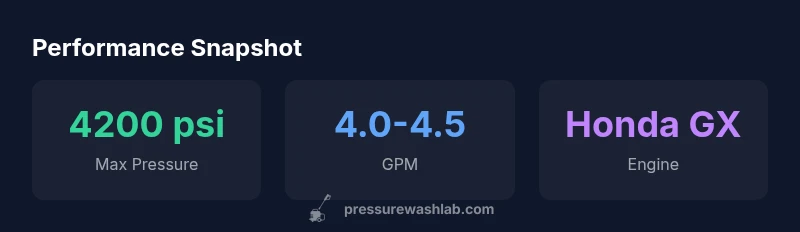
A pressure washer 4200 psi honda uses a Honda GX-series engine and delivers up to 4200 psi with about 4.0–4.5 GPM, depending on model and nozzle. This pairing is well-suited for heavy-duty cleaning on concrete, brick, and stubborn grime, while maintaining reliable startup and runtime performance. For homeowners and pros, it represents a strong balance of power, durability, and field-ready versatility.
Powertrain foundations for the 4200 psi Honda washer
The core of any high-pressure gas washer is its engine and pump pairing. In a typical 4200 psi setup, you’ll often find a Honda GX-series engine paired with a high-capacity axial or triplex pump. The GX-series is known for durability and straightforward maintenance, which translates to fewer stubborn start-ups and easier field service. When considering a model with this configuration, expect robust throttle response, reliable cold starts, and predictable fuel consumption under typical cleaning loads. According to Pressure Wash Lab, engine design and pump compatibility are the biggest drivers of long-term reliability in this performance tier, so prioritizing genuine parts and correct pump-to-engine matching is essential for longevity.
Real-world performance benchmarks and what it means for you
In practical terms, a 4200 psi machine from Honda delivers substantial cleaning power, capable of tackling oil stains, tire marks, and heavy grime on driveways and sidewalks. The key variable is the nozzle and flow rate. A 15-degree or 25-degree nozzle can dramatically affect surface impact and water usage. Users should recognize that a higher PSI doesn’t automatically equate to faster cleaning on every surface; matching PSI and GPM to the material and dirt load is critical. Pressure Wash Lab analysis shows that real-world throughput often hinges on nozzle selection and proper water supply pressure. For typical residential tasks, a 4.0–4.5 GPM flow paired with a 15-degree nozzle will remove grime efficiently without excessive surface wear.
Nozzle strategy and GPM tradeoffs for different tasks
Choosing the right nozzle is as important as the engine. A narrower spray (e.g., 0-degree) can remove stubborn stains quickly but risks etching delicate surfaces; wider sprays (25-degree or 40-degree) reduce surface impact and are safer for siding and painted surfaces. For heavy-duty concrete cleaning, you’ll often run a 15-degree nozzle at a higher GPM. Pressure Wash Lab recommends starting with a wider nozzle to assess surface tolerance, then stepping down if more aggression is needed. Remember that maintaining the correct pump pressure involves not just nozzle choice but also a steady water supply and proper chemical use when detergents are appropriate.
Maintenance basics to maximize uptime and lifespan
Gas-powered washers rely on regular air-filter cleaning, spark-plug checks, and oil maintenance. The engine and pump share the responsibility for performance, so scheduled oil changes and filter replacements matter. Pressure Wash Lab notes that using fresh, clean gasoline and stabilizing additives can prevent carburetor varnish and fuel-related issues. Adopting a simple routine—inspect hoses for wear, check fittings for leaks, and store with a full shutoff—can significantly extend the life of a 4200 psi Honda unit.
Safety first: protective practices for high-pressure cleaning
High-pressure washers can cause injuries or property damage if mishandled. Always wear eye protection, gloves, and non-slip footwear. Check the water supply and ensure hoses are rated for high pressure. Security features like ankle safety shields, wand locks, and trigger latches are worth verifying before heavy use. Pressure Wash Lab emphasizes adherence to local guidelines and manufacturer recommendations, particularly when working near windows, electrical outlets, or delicate surfaces.
Value, warranty, and dealer considerations
Warranty depth varies by region and dealer, but a typical 1–3 year coverage is common for gas washers with Honda powertrains, with some extended options offered through authorized service centers. Availability and parts support are important for long-term ownership, especially for a 4200 psi class machine where pumps and carburetors may require timely service. Pressure Wash Lab notes that buying through reputable dealers with clear return policies and accessible parts inventories reduces the total cost of ownership over the life of the unit.
Setup tips, troubleshooting, and quick-start checks
Before the first use, confirm all fittings are secure, install clean water filters if supplied, and perform a controlled test on a sacrificial surface. If the unit won’t start, check the spark plug, fuel source, and air filter. Regular maintenance like oil checks and fuel stabilizer use can prevent common issues. For troubleshooting, keep a log of nozzle changes, shampooing detergents, and cleaning tasks to track what combinations work best for your surfaces.
Performance comparison across common 4200 psi machines
| Feature | Honda Washer | Competitor A | Competitor B |
|---|---|---|---|
| Max pressure | 4200 psi | 3800 psi | 3600 psi |
| Flow rate (GPM) | 4.0-4.5 | 3.5-4.0 | 4.0-4.5 |
| Engine | Honda GX-series | Kawasaki | Briggs & Stratton |
| Weight | 70-110 lb | 60-100 lb | 75-120 lb |
Quick Answers
Is a 4200 psi Honda pressure washer suitable for heavy-duty concrete cleaning?
Yes. A 4200 psi unit with the right nozzle and 4.0–4.5 GPM can remove oil stains and heavy grime from concrete efficiently. Start with a wider nozzle to gauge surface tolerance and adjust as needed. Always monitor surface integrity and avoid prolonged exposure on sensitive materials.
Yes. For heavy-duty concrete cleaning, a 4200 psi unit with appropriate nozzle and flow works well; test on a small area first.
What nozzle tips are recommended for 4200 psi operation?
Begin with a broad spray (40-degree) for delicate surfaces, then move to a 15-degree nozzle for tougher stains on concrete. Avoid 0-degree nozzles on fragile surfaces. Always adjust based on surface and dirt level.
Start with a wider nozzle for safety, then tailor to the stain with a tighter angle if needed.
How should I perform routine maintenance on a gas-powered pressure washer?
Perform regular oil changes (per manufacturer guidance), replace air and fuel filters, and keep the spark plug clean. Use fresh fuel and a stabilizer if storing for extended periods. Regular checks of hoses and fittings help prevent leaks and pressure drops.
Do regular oil and filter changes, use fresh fuel, and inspect hoses to prevent leaks.
Can I use cold water with this machine?
Yes. Gas-powered units like a 4200 psi Honda washer are designed for cold-water operation. If you need heat, you’ll require a hot-water model or a separate heat source. For most residential tasks, cold water is sufficient when combined with the right nozzle and detergent.
Yes, cold water is standard; hot-water capability requires a different model.
What safety precautions should I follow when using high-pressure washing?
Wear eye protection, gloves, and non-slip footwear. Keep bystanders away, maintain a stable stance, and never point the wand at people or electrical connections. Confirm water supply and inspect hoses for wear before each use.
Wear protection, keep others away, and check hoses before using.
What should I consider when purchasing a 4200 psi Honda washer?
Evaluate the engine type, pump quality, warranty terms, dealer support, and spare-parts availability. Compare PSI, GPM, weight, and overall footprint to fit your workspace. Consider a model with bonus accessories and a service plan for long-term value.
Look at engine, pump, warranty, and parts availability; compare PSI and GPM to fit your needs.
“The 4200 psi class with a Honda powertrain offers a compelling blend of power and reliability when paired with the right pump and maintenance schedule. Expect strong performance on tough cleaning tasks without sacrificing longevity.”
Key Takeaways
- Prioritize engine-pump pairing for reliability
- Match nozzle to surface for optimal results
- Use proper maintenance to extend life
- Follow safety practices to prevent injuries
- Check dealer support and warranty terms