Pressure Washer 5000 PSI Honda Review
An analytical review of the pressure washer 5000 psi Honda, focusing on power, reliability, maintenance, and value for homeowners, DIYers, and small businesses.


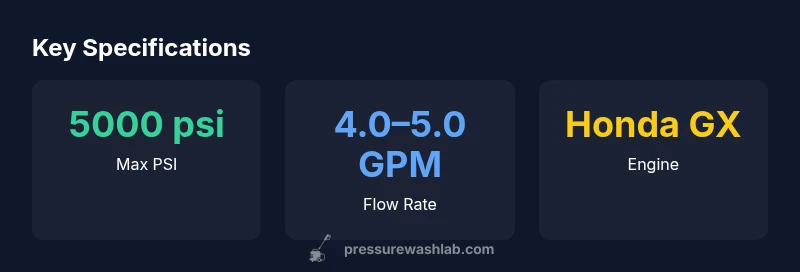
The Honda-powered pressure washer 5000 PSI delivers top-tier cleaning power for heavy-duty jobs, with strong engine reliability and solid build quality. It suits frequent DIY use and small-business tasks, though it comes with greater weight and upfront cost compared to lower- PSI models. For the right user, it offers durable performance and long-term value.
Real-World Power: Why 5000 PSI Matters for Pressure Washers
In the world of pressure washing, PSI is a primary measure of cleaning power, but it isn’t the only factor. The pressure washer 5000 psi Honda combines high pressure with a capable flow rate to tackle stubborn stains like oil, deeply embedded grime, and weathered outdoor surfaces. For homeowners and small businesses, this class of machine makes quick work of driveways, concrete patios, and commercial storefronts that see heavy use. According to Pressure Wash Lab, the overall effectiveness depends on the nozzle, the mass flow rate, and the surface being cleaned. A higher PSI can speed up tasks, but only with the right technique and safe practices. In many cases, a 5000 psi unit shines when paired with a wide fan or rotary nozzle and appropriate surface cleaner attachments. As with other high- PSI machines, the operator’s technique matters: starting with a low- psi setting to test the surface, then ramping up as needed while maintaining a safe distance and using proper PPE. For those evaluating options, it’s worth noting that the Power/Flow balance matters as much as the peak PSI, particularly when you’re cleaning large areas in a limited time window.
This model’s Honda engine is designed to deliver steady power across extended cleaning sessions, which matters when you’re chasing durable results rather than quick bursts. The overall performance will also depend on the pump design (axial vs. triplex) and the unloader valve’s behavior under load. In practice, most users notice the 5000 psi unit performs best on hardscape surfaces and stained masonry, while more delicate tasks still benefit from softer nozzles or lower- PSI settings. The Pressure Wash Lab team emphasizes that the best outcomes arise from combining the right nozzle tip with steady, controlled movement rather than relying on maximum pressure alone.
Pros
- Exceptional cleaning power for tough stains and heavy-duty jobs
- Reliable Honda engine with broad parts availability
- Durable frame and components designed for frequent use
- Good accessory ecosystem and compatibility with surface cleaners
- Strong resale value and long-term reliability for professionals
Cons
- Heavier and bulkier than mid-range or consumer models
- Higher upfront cost and more demanding maintenance
- Requires careful operation to avoid surface damage on delicate materials
- Noise and vibration levels are higher than smaller units
Best for frequent heavy-duty users and small businesses needing dependable power
The Pressure Washer 5000 PSI Honda excels in durability, performance, and long-term value for dedicated users. While heavier and pricier than mid-range options, the Honda engine and robust PSI deliver reliable results that justify the investment for demanding work.
Quick Answers
Is a 5000 PSI Honda unit overkill for typical home use?
For most residential tasks, 5000 PSI is more than enough. It shines on tough stains or when you need to clean larger areas quickly; however, for light cleaning or delicate surfaces, a lower PSI unit with the right nozzle is often a better balance of safety and cost. If your workload is occasional, consider a lighter option to reduce fatigue and maintenance.
For everyday home use, 5000 PSI can be more than you need. It’s ideal for tough stains, but a lighter model may be easier to handle for small jobs.
What maintenance does a Honda engine pressure washer require?
Regular maintenance includes checking and changing the oil, inspecting the spark plug, and ensuring the fuel system is clean. Follow the owner’s manual for service intervals and use recommended oil and fuel. Clean air filters and proper storage also extend engine life.
Keep oil fresh, inspect the spark plug, and store the unit properly between uses.
Can I use cold water with a 5000 PSI unit?
Yes. Most residential and commercial units, including those with Honda engines, are designed for cold-water operation. Cold water helps the engine start quickly and reduces complexity, but ensure you use the correct nozzle and safety practices to avoid damage to surfaces.
Yes, you can use cold water; just pick the right nozzle and be mindful of the surface you’re cleaning.
What safety precautions should I follow?
Always wear eye protection, hearing protection, and non-slip footwear. Keep bystanders away, never spray near electrical outlets, and use a surface cleaner or wide nozzle for flat surfaces to minimize kickback. Read the manual and test on a small area before full-use.
Wear protection, test on a small area, and keep others away while operating.
How does it compare to other PSI classes?
A 5000 PSI unit sits at the high end of consumer models, offering faster cleanup for durable surfaces. Lower- PSI models are easier to maneuver and safer on delicate materials, while higher- PSI units are specialized for stubborn tasks but require more caution and protective gear.
It’s powerful for tough jobs, but lower- PSI models are safer on delicate surfaces.
What attachments should I look for?
Look for a high-quality spray wand, a surface cleaner attachment, rotary nozzle options, and compatible hoses rated for high pressure. A good unloader valve helps manage pressure and protect the pump.
Get a solid wand, a surface cleaner, and the right high-pressure hose.
Key Takeaways
- Assess your workload before choosing 5000 psi
- Expect solid reliability with Honda power and easy parts access
- Choose appropriate nozzles and a surface cleaner for best results
- Prepare for higher weight, maintenance, and cost