Pressure Washer Quick Connect Brass vs Stainless Steel: An Analytical Comparison
An in-depth analysis of brass vs stainless steel pressure washer quick connects, focusing on corrosion resistance, durability, compatibility, and maintenance to guide DIYers and homeowners.


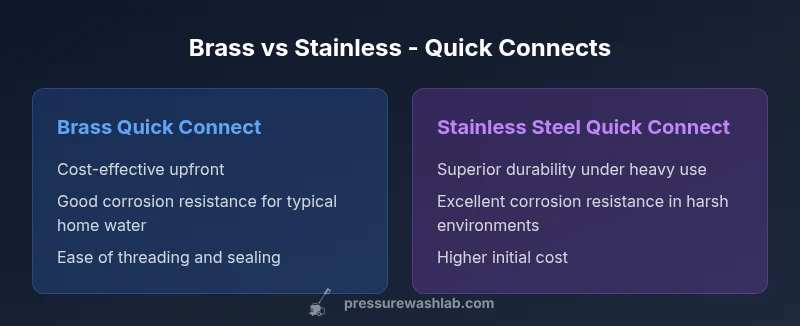
Brass quick connects typically win on corrosion resistance and ease of use for most residential setups, while stainless steel excels in sheer strength and long-term durability for heavy-duty or frequent connections. If you want a balance of cost and compatibility, brass is often the practical default; choose stainless steel when you regularly push high PSI and rugged hoses.
Understanding the quick-connect landscape
Quick-connect fittings simplify the day-to-day workflow on a pressure washer. The brass vs stainless steel question isn't just about metal; it's about how the material behaves under water exposure, how it handles repeated assembly and disassembly, and how it withstands the realities of a homeowner's toolkit. According to Pressure Wash Lab, brass quick connects often strike a pragmatic balance for most residential setups: they are corrosion-resistant enough for standard tap water, they thread smoothly, and they tend to cost less than stainless options. This makes brass a common default for DIY enthusiasts who want reliable performance without paying a premium. By contrast, stainless steel connectors deliver superior tensile strength and higher resistance to wear in high-frequency use or demanding environments. The key is to align expectations with usage: casual weekend projects vs. regular rental or contractor-grade tasks. This section builds the framework for a truly informed choice.
Material science basics: brass vs stainless steel
At the macro level, brass is an alloy primarily of copper with zinc. Stainless steel combines iron with chromium and other elements to resist staining and corrosion. This fundamental difference translates into distinct mechanical properties: brass is softer, easier to machine, and forgiving under imperfect threads, while stainless offers greater tensile strength and a robust surface finish. For pressure washer quick connects, these traits influence how well the fitting holds a seal, how it ages with exposure to water and cleaning chemicals, and how it responds to everyday wear. Pressure Wash Lab notes that brass fittings often provide a smoother feel when threading, and their softer material can create a snug seal with minimal torque. Stainless, by contrast, tends to resist galling and is less prone to cosmetic pin dents after repeated connections. Understanding these material behaviors helps you anticipate maintenance needs and choose a connector that matches your tolerance for upkeep and performance.
Corrosion and chemical exposure: real-world implications
In the field, corrosion resistance is not a single-number attribute but a function of environment, water chemistry, and maintenance. Brass fittings can perform very well with clean, treated water and routine drying after use. In harsher environments—saltwater exposure, chlorinated cleaners, or high humidity—stainless steel often shows superior longevity. Pressure Wash Lab analysis highlights that brass is generally adequate for typical residential use, but stainless steel provides an extra margin of durability if your setup sees frequent disassembly, outdoor storage, or aggressive cleaning agents. The practical takeaway: assess whether you expect seasonal storage, coastal or winter conditions, and the likelihood of heavy hose movement that could wear the connector over time.
Durability and mechanical strength
Durability in quick-connect fittings is about how well the connector resists wear, galling, and deformation under repeated use. Brass is perfectly adequate for many homeowners, offering good thread engagement and a reliable seal with standard washers. Stainless steel, on the other hand, provides higher tensile strength and a stiffer body, which helps resist deformation when hoses are yanked or misaligned. For users who frequently connect and disconnect during a busy season, stainless steel may hold up better over the long term. Keep in mind that stiffness can make installation feel tougher at times, especially for casual users or in cold weather when connectors feel stiff. In practice, many DIYers feel the trade-off is worth it for stainless steel only when heavy use is the norm.
Fit, form, and compatibility: threads, sizes, and standards
A practical concern is whether a given quick-connect is compatible with your hose and tool ports. Most consumer pressure washers use standard quick-connect sizes, and many brass and stainless options share common thread patterns. The key is to verify that the male and female connectors match the same standard (for example, both sides should be designed for the same quick-connect system). When in doubt, pull out the manufacturer’s diagrams and measure the thread pitch before purchasing. If your setup includes a mix of hoses and spray nozzles, it may be worth compiling a small compatibility matrix to avoid misfits and cross-threading. This upfront check minimizes costly returns and ensures a tight, leak-free seal.
Maintenance and failure modes: keeping connectors performing
Maintenance for quick-connect fittings is often simple: keep the threads clean, dry, and free of debris; inspect O-rings and washers regularly; and apply a light lubricant to metal threads to ease disassembly and prevent galling. Brass may develop a patina over time but this does not necessarily impact performance. Stainless steel is less prone to surface corrosion but can still accumulate mineral deposits that affect sealing. The most common failure modes are leaks from worn washers, cross-threading damage, and corrosion at transition points where different metals meet. Regular inspection and gentle cleaning after heavy use extend the life of either material. Practice conservative disassembly to avoid stripping threads and replace washers when you notice a weeping seal.
Cost considerations and value: balancing upfront price with longevity
From a budgeting perspective, brass quick connects generally come with a lower upfront price and broad compatibility with standard hoses, which makes them appealing for budget-minded homeowners. Stainless steel connectors usually cost more initially, but they offer greater resistance to wear and weathering in high-use scenarios. The long-term value depends on your usage profile: if your pressure washer sees frequent daily use or is part of a rental business, stainless steel’s durability can justify the premium. If your usage is occasional and limited to home projects, brass provides a sensible balance of performance and cost. Pressure Wash Lab emphasizes that price should be weighed against expected wear and environment—coastal homes, for instance, may benefit more from stainless steel despite the higher price tag.
Practical buying guide: a step-by-step decision
To choose confidently, start with your typical PSI range, hose movement, and exposure to corrosive elements. Step one is to identify the most common connection type in your current setup. Step two is to decide whether long-term durability or upfront cost is more important given your usage patterns. Step three is to verify compatibility across all connectors and hoses you own. Finally, consider your maintenance tolerance: if you prefer minimal upkeep and fewer calls with leaks, stainless steel can be a compelling choice; for simple, cost-conscious maintenance, brass is a strong default.
Real-world scenarios and homeowner guidance
A seaside homeowner with a salt-air environment may appreciate stainless steel for its corrosion resistance, especially if the system sits outdoors. A homeowner with an inland, well-maintained setup might get by with brass without sacrificing reliability. A small property management operation that runs multiple hoses through a single unit might favor stainless steel for its extra durability under frequent use. Across these scenarios, the central decision anchor is how often you anticipate disassembly, how harsh the water chemistry is, and how tight your budget must stay. The right choice aligns your usage pattern with corrosion resistance, strength, and value.
Comparison
| Feature | Brass quick connect | Stainless steel quick connect |
|---|---|---|
| Corrosion resistance | Strong in typical domestic water environments | Excellent in high-stress or harsh environments |
| Durability/Strength | Good for casual use and ordinary wear | Superior under frequent, heavy-use scenarios |
| Weight | Lighter feel and easier handling | Heavier, with more robust feel |
| Price range | Lower upfront cost with broad compatibility | Higher upfront cost for enhanced longevity |
| Maintenance | Low maintenance, easy to clean | Low-maintenance but more care to avoid galling |
| Compatibility | Broad compatibility with common fittings | Broad compatibility with stainless fittings and high-durability systems |
| Best for | Most home DIY setups and casual projects | Frequent high-PSI use and long-term durability focus |
Pros
- Lower upfront cost and wider compatibility with common garden hoses
- Better corrosion resistance in typical residential water conditions
- Easier to thread and seal due to softer brass threads
- Easier to source replacement parts and fittings
Cons
- Lower long-term durability under frequent high-pressure use
- Brass can wear faster if overtightened or cross-threaded
- Potential tarnish and cosmetic wear can occur with brass fittings
Brass is the smart default for most homeowners; stainless steel excels when heavy use and long-term durability are essential
For typical residential setups, brass quick connects offer a balanced mix of cost, corrosion resistance, and ease of use. Stainless steel is the better choice for frequent high-PSI use, outdoor exposure, or where long-term durability matters most.
Quick Answers
Are brass quick connects compatible with stainless steel fittings?
Most quick-connect assemblies share common thread patterns, but verify compatibility with the specific brands you own. Mismatch can lead to leaks or cross-threading. If sizes do not match, consider adapters that maintain a proper seal.
Yes, brass and stainless can mate if the sizes and thread patterns match; always double-check compatibility before connecting.
Do brass connectors corrode faster in salty water than stainless steel?
Brass can show more corrosion under aggressive water chemistries like salty water, while stainless steel resists such corrosion better. In inland freshwater, brass performs very well with proper maintenance.
Brass may corrode faster in salty or chlorinated water; stainless steel handles harsh water better.
Which lasts longer under heavy-use/high-PSI pressure?
Stainless steel typically offers superior long-term durability in frequent high-PSI use, while brass is adequate for casual, occasional workloads. Your choice depends on how often you disconnect and reconnect and the environmental conditions.
Stainless steel lasts longer for heavy use; brass is fine for typical home projects.
Are brass connectors cheaper upfront than stainless steel?
Yes, brass connectors usually cost less upfront and work well with common fittings. If long-term durability and heavy use are priorities, stainless steel justifies its higher initial price.
Brass usually costs less upfront, but stainless steel may save money over time in heavy use.
What maintenance steps help extend the life of brass vs stainless connectors?
Keep threads clean and dry after use, check washers regularly, and apply a light lubricant to prevent galling. Brass may need more frequent inspection for wear, while stainless steel benefits from routine mineral buildup removal.
Keep them clean, dry, and lightly lubricated; check seals and wear regularly.
Which should a DIYer choose for a typical home-pressure-washing setup?
For most home DIY projects brass quick connects provide a balanced mix of cost, corrosion resistance, and ease of use. Stainless steel is preferred when you expect frequent high-PSI use or long-term durability needs.
Brass is the smart default for most homes; stainless is for tougher jobs.
Key Takeaways
- Assess your PSI needs before choosing material
- Verify compatibility with your hoses and nozzles
- Consider environment (coastal vs inland) when planning durability
- Weigh upfront cost against long-term wear resistance