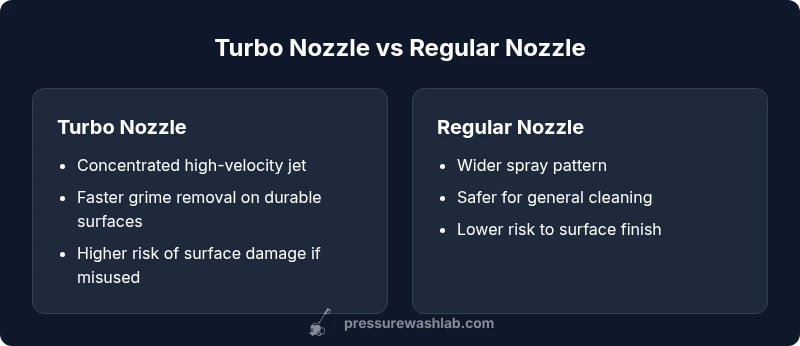
Turbo Nozzle vs Regular Nozzle: An Analytical Comparison
An analytical comparison of pressure washer turbo nozzles vs regular nozzles, covering performance, safety, use cases, and best practices for homeowners and pros.


Turbo nozzles deliver a high-velocity, concentrated spray that accelerates grime removal on durable surfaces and speeds up large-area cleaning. Regular nozzles offer safer, more versatile performance suitable for everyday tasks and delicate surfaces. According to Pressure Wash Lab, the best choice depends on surface type, grime severity, and the need to control risk. This comparison breaks down when to reach for each nozzle type.
What is a Pressure Washer Turbo Nozzle?
A turbo nozzle is a specialized attachment for pressure washers that concentrates the spray into a tighter, more pressurized jet while also introducing a slight spinning motion. This design creates a focused, high-energy cleaning pattern that can cut through stubborn grime more quickly on hard, durable surfaces such as concrete, brick, and sealing. Unlike a standard nozzle, a turbo nozzle trades some surface safety for speed and cleaning power, making it a valuable tool for maintenance tasks that require rapid, aggressive grime removal. As you consider the pressure washer turbo nozzle vs regular nozzle debate, it’s important to understand that the turbo nozzle is not a universal fix—it excels when used appropriately and with proper distance and technique.
For homeowners and DIY enthusiasts, this means recognizing when the turbo option can save time without risking damage to the surface you’re cleaning. The turbo nozzle is most effective on flat, solid surfaces where a concentrated jet can break up heavy grime without embedding it deeper into materials. In contrast, for many everyday tasks, a regular nozzle provides a safer, more forgiving cleaning experience that minimizes the chance of marring sensitive finishes.
In this article, we’ll compare the two nozzle types, discuss real-world scenarios, and offer practical tips to help you decide which nozzle to reach for in different situations. The discussion is grounded in practical testing and field experience, with emphasis on safe operation and predictable results across common home and small-business projects.
How a Turbo Nozzle Differs from a Regular Nozzle
Turbo nozzles and regular (cone or fan) nozzles serve the same core purpose—deliver pressurized water to remove grime. The key differences lie in spray concentration, impact, and risk level. A turbo nozzle narrows the spray into a tighter jet and adds a rotating motion that concentrates energy at the point of contact. This accelerates removal of baked-on grime from durable surfaces and reduces cleaning time for large, flat areas. A regular nozzle, by comparison, provides a broader spray pattern with lower peak impact, which is gentler on surfaces and safer for mixed materials.
Practically speaking, the turbo nozzle trades surface versatility for raw cleaning speed. If you’re cleaning a concrete driveway or a stone patio with years of grime, a turbo nozzle can be a time-saver. If you’re cleaning painted siding, wood decks, or delicate masonry, a regular nozzle often yields more predictable results with less risk of chipping, gouging, or etching. In short, the turbo nozzle is a specialist tool; the regular nozzle is the generalist.
When Turbo Nozzle Makes Sense: Best Use Cases
The turbo nozzle shines in scenarios where grime has bonded to hard, durable surfaces and speed matters. Think driving through a winter buildup on a driveway, removing heavy sediment from a brick wall, or blasting away compacted dirt from a sidewalk. In these cases, the turbo nozzle’s focused jet breaks through intrusive deposits more quickly than a standard spray. Conversely, for routine tasks such as cleaning vinyl siding, painted surfaces, or fences with loose coatings, a regular nozzle is less aggressive and safer.
Another factor is the shape and condition of the surface. Very smooth, sealed concrete accepts a turbo nozzle better than rough, damaged mortar. For surfaces with older paint or fragile finishes, the regular nozzle minimizes risk while still achieving effective cleaning when used at appropriate distances. The decision to use turbo versus regular should consider grime severity, surface material, and tolerance for potential surface impact.
Surface Safety and Practical Tips to Avoid Damage
A central concern when comparing turbo and regular nozzles is surface safety. The turbo nozzle’s concentrated jet can chip paint, etch delicate stone, or leave visible marks if held too close or moved too slowly. A common rule of thumb is to keep the nozzle at a distance where you can feel the impact without maintaining direct contact. Use a sweeping motion rather than holding the jet on one spot, and test on a small, inconspicuous patch before proceeding.
Always wear eye protection and footwear with good grip; turbulent spray can reflect off hard surfaces and pose a ricochet risk. For painted or stained wood, a slower, wider spray from a regular nozzle is often safer. If you must use a turbo nozzle near a softer surface, consider bridging with painter’s tape or using a lower PSI setting to reduce risk. The goal is effective cleaning while preserving surface integrity.
In summary, the turbo nozzle is not inherently dangerous; it requires disciplined technique and surface-aware settings to avoid unintended damage.
PSI, GPM, and Nozzle Compatibility: How to Choose
Nozzles work in concert with your pressure washer’s PSI (pounds per square inch) and flow rate (GPM). A turbo nozzle typically performs best when paired with a unit capable of delivering solid pressure without excessive flow that can push water too aggressively into porous materials. It’s important to ensure your wand and adapter are compatible with turbo nozzles; an incompatible fit can cause leaks, misalignment, or degraded spray quality.
When switching between turbo and regular nozzles, start with a higher distance and lower pressure, then gradually adjust as needed. Use the turbo nozzle for quick grime removal on tough surfaces, but revert to a regular nozzle for finish work, smaller areas, or delicate materials. If you’re unsure about compatibility, consult your manufacturer’s guidelines or seek advice from a reputable service source to prevent warranty issues.
PSI and GPM are not the only constraints—nozzle orifice size and spray angle also influence cleaning outcomes. A loose nozzle fitting or a worn seal can create leaks or inconsistent spray, so inspect hardware before use and replace worn components promptly.
Best Practices for Safe and Effective Use
The most effective way to employ a turbo nozzle is to combine knowledge of surface type with careful technique. Begin with the widest nozzle available on your unit, then move to a turbo nozzle only after you’ve identified a suitable surface and distance. Maintain a steady walking pace to avoid streaking and ensure even cleaning, and never point the nozzle at people, pets, or fragile surfaces.
Keep the spray angle at a safe height, and avoid prolonged exposure to any single spot. When cleaning brick, masonry, or concrete, work in sections and rinse away loosened grime to prevent mud buildup that can re-adhere. Remember that the turbo nozzle is best used as a speed tool, not a substitute for proper surface preparation or priming—surface condition and weather can influence results more than the nozzle itself.
Regular nozzle users should still adopt a measured approach when attempting tougher stains; upgrading technique often yields as much benefit as a different nozzle. Documentation and trial runs are wise, especially on outdoor surfaces that experience seasonal grime. In short, safe operation plus a tested plan yields the best outcomes.
Maintenance, Longevity, and Replacement Considerations
Nozzle maintenance is essential for consistent performance. After each use, inspect the turbo nozzle for wear, check the orifice for buildup, and ensure the threads are clean to prevent cross-threading during reattachment. A worn nozzle can alter spray pattern and reduce cleaning efficiency, so replace damaged components promptly. Regular-nozzle life depends on usage frequency and exposure to outdoor elements, but periodic inspection is still important for any nozzle type.
Storage matters: keep the nozzle dry and away from harsh solvents that can degrade seals. When you store multiple nozzles, label them to avoid confusion during future jobs. If you notice decreased spray quality or unusual vibrations during operation, stop use and assess for damage before resuming.
For home and small-business users, having a spare turbo nozzle is a prudent investment. It minimizes downtime during peak cleaning windows and ensures you always have the right tool ready for tough grime. The takeaway is simple: inspect, replace when needed, and store properly to maximize performance and lifespan.
Common Misconceptions About Turbo Nozzles
A common misconception is that turbo nozzles always damage surfaces. In reality, the risk comes from improper use or selecting the wrong nozzle for a given material. When used with the correct distance and technique, turbo nozzles can safely remove heavy grime on solid surfaces without undue harm. Another myth is that turbo nozzles work in every scenario—nozzles have limits, and for many tasks a regular nozzle provides safer, more controlled cleaning.
Finally, some assume turbo nozzles are universally faster; while they can speed up heavy jobs, the overall time saved depends on grime type, surface condition, and operator skill. Understanding these nuances helps prevent over-reliance on a single tool and encourages a more strategic approach to pressure washing.
Real-World Scenarios: Case Studies and Quick Wins
Consider a homeowner facing a winter buildup on a concrete driveway. A turbo nozzle can dramatically reduce cleaning time by concentrating energy on heavy grime, provided the distance and PSI are carefully controlled. For painted siding with flaking paint, a regular nozzle kept at a safe angle will minimize the risk of peeling while still delivering decent results. In deck cleaning, start with a regular nozzle to assess surface response, then switch to turbo for stubborn areas if necessary. A small storefront with brickwork may benefit from turbo for fast results on the masonry while protecting nearby plantings with shields.
These examples illustrate a practical approach: reserve turbo power for tough, durable surfaces, and default to regular nozzles for general cleaning or delicate finishes. The key is to adapt your method to the surface and grime, rather than applying the same pressure everywhere.
Quick-Start Checklist Before You Begin
- Identify the surface you will clean and match the nozzle to its safety profile.
- Verify compatibility of your pressure washer, wand, and nozzle accessory.
- Wear eye protection and slip-resistant footwear.
- Test on a small, inconspicuous spot to check for damage or discoloration.
- Start with a wider spray and gradually increase aggression if needed.
- Maintain a steady movement and avoid lingering in one spot.
- Store nozzles properly after use and inspect for wear before next use.
Comparison
| Feature | Turbo nozzle | Regular nozzle |
|---|---|---|
| Performance on tough grime | High-velocity, concentrated jet for fast grime removal | Moderate, broad spray with steady cleaning |
| Surface safety | Higher risk of damage if held too close or misused | Lower risk with correct distance and gentler impact |
| Best use cases | Stubborn grime on durable surfaces (concrete, brick) | Everyday cleaning and delicate surfaces (wood, siding) |
| Spray pattern | Narrow, intense cone with rotating action | Wider fan spray for gentler cleaning |
| PSI/compatibility | Typically used with upper-mid to high PSI ranges | Effective across a broader PSI spectrum, especially lower to mid ranges |
| Maintenance needs | May require more frequent inspection for wear | Typically lower maintenance demand |
Pros
- Speeds up stubborn grime removal on durable surfaces
- Reduces cleaning time for large, flat areas
- Concentrated jet improves efficiency on tough deposits
- Useful for quick turnaround on high-demand projects
Cons
- Higher risk of surface damage if misused or held too close
- Requires careful technique and distance control
- Not universally compatible with all washers and wands
- Can accelerate wear if used improperly on sensitive materials
Turbo nozzle is a power tool for tough grime; regular nozzle remains the safer, more versatile choice for general tasks
Choose turbo when you face heavy, baked-on grime on durable surfaces and speed matters. For routine cleaning or delicate finishes, a regular nozzle offers safer, more adaptable performance. The Pressure Wash Lab Team supports using the turbo nozzle strategically to maximize efficiency while preserving surface integrity.
Quick Answers
What is a turbo nozzle and how does it work?
A turbo nozzle concentrates the spray into a tight, high-velocity jet and adds a rotating action for greater cleaning power. It’s designed to tackle heavy grime on hard surfaces, but requires careful use to avoid surface damage. Understanding its mechanism helps decide if it fits the pressure washer turbo nozzle vs regular nozzle choice for your project.
A turbo nozzle focuses the spray into a tight, fast jet with a slight spin for extra cleaning power, best for tough grime on hard surfaces.
Can I use a turbo nozzle on any pressure washer?
Not every pressure washer supports turbo nozzles. Check your unit’s wand, nozzle adapter, and warranty guidelines before purchasing. Using an incompatible nozzle can reduce performance or void warranties.
Not every machine works with turbo nozzles; check compatibility before buying.
What surfaces should I avoid with a turbo nozzle?
Avoid soft, damaged, or loosely painted surfaces. Turbos can etch or chip if too close or too aggressive. Always test on a hidden area and consider using a regular nozzle for fragile finishes.
Avoid delicate surfaces; test first and use caution.
How can I use turbo nozzles safely?
Maintain a safe distance, use a steady sweeping motion, wear eye protection, and never aim at people or pets. Begin with the least aggressive setting and progressively approach the grime if necessary.
Keep a safe distance, move steadily, and wear eye protection.
Are turbo nozzles more expensive than regular nozzles?
Turbo nozzles typically cost more upfront but can save time on heavy grime jobs. Prices vary by brand and compatibility with your unit.
They usually cost a bit more, but can save time on tough jobs.
Do turbo nozzles wear out faster?
Turbo nozzles wear similarly to other nozzle types; inspect the orifice and gaskets for wear and replace as needed. Proper use helps extend their life.
They wear like other nozzles; check regularly and replace worn parts.
Key Takeaways
- Choose turbo nozzle for heavy grime on durable surfaces when time matters
- Always start with the widest, most forgiving setting and test on inconspicuous area
- Match nozzle choice to surface and PSI to avoid damage
- Regular nozzles excel in versatility and surface safety
- Maintain proper distance and technique to maximize effectiveness