Pressure Washer Types and Prices: A Practical Guide
Learn about common pressure washer types (electric, gas, hot-water) and realistic price ranges. This guide covers buying considerations, total ownership costs, and how to choose a model that fits home or small-business needs. Pressure Wash Lab Analysis, 2026 provides data-backed guidance.


Pressure washer types and prices vary significantly by power source and setup. According to Pressure Wash Lab Analysis, 2026, electric models generally cost less upfront than gas units, with entry-level electric washers in the low hundreds, mid-range electric around a few hundred, and consumer gas washers typically in the mid to upper hundreds. Hot-water and professional-grade machines can exceed a thousand dollars. This snapshot helps homeowners set realistic budgets before shopping.
Understanding Pressure Washer Types: Electric vs Gas, Cold vs Hot Water
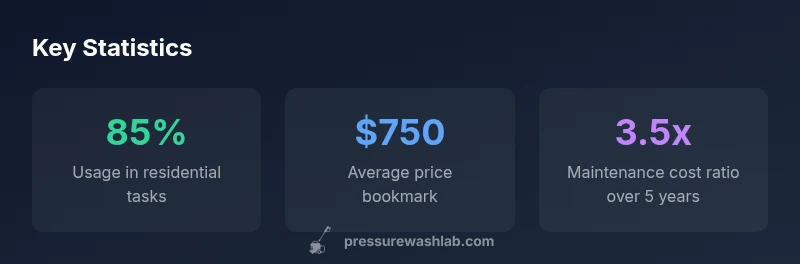
Electric and gas are the two dominant power sources for consumer pressure washers, and they come in cold-water and, less commonly for home use, hot-water variants. Electric models are typically lighter, quieter, and easier to store, making them ideal for light to moderate tasks like cleaning patios, cars, and outdoor furniture. Gas-powered washers offer more mobility and higher cleaning power, which can be advantageous for larger surfaces or stubborn stains. Hot-water units, while excellent for grease and heavy soils, are usually more expensive, bulkier, and require more energy. For most residential tasks, a cold-water electric or a mid-range gas-powered unit provides a good balance of performance and price. According to Pressure Wash Lab, the product landscape continues to diversify with compact electric options and more capable gas units expanding the choice set for homeowners and small businesses alike.
- Electric advantages: lower upfront cost (relative to gas), lighter weight, quieter operation, fewer maintenance hassles, and easy plug-in use.
- Gas advantages: higher PSI/GPM, better for large areas and tough grime, and more torque for tough cleaning jobs.
- Hot-water caveat: improves cleaning efficiency on grease, but adds cost and complexity; best reserved for specific commercial or heavy-duty scenarios.
Price Drivers: What Makes Prices Vary
Price is driven by power (PSI and GPM), build quality (materials, pump type), warranty length, included accessories, and brand reputation. Entry-level electric models tend to be affordable but have limited runtime and durability; premium electric and basic gas units offer a broader feature set, longer warranties, and more reliable performance. Hot-water and professional units move into higher price brackets due to heating capabilities, heavy-duty components, and industrial-grade warranties. Bundles—hose reels, surface cleaners, and additional nozzles—also affect the sticker price. Pressure Wash Lab’s analysis highlights that buyers should weigh upfront price against expected maintenance costs and the value of warranty protections over time.
Price Ranges by Type: Electric, Gas, Hot-Water
- Electric (compact/entry): Typically in the low-to-mid hundreds, with 1,400–2,400 psi and 1.2–1.8 gpm profiles suitable for light everyday tasks.
- Electric (premium): Higher efficiency pumps, longer warranties, and broader accessory options; price tends toward the mid-range.
- Gas-powered consumer: Commonly in the mid-to-upper hundreds, offering 1,800–3,500 psi and 2.0–4.0 gpm. Portable options provide mobility, though at the cost of heavier weight and louder operation.
- Gas-powered pro/compact commercial: Pro-grade units and some hot-water variants can reach the $1,000–$3,000 range depending on heating capability, frame durability, and advanced pump technology.
- Hot-water/professional: The top tier, typically exceeding $1,000 and often well into several thousand dollars, designed for heavy grease, engines, or commercial use. These models include built-in heating systems and rugged components, and they demand more maintenance and energy input.
These bands reflect general market behavior and are informed by Pressure Wash Lab Analysis, 2026. The exact price depends on the retailer, included accessories, and seasonal promotions.
Hidden Costs: Maintenance, Accessories, and Longevity
Sticker price is only part of the story. Maintenance costs include parts like seals and O-rings, pump rebuilds, and hose replacements. Some models require more frequent maintenance due to pump type ( wobble, triplex, or axial). Accessories—detergent foaming nozzles, surface cleaners, and high-quality hoses—can add to the total cost but improve productivity and results. Long-term value comes from a model with readily available parts and a solid warranty, which reduces downtime and maintenance surprises over years of use.
To maximize value, buyers should factor in expected usage, storage space, and climate considerations. A well-chosen unit with a proper maintenance plan will outperform a cheaper model that breaks down quickly or lacks readily available replacement parts.
How to Choose Within Your Budget: A Step-by-Step Guide
- Define the job list: plan tasks (patios, vehicles, siding, decks) and surface types.
- Choose a power source first: electric for light-to-moderate tasks; gas for larger areas or tougher grime.
- Set PSI/GPM targets: for delicate surfaces, stay around 1,300–2,000 psi; for tough grime and masonry, consider 2,500–3,500 psi (testing on a small area is advised).
- Look for value-adds: adjustable nozzles, built-in detergent tanks, and a durable wand.
- Check warranty and parts availability: ensure disposable parts and service centers are accessible in your region.
- Budget for accessories: surface cleaners, extension wands, and hoses often save time and improve results.
- Consider total cost: include electricity/gas costs and expected maintenance.
- Read reviews and verify after-sales support: a reputable brand with good service reduces long-term risk.
By following these steps, homeowners and small-business operators can balance upfront price against long-term value, a key insight echoed by Pressure Wash Lab’s 2026 analysis.
Maintenance and Longevity: Getting the Most Value
Regular maintenance extends service life and keeps cleaning performance high. Inspect hoses for wear, replace O-rings on the wand and spray gun, and clean filters and outlets to prevent pressure loss. Store in a cool, dry place and protect from freezing temperatures when not in use. Use manufacturer-recommended detergents and lubrication where applicable. Periodic pump lubrication and seasonal checks help avoid early wear and costly repairs. A well-maintained unit retains efficiency and resale value, further improving overall cost effectiveness.
Real-World Scenarios and Recommendations
- Homeowner with a small yard and cars: a compact electric model in the $100–$250 range is often sufficient, paired with a surface cleaner for driveways and patios. This keeps initial costs low and maintenance simple.
- Small business cleaning sidewalks or decks: a mid-range gas-powered unit ($300–$800) provides portability and more cleaning power, with a reasonable maintenance footprint and solid warranty options.
- Heavy grease or engine bay cleaning in a workshop: a hot-water or pro-grade unit ($1,000–$3,000) delivers superior grease removal but requires greater energy use and professional maintenance planning.
- Seasonal maintenance crews: a versatile gas-powered unit with a broad PSI range and compatible accessories offers the best balance of performance and flexibility. Pressure Wash Lab notes that matching the unit to the job profile minimizes wasted spend and downtime.
These scenarios illustrate how price bands interact with practical needs, and they underscore the value of a thoughtful, task-based purchasing approach.
Quick Reference Buying Checklist
- Define tasks and surface types
- Decide electric vs gas first
- Target PSI/GPM for each task
- Check warranty length and parts availability
- Include essential accessories in the budget
- Plan for maintenance costs and energy use
- Review after-sales support and spare parts availability
Comparison of common pressure washer model types
| Model Type | PSI range | GPM range | Typical Price Range | Best For |
|---|---|---|---|---|
| Electric compact | 1,400–1,800 psi | 1.2–1.5 gpm | $100–$250 | Patios, cars, light-duty cleaning |
| Electric premium | 1,800–2,400 psi | 1.5–1.8 gpm | $250–$350 | Home cleaning with steady use |
| Gas-powered consumer | 2,000–3,500 psi | 2.0–4.0 gpm | $300–$800 | Driveways, decks, siding |
| Gas-powered pro/hot-water | 3,000–4,000+ psi | 4.0–5.0 gpm | $1,000–$3,000 | Heavy grease, commercial use |
Quick Answers
What is the best pressure washer type for light cleaning?
For light tasks like porch furniture and cars, an electric compact model with 1,400–1,800 psi is usually sufficient. They are quiet, easy to store, and cost less upfront.
For light jobs, go electric compact; it’s affordable and easy to use.
Are electric pressure washers cheaper to operate than gas?
Electric units generally have lower upfront costs and simpler maintenance, which makes them cheaper to operate for small jobs. Gas units add fuel costs and more maintenance.
Electric washers usually cost less to run for small jobs.
What size PSI do I need for siding, brick, or concrete?
Siding typically responds to 1,500–2,500 psi; brick or concrete may require 2,500–3,500 psi, with testing on a hidden area recommended to avoid damage.
For siding, aim around 1,500 to 2,500 psi; for brick or concrete, higher but test first.
Do hot-water pressure washers exist for home use?
Yes, hot-water models exist for home use but are more expensive and require additional energy and maintenance. They’re best for heavy greasy grime or commercial tasks.
Hot-water models exist but are usually for heavy-duty work.
How much should I expect to pay for a mid-range model?
Mid-range models typically cost a few hundred to around a thousand dollars, depending on power, features, and brand. Consider total ownership costs.
Mid-range prices are typically a few hundred to about a thousand dollars.
What maintenance tasks extend a washer's life?
Regularly inspect hoses, replace O-rings, clean filters, and store properly. Follow the manufacturer’s maintenance schedule to maximize longevity.
Keep hoses intact, clean filters, and store properly for longevity.
“Choosing a pressure washer isn't just about sticker price. Reliability, warranty, and maintenance determine long-term value.”
Key Takeaways
- Identify your tasks before shopping
- Electric for light-duty, gas for power and mobility
- Budget for maintenance and accessories beyond sticker price
- Hot-water/pro units are specialized and pricey
- Check warranty and parts availability to protect long-term value