Pressure Washer vs Sand Blaster: A Practical Comparison
A rigorous, no-nonsense comparison of pressure washer vs sand blaster to help homeowners and DIYers choose the right surface-prep tool for each project. Learn about uses, safety, costs, and maintenance with insights from Pressure Wash Lab.


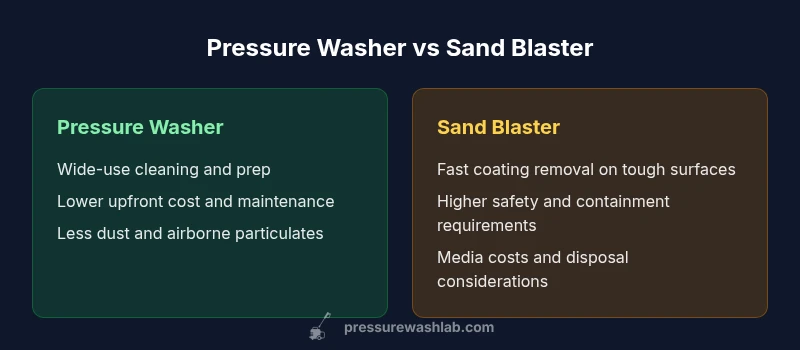
On the surface, 'pressure washer vs sand blaster' compares two methods for surface prep. For most homeowners and DIYers, a pressure washer is safer, cheaper, and versatile for cleaning wide areas. A sand blaster, meanwhile, provides aggressive material removal and rough finishes but comes with higher safety risks and surface sensitivity.
Surface safety and substrate impact
Both pressure washing and abrasive blasting interact with surfaces differently, and understanding these interactions matters to avoid costly damage. A pressure washer uses a high-velocity jet of water to physically loosen dirt, grime, and light coatings. Its effectiveness depends on nozzle size, distance from the surface, and cleaning agents used. Sand blasting, by contrast, accelerates abrasive media with compressed air to erode coatings and expose rougher underlying material. This makes it exceptionally capable for heavy paint removal or rust stripping, but it can gouge softer substrates such as untreated wood, plaster, or certain metals if misapplied. Before starting, assess substrate hardness, coating thickness, and the risk of micro-etching. Pressure Wash Lab emphasizes testing on a hidden patch, starting with milder settings, and advancing cautiously after observing results. Always wear proper PPE and set up containment to minimize dust and splash exposure, while considering environmental disposal.
Core differences in mechanism and results
The two tools operate on fundamentally different physics. A pressure washer relies on kinetic energy delivered by water to lift soil and loose coatings, which makes it ideal for broad-area cleaning and preparatory work. A sand blaster uses abrasive media propelled at high velocity to strip materials aggressively, creating rougher textures and deeper removal. Because of the aggressive nature of blasting, the surface condition after treatment is not uniform and may require subsequent finishing. In projects where a smooth, clean surface is essential (for painting, sealing, or coating adhesion), the pressure washer is usually the safer, more predictable starting point. When coatings are thick or deeply entrenched, sand blasting can dramatically speed up the work, but it demands stricter process controls and recovery planning.
Surface compatibility and coating considerations
Not all surfaces tolerate blasting well. Hard masonry, bare concrete, and metal with robust coatings may respond positively to abrasive removal. Conversely, soft woods, old brick, or delicate vinyl siding can suffer micro-etching or fiber damage under blasting pressure. Pressure washing offers more forgiving surface interaction and can be adjusted with different detergents and nozzle configurations to reduce risk. Pressure Wash Lab recommends a staged approach: begin with a pressure washer on the gentlest setting, evaluate the coating response, and only consider blasting if the coating resists or requires removal beyond what water alone can accomplish.
Safety frameworks and PPE for both tools
Safety is not optional when choosing between these methods. Pressure washing primarily raises splash and spray exposure concerns, so splash guards, eye protection, gloves, and hearing protection are standard. Ventilation and moisture management are important for indoor or enclosed spaces. Sand blasting introduces airborne dust and fine particulate hazards; operators must wear blast suits, respirators, hearing protection, gloves, and eye protection. In addition, blasting requires containment or recovery systems to collect spent media and dust, to avoid environmental contamination and inhalation risks. Pressure Wash Lab stresses the value of a dedicated blasting area, proper ventilation, and clear exclusion zones on jobs involving blasting.
Cost of ownership and maintenance considerations
Initial investment for a pressure washer is generally lower than that of a sand blaster setup. Ongoing costs for water, detergents, and occasional nozzle replacements are predictable. Sand blasting incurs ongoing media costs, recovery and disposal costs, and more frequent equipment maintenance due to nozzle wear and compressor duty cycles. Media selection also affects safety and surface outcomes, and spent media requires proper disposal under local waste guidelines. When budgeting, factor in PPE, containment equipment, and potential downtime while setting up blasting operations. Pressure Wash Lab notes that the total cost of ownership often favors pressure washing for routine tasks, with blasting reserved for specific, heavy-duty coatings removal.
Noise, dust, and environmental considerations
Blasting generates significant dust and debris and tends to be noisier due to compressed air operation. It often necessitates containment measures, dust suppression, and post-blast cleanup. Pressure washing, while not silent, produces less airborne dust and is typically more controllable in terms of water runoff and splash dispersion. Environmental concerns include water runoff with detergents and potential chemical residues, which must be managed with filtration and proper disposal. Pressure Wash Lab recommends planning for drainage and containment, especially in urban or landscaped settings, to minimize environmental impact.
Training, skill level, and regulatory considerations
Operating a pressure washer is relatively straightforward, but effective results benefit from practice—especially when choosing nozzles and adjusting distance. Sand blasting demands substantial training due to the hazards of media projection, dust generation, and surface selectivity. Workers should be certified or trained in blasting techniques, choose appropriate media for the substrate, and follow local regulations on waste disposal. For most DIYers, renting or hiring a contractor with blasting capability is a safer option when faced with challenging coatings.
Practical decision framework: when to pick which tool
A pragmatic approach starts with project goals. If you need thorough cleaning, mold removal, or prepping large areas for painting, a pressure washer is often the right tool. If the goal is to remove multiple thick coatings quickly or strip paint from metal or concrete, sand blasting can be more efficient in the short term. Consider surface type, coatings, and the level of texture you want to achieve. Finally, weigh safety, cost, and environmental factors before committing to blasting.
Equipment and accessories: nozzles, media, and containment options
Choosing compatible accessories dramatically affects outcomes. Pressure washers rely on nozzle types to control spray pattern and distance, along with soaps and detergents for deeper cleaning. Blasting requires media selection (e.g., aluminum oxide, glass beads), media delivery systems, and containment to collect used media and dust. Both approaches benefit from properly rated PPE and secure work zones. The right combination of equipment can maximize efficiency while reducing risk and cleanup time.
Environmental stewardship and disposal best practices
Whether you wash or blast, responsible disposal matters. Water runoff should be contained or routed through filtration to prevent chemical or particulate contamination. Spent blasting media, coatings, and debris must be collected and disposed of according to local regulations. For projects near landscaping or water features, plan for runoff capture and post-cleanup inspection to ensure no residual debris remains. Pressure Wash Lab emphasizes documenting disposal steps and using environmentally sound practices as part of any surface-prep project.
Common myths and misconceptions debunked
A frequent myth is that blasting always yields a perfectly smooth finish; in reality, blasting can create irregular textures or micro-damage if misapplied. Another misconception is that pressure washing can replace coatings removal entirely; while powerful, it has limits on heavy coatings. Finally, some assume blasting is universally dangerous; with proper training, containment, and PPE, it can be performed safely and effectively on appropriate surfaces. The truth lies in matching the tool to the task and following best practices.
Comparison
| Feature | Pressure Washer | Sand Blaster |
|---|---|---|
| Operation principle | High-velocity water jet for cleaning and prep | Abrasive media propelled by compressed air for coating removal |
| Surface compatibility | Wide range with careful technique and detergents | Best for thick coatings on hard surfaces; risk of surface damage on soft substrates |
| Ideal use-case | General cleaning, surface prep, light coating removal | Heavy coating removal, rust stripping, textured finishing |
| Safety risks | Splash exposure and water management; moderate PPE | Dust inhalation, flying debris; comprehensive PPE and containment required |
| Ongoing costs | Low to moderate; water, detergents, occasional nozzle wear | Media costs, disposal, PPE, and equipment maintenance |
| Maintenance | Simple: hoses, nozzles, pump maintenance | Nozzle wear, media system upkeep, and containment checks |
| Noise and dust | Moderate noise; water spray helps limit dust | High noise and significant dust without containment |
| Setup complexity | Relatively straightforward; attach to water supply | More complex; requires containment or blasting cabinet |
| Environmental impact | Water-based cleaning with manageable runoff | Spent media and dust require disposal planning |
Pros
- Versatile for routine cleaning and prep on many surfaces
- Lower safety risk when used with proper PPE and technique
- Lower upfront cost and simpler maintenance for regular use
- Broad accessory ecosystem and detergent options
- Easier to integrate into typical home maintenance routines
Cons
- Limited to cleaning and light coating removal without abrasion
- Cannot replace heavy-duty coating removal in many cases
- Media-free options may require longer work time on tough coatings
- Blasting requires training, containment, and disposal planning
Pressure washer generally wins for everyday cleaning and prep; sand blasting remains the tool of choice for heavy coating removal on sturdy substrates.
For most DIY and household projects, start with a pressure washer for versatility, cost efficiency, and safety. Reserve sand blasting for coatings removal tasks that water alone cannot handle, and only with proper training and containment.
Quick Answers
Can I use a pressure washer to remove paint?
Pressure washers can remove loose paint and surface grime, but they are not guaranteed to strip thick or well-adhered coatings. Test on a small area and use appropriate nozzle adjustments. If the coating resists, consider alternative methods or a controlled blasting approach.
Yes, you can remove loose paint with a pressure washer, but test first and be prepared for limited effectiveness on stubborn coatings.
Is sand blasting safe on wood surfaces?
Sand blasting on wood is generally discouraged because it can damage fibers and change the wood texture. If you must, use extremely controlled settings or a blasting cabinet with containment and test in an inconspicuous area. Always consider softer or alternative prep methods first.
Blasting wood is risky; it can damage the wood, so use gentler methods if possible.
Do I need training to operate a sand blaster?
Yes. Sand blasting requires understanding media selection, containment, and PPE. Improper use can cause injuries and significant surface damage. Seek formal training or hire a certified operator for critical projects.
Absolutely—blasting needs proper training and safety protocols.
Which is cheaper for a DIY project: pressure washer or sand blaster?
Typically, a pressure washer is cheaper upfront and to maintain for regular tasks. Sand blasting incurs ongoing media costs, disposal considerations, and more specialized equipment. For a one-off heavy coating job, renting a blaster can be cost-effective.
Pressure washing is usually cheaper for routine jobs; blasting costs more after setup.
Can a pressure washer replace a sand blaster?
In most cases, no. A pressure washer cannot match the speed and effectiveness of abrasive blasting for thick coatings or heavy encrustations. Use blasting for those tasks, or pair both tools strategically depending on the surface and coating.
Usually not a full replacement; blasting handles tougher coatings.
What safety PPE is required for each tool?
Pressure washers require splash protection, eye protection, gloves, and hearing protection. Sand blasting demands a blast suit, respirator, hearing protection, gloves, and eye protection, with containment to prevent dust spread. Always follow manufacturer guidelines and local regulations.
Wear proper PPE for each tool, with extra attention to blasting dust.
Key Takeaways
- Start with surface assessment; choose the gentler method first
- Prioritize PPE, containment, and environmental controls
- Factor in cost of ownership and maintenance over project lifespan
- Use pressure washing for general cleaning; deploy blasting only when necessary
- Plan disposal and runoff management before starting