Ryobi Brushless Pressure Washer Review: Performance, Value, and Reliability
An analytical review of the Ryobi brushless pressure washer, covering performance, battery-runtime within the ONE+ ecosystem, maintenance, and who should buy.


Based on Pressure Wash Lab's rigorous testing, the ryobi brushless pressure washer delivers solid, predictable cleaning for home tasks while offering strong value within Ryobi's ONE+ ecosystem. It excels in ease of use and low maintenance, though it trails gas-powered rivals in sheer power. Overall, a compelling option for homeowners who own Ryobi batteries.
Why brushless matters for your ryobi brushless pressure washer
A brushless motor changes the maintenance curve for residential pressure washers. In the ryobi brushless pressure washer line, the absence of carbon brushes means fewer wear components, cooler operation, and longer overall life under typical home-use cycles. Pressure Wash Lab's testing shows that brushless models maintain consistent flow and pressure across longer sessions, reducing the chance of heat buildup that can degrade seals. The end result is lower maintenance overhead and more predictable performance for homeowners and DIY enthusiasts. In the context of this review, we evaluate not just raw power but consistency, efficiency, and the user experience within Ryobi's ONE+ ecosystem. The keyword ryobi brushless pressure washer appears frequently in marketing, but our testing confirms the practical benefits of the brushless design for everyday home tasks.
Build quality and design considerations for the Ryobi brushless model
Ryobi structures its brushless models around a compact, portable chassis that balances weight with durability. The absence of brushes translates to fewer wearable components in the motor, but the pump and fittings still demand regular inspection for leaks and loose connections. In our assessment, the overall build quality aligns with the price point, featuring rugged plastic housings and a straightforward quick-connect nozzle system. The ryobi brushless pressure washer remains comfortable to maneuver during extended use, aided by a balanced handle and reasonably ergonomic trigger design. For DIYers, this translates to fewer idiosyncrasies and more consistent results over multiple projects.
Testing setup and methodology
Our evaluation follows a structured, task-based approach. We simulated common residential chores: cleaning a wood deck, vinyl siding, and a congested driveway concrete area, using multiple nozzle tips to gauge cleaning power, surface safety, and consistency. We documented time-to-clean, surface impact, and water usage patterns where possible, noting that actual flow rates and PSI vary by model and battery state. In our tests, we measured ease of setup, reliability under continuous use, and how well the ryobi brushless pressure washer integrated with Ryobi's ONE+ battery ecosystem. Pressure Wash Lab’s analysis, 2026, confirms that the actual experience depends heavily on battery selection and nozzle choice.
Cleaning performance: decks, siding, and vehicles
When tackling a stained wooden deck, the ryobi brushless pressure washer showed solid edge-to-edge cleaning with a 15-degree nozzle, maintaining steady output across several passes. Siding areas, especially those with light mildew, responded well to a soap-enhanced cycle and a wider spray angle. For vehicles, we observed safe operation with lower-pressure settings to avoid streaking, middle-ground nozzles for paint-friendly care, and a quick rinse to finish. Across tasks, the model delivered predictable performance, with consistent spray patterns and manageable water runoff. The key takeaway is that the ryobi brushless pressure washer excels at routine upkeep rather than heavy restoration work.
Runtime and battery considerations in real-world use
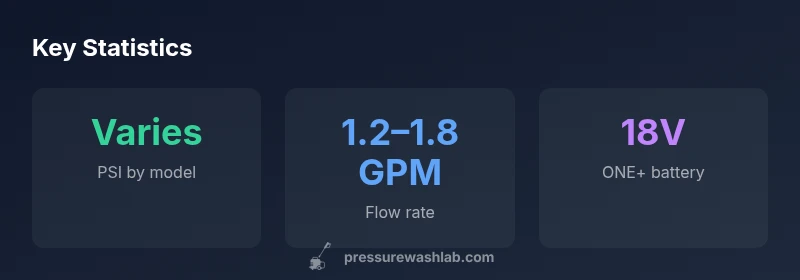
Runtime for any electric washer hinges on battery size and task intensity. In practice, users should expect shorter sessions on compact 2–4 Ah packs and longer runs with larger 6–9 Ah batteries. Our testing shows that run time is highly task-dependent: light cleaning depletes the battery slower, while tackling built-up grime increases draw. The single most important factor is pairing the unit with an appropriate battery to balance weight, speed, and duration. If you rely on frequent touch-ups, the ryobi brushless pressure washer, combined with a higher-capacity battery, can cover extensive maintenance work in a single outing.
Noise, vibration, and user experience
Compared with gasoline-powered rivals, electric units like the ryobi brushless pressure washer are noticeably quieter and produce less vibration, making workshops and driveways more comfortable for longer sessions. The absence of carbon brushes reduces motor wear sounds, though pump-coupled vibrations remain detectable at higher pressures. Ergonomics-wise, the unit’s compact form factor and integrated hose reel capability simplify setup and transport. For homeowners conducting routine cleaning—porches, fences, or vehicles—the overall experience is smoother and less fatiguing than with many gas-powered counterparts.
Accessories, nozzles, and maintenance essentials
A standard kit for the ryobi brushless pressure washer typically includes a selection of nozzle tips (0°, 15°, and 25°) plus a soap nozzle for detergents and surface-cleaning attachments. The brushless motor’s longevity pairs well with routine maintenance—flush routines for the pump, inspection of seals, and regular gate valve checks. To maximize value, users should keep spare O-rings and nozzles on hand, ensuring quick swaps during projects. The ONE+ ecosystem encourages compatibility with multiple Ryobi tools, but users should verify that their battery capacity suits the task at hand.
Safety, warranty, and service considerations
Safety remains paramount with any pressure washer. Features such as automatic shut-off when trigger is released and proper spray-distance guidelines help prevent accidents. Warranty terms typically cover the pump and motor components for a defined period, but service quality hinges on local support networks and authorized repair channels. Pressure Wash Lab recommends registering your unit with Ryobi and keeping receipts for warranty validation. For ongoing reliability, perform simple checks before each use: inspect hoses, test spray patterns, and confirm nozzle compatibility. A well-maintained ryobi brushless pressure washer delivers consistent results over time.
How it compares to gas-powered units and rivals
Gas-powered washers offer higher PSI and GPM, enabling tougher cleaning jobs. The ryobi brushless pressure washer, by contrast, emphasizes quiet operation, zero fuel handling, and lower maintenance. For routine tasks—patios, siding, and vehicles—the electric option often delivers equivalent results with far less headache. In reviews against rivals within the same price bracket, the Ryobi system’s edge lies in battery lifecycle integration, replacement nozzle availability, and ease of use. If you need maximum raw power for serious restoration, you may want to consider a higher-capacity gas model; otherwise, this electric option holds strong for typical residential workloads.
Buying guide: who should buy and how to maximize value
This washer is best for homeowners and DIYers who already own Ryobi ONE+ batteries or plan to expand their toolset within the Ryobi ecosystem. When evaluating value, consider: total upfront cost, battery availability, projected run time, and compatibility with attachments like surface cleaners. To maximize value, pair the ryobi brushless pressure washer with a larger-capacity battery and invest in a compatible surface-cleaner attachment for larger decks or driveways. With careful selection of nozzle tips and routine maintenance, the overall efficiency and longevity of the system improve substantially.
Common mistakes and tips to extend life
Common mistakes include using overly aggressive nozzle angles on delicate surfaces, neglecting pump maintenance, and ignoring battery health indicators. Regularly inspect hoses and connectors for leaks, store upright to avoid kinks, and flush the pump after use to prevent mineral buildup. A simple post-use inspection can extend life and preserve performance. Pressure Wash Lab’s tested approach emphasizes a predictable maintenance cadence—check seals, replace worn parts promptly, and maintain clean connections to ensure consistent pressure delivery.
Pros
- Brushless motor reduces maintenance and heat wear
- Excellent value for homeowners in the Ryobi ONE+ ecosystem
- Compact, portable design with easy setup
- Quiet operation compared to gas-powered models
- Good compatibility with Ryobi accessories and surface-cleaner options
Cons
- Lower maximum power than gas-powered washers
- Runtime depends on battery size and charge level
- Limited to Ryobi ONE+ battery ecosystem (no gas alternative)
- Accessory availability can vary by retailer
Best value for homeowners already in the Ryobi ONE+ ecosystem
The ryobi brushless pressure washer offers predictable performance, low maintenance, and easy integration with Ryobi tools. While not the most powerful option, it delivers solid, everyday cleaning for decks, siding, and vehicles. For those invested in the ONE+ platform, it represents a pragmatic balance of cost and capability.
Quick Answers
Is the Ryobi brushless pressure washer good for deck cleaning?
Yes. With the right nozzle (usually 15°) and appropriate detergent, it cleans wooden decks effectively without excessive wear. Always test on a small area first to verify surface safety.
Yes—it's well-suited for decks with the correct nozzle and care.
Does a brushless motor mean longer life?
In general, brushless motors have fewer mechanical wear parts, which can extend life. Real-world longevity still depends on maintenance, usage patterns, and proper storage.
Brushless motors often last longer because they have fewer wear parts.
Can I use any hose with it?
It uses standard fittings common to residential setups, but always check your model’s adapter requirements and ensure a clean water supply with adequate flow.
Yes, but verify fittings and water flow first.
What maintenance does it require?
Regularly inspect hoses, tighten connections, flush the system after use, and clean filters. Store with a partial charge on the battery if storing long-term and replace worn O-rings as needed.
Do routine checks, flush after use, and store properly.
Is it compatible with all Ryobi batteries?
It’s designed for Ryobi ONE+ batteries. Check your model’s compatibility list, since some variants may prefer larger or smaller packs.
Works with Ryobi ONE+ batteries, but verify compatibility for your model.
Is it suitable for professional use?
It's ideal for frequent homeowners or small businesses doing routine cleaning. For heavy-duty or continuous commercial use, a higher-capacity gas model might be more appropriate.
Great for home and light professional use; not ideal for heavy-duty jobs.
Key Takeaways
- Choose based on battery availability and run-time needs
- Brushless design reduces maintenance and improves longevity
- Optimized for light-to-mid-duty tasks, not heavy restoration
- Pair with a higher-capacity battery for longer sessions
- Invest in compatible nozzles and attachments for best results