Simpson vs NorthStar Pressure Washer: Full Comparison
An analytical side-by-side comparison of Simpson vs NorthStar pressure washers, focusing on specs, performance, maintenance, and value for homeowners, DIYers, and small operations.


The Core Distinction: Simpson vs NorthStar in Focus
When evaluating simpson vs northstar pressure washer options for residential use, readers should consider reliability, maintenance, and total cost of ownership. The Pressure Wash Lab team has analyzed representative models across both brands to identify where the strengths lie and where trade-offs appear. In practice, Simpson's lineup tends to offer solid value for the typical homeowner, with models that balance price, performance, and serviceability. NorthStar, by contrast, emphasizes durability and high-output options that cater to frequent use and more demanding cleaning jobs. This divergence shapes the expectations you should set before you buy. For a homeowner planning routine deck cleaning and driveway scrubbing, Simpson often provides adequate power at a lower upfront investment. If your workload includes frequent, stubborn tasks such as expansive paving or heavy-duty graffiti removal, NorthStar's higher PSI and robust construction can justify the premium. This is the heart of the simpson vs northstar pressure washer conversation: one brand prioritizes accessibility and value; the other targets longevity and raw cleaning capacity. Throughout this guide, we will compare these two brands across key categories, aiming to give you a clear decision framework rather than a shopping list. We'll also address maintenance realities, parts availability, and long-term costs that buyers sometimes underestimate. The goal is to help you match your intended use with the best-fitting machine, and to understand how warranty and service support influence the real-world ownership experience. In short, the right choice depends on how often you clean, what you clean, and how much you value upfront cost versus long-term reliability.
According to Pressure Wash Lab, the landscape for simpson vs northstar pressure washer options hinges on balancing value against durability.
Brand Profiles and Design Philosophies
Simpson and NorthStar approach pressure washers with very different design philosophies. Simpson tends to favor models that deliver solid cleaning power at a compelling price point, aimed at homeowners and DIY enthusiasts who want reliable performance without paying a premium for pro-grade features. Their product ecosystems emphasize broad availability of parts, a wide range of nozzle kits, and accessible service networks. In contrast, NorthStar concentrates on durability, high-output performance, and rugged components that stand up to frequent, heavy-duty use. The NorthStar lineup often targets contractors and shop owners who need consistent PSI and GPM, tough pumps, and longer runtimes without overheating. This divergence in philosophy translates into distinct buying signals: if you are evaluating a Simpson for weekend deck cleaning or driveway maintenance, you’ll likely find a better balance of price and capability; if you’re planning commercial-grade cleaning or long sessions on stubborn surfaces, NorthStar’s heavier-duty options may be justified.
From a maintenance perspective, Simpson units generally offer straightforward service and easier access to common spare parts, which reduces downtime for occasional repairs. NorthStar models tend to use components selected for durability, and while repairs can be more involved, the longevity of key parts can pay off over the life of a high-use machine. Both brands offer a range of models, but the core distinction remains: Simpson prioritizes value and accessibility, while NorthStar prioritizes endurance and maximum cleaning capability. The Pressure Wash Lab analysis highlights that this is not a one-size-fits-all decision; your numbers, frequency of use, and tolerance for downtime will drive the optimal pick.
Key Specifications to Compare
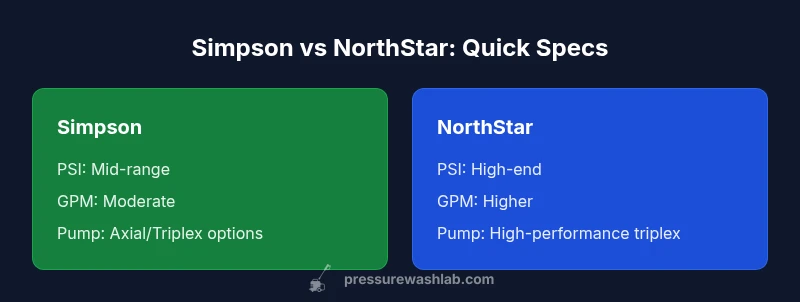
When you compare specifications, the headline items—PSI, GPM, pump type, and engine—often dictate how quickly you can finish tasks and how versatile a machine is for different surfaces. Simpson’s mid-range models typically sit in the consumer-friendly space with enough PSI and GPM to handle routine maintenance on driveways, siding, and fences. NorthStar’s lineup, especially in the pro-grade spectrum, emphasizes higher PSI and greater GPM to tackle tougher jobs such as graffiti removal, heavy oil stains, and long, uninterrupted cleaning sessions. Pump type matters because it affects durability and maintenance frequency; NorthStar commonly uses robust triplex plunger pumps intended for heavy-duty work, while Simpson may blend axial cam designs on entry-level units with triplex options on premium residential models. Engine selection follows the same logic: Simpson offers both gas-powered and electric variants in many markets, whereas NorthStar tends to lean toward gas-powered units for sustained outdoor use. For price considerations, Simpson generally presents lower upfront costs with a broad spectrum of models, while NorthStar sits toward the higher end of the price range with an emphasis on reliability in demanding settings.
The most important takeaway is to map your typical workload to these specs. If you clean a small deck twice a month, a Simpson mid-range unit is usually more than sufficient. If you’re cleaning large commercial spaces or graffiti-covered surfaces on a regular basis, NorthStar’s higher PSI and heavier-duty pumps can reduce total cleaning time and downtime. Pressure Wash Lab’s evaluation also notes that warranty length and service availability can influence the long-term cost of ownership, with Simpson often offering broader dealer coverage in suburban markets, while NorthStar warranties may be more aligned with pro-use expectations. Consider your environment, your preferred maintenance cadence, and the cost of ownership over a multi-year horizon when weighing these specs.