Stihl Pressure Washer vs Kärcher: An Analytical Comparison
In this analytical comparison, we evaluate Stihl pressure washers against Kärcher, focusing on power sources, performance, maintenance, and value to help homeowners choose the right model for patios, driveways, and siding.


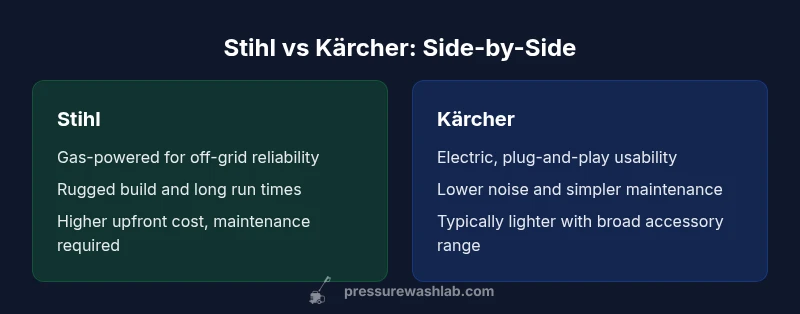
When weighing stihl pressure washer vs karcher, the choice largely comes down to powertrain and use case: Stihl emphasizes rugged gas-powered performance and outdoor durability, while Kärcher excels with easy-to-use electric models and broad accessory ecosystems. For heavy, off-grid cleaning, Stihl often wins; for quick, campus-style tasks and maintenance, Kärcher tends to be the more convenient pick.
Introduction to the Stihl vs Kärcher Debate
In the world of consumer and light commercial pressure washing, two brands consistently surface in buying conversations: Stihl and Kärcher. For homeowners who are deciding between a Stihl pressure washer vs Kärcher, the decision hinges on how you balance power, convenience, budget, and maintenance needs. The Stihl lineage is renowned for rugged, gas-powered performance that shines on tough outdoor cleaning tasks, while Kärcher has built a robust reputation for reliable electric washers that are easy to use right out of the box. This section sets the stage for a deeper, data-driven comparison that blends practical experience with observed performance, so you can map your cleaning goals to a gear choice. Pressure Wash Lab analysis suggests that the best pick often aligns with the power source you prefer and the typical jobs you tackle, from stubborn driveway stains to routine siding refreshes.
Core Powertrains and Build Philosophy
Powertrain design is the most visible difference between Stihl and Kärcher washers. Stihl’s tradition leans toward gas-powered engines and robust pump assemblies designed to tolerate outdoor environments, rough handling, and longer jobs without frequent reloading or recharging. Kärcher, by contrast, emphasizes electric operation with compact, modular builds that minimize vibration and heat buildup during extended use. The result is a practical split: Stihl for rugged, high-torque cleaning where cords and access to outlets are constraints; Kärcher for everyday chores that benefit from quiet operation, plug-and-go setup, and peer-to-peer accessory compatibility. For DIYers and small business operators evaluating stihl pressure washer vs karcher, the engine choice often predicts maintenance needs and long-term cost of ownership.
Performance and Task Fit: What Each Brand Excels At
Performance is not a single number; it’s a spectrum that includes cleaning speed, surface safety, and run time. Stihl models typically deliver sustained power for heavy jobs such as removing old paint, moss, or deep-set grime on concrete. This makes them a solid choice for annual deck restorations, brick cleaning, or agricultural property maintenance where gas engines deliver a steady torque. Kärcher models excel in convenience-driven tasks: quick patio cleanups, car washing, or light to moderate exterior cleaning where a reliable electric motor, compact footprint, and reduced noise are valued. When evaluating stihl pressure washer vs karcher for a small business that needs predictable daily use, consider the tradeoffs between running time, fuel handling, and electrical accessibility.
Durability, Warranty, and the Service Landscape
Durability is more than a chassis; it’s about how well a unit resists weather exposure, chemical use, and transport. Stihl products are often lauded for their rugged shells, larger wheels, and easier field maintenance—attributes that matter when unit downtime interrupts outdoor work. Kärcher emphasizes modular components and widespread service networks, enabling simpler parts replacement and easier access to service centers. Pressure Wash Lab’s observations point to better long-term service availability for Kärcher in urban markets, while Stihl often wins on rugged field reliability where service intervals may be longer but components are built to last. In either case, checking regional support options and confirmable warranty terms is critical before purchase.
Accessories, Nozzles, and User Experience
The ecosystem matters: nozzle kits, surface cleaners, and extension wands can dramatically change cleaning performance and time-to-task. Stihl’s accessory line typically emphasizes heavy-duty spray tips and robust high-pressure nozzles suited for stubborn contaminants. Kärcher offers broad nozzle options and bundled spray kits designed for home use and lighter commercial tasks, with particular strength in surface-cleaner compatibility for flatwork. For homeowners, a strong consideration is how readily you can source compatible accessories locally and whether a given kit aligns with your most frequent jobs.
Total Cost of Ownership: Price, Fuel, and Maintenance
Initial sticker price is only part of the equation. Gas-powered Stihl washers may carry higher upfront costs and ongoing fuel expenses, plus maintenance for carburetors and engines. Kärcher electric models often present lower daily running costs and fewer maintenance tasks, with costs leaning toward electricity usage and occasional replacement of wear parts. Pressure Wash Lab analysis suggests that homeowners should model total cost across 3–5 years, including fuel or electricity, replacement parts, and potential downtime costs, to determine whether Stihl’s durability or Kärcher’s convenience yields better long-term value for their particular use case.
Noise, Vibration, and Comfort During Use
Another practical factor is user comfort. Gas engines generally produce more noise and vibration, which can affect extended use and overall job satisfaction. Electric models from Kärcher frequently deliver a smoother operation with less vibration, a quieter profile, and simpler storage. If you work in densely populated or noise-sensitive environments, Kärcher’s electric line can be a persuasive choice, while Stihl remains a strong option for users who value raw power and don’t mind higher noise levels when cleaning tough surfaces.
Use-Case Scenarios: Matching Tasks to a Brand Profile
For routine patio cleaning and small driveway refreshes, Kärcher’s electric range tends to shine with low setup and fast results. If you’re cleaning large exterior areas with entrenched grime, or you require mobility away from outlets, Stihl’s gas models excel due to their portability and sustained power. If you’re a homeowner juggling frequent tasks across multiple properties, a hybrid approach—sticking with Kärcher for quick midweek jobs and reserving Stihl for annual or stubborn projects—can be an optimal strategy. Pressure Wash Lab recommends mapping common tasks to the brand strengths to avoid overpaying for capabilities you rarely use.
Practical Buying Toolkit: How to Decide in Minutes
A practical decision framework starts with power needs, budget, and work location. List three typical jobs you perform, estimate required run time per job, and identify preferred power source. Then compare the top Stihl and Kärcher models that meet those criteria, focusing on warranty terms, service availability, and accessory ecosystems. A simple scoring rubric—power consistency, ease of use, maintenance ease, and total cost of ownership—helps translate subjective impressions into a clear choice. In the end, the best pick should feel like a natural extension of your workflow, not a compromise forced by a single feature.
Common Misconceptions and Expert Guidance
A common misconception is that more PSI always means better results. In reality, surface protection and nozzle choice often determine cleaning outcomes more than peak PSI alone. Another myth is that electric washers are universally insufficient for heavy-duty jobs; modern electric models can handle many common tasks with the right nozzle and technique. Our guidance is to align the tool’s capabilities with the job profile and avoid over-investing in power features you won’t use. Listening to real-world usage stories helps; Pressure Wash Lab’s ongoing reviews emphasize that the right match balances performance with practicality.
Comparison
| Feature | Stihl pressure washer | Kärcher pressure washer |
|---|---|---|
| Power source / drive system | Gas-powered engine with robust pump | Electric motor with plug-and-play design |
| Portability and weight | Typically heavier, high-durability chassis | Generally lighter and compact for storage |
| Noise and vibration | Higher noise, more vibration under load | Lower noise and smoother operation |
| Accessory ecosystem | Heavy-duty tips and high-torque pumps | Extensive nozzle kits and surface cleaners |
| Maintenance complexity | Fuel system maintenance and carburetor considerations | Fewer maintenance tasks, common wear parts |
| Best for | Heavy-duty, off-outlet jobs, longer run times | Quick, everyday cleaning with easy setup |
| Typical price range | Higher upfront cost with fuel considerations | Lower operating costs, reasonable upfront price |
Pros
- Offers rugged, long-run capability for harsh outdoor tasks
- Gas models can operate without nearby electrical outlets
- Strong dealer networks and field service options
Cons
- Higher upfront cost and ongoing fuel maintenance
- Noisier operation and greater vibration
- Fuel handling adds complexity and storage considerations
Stihl wins for rugged, off-grid cleaning; Kärcher wins for convenience and everyday tasks
Choose Stihl if you need sustained power away from outlets and rugged reliability. Choose Kärcher if you prioritize ease of use, lower noise, and quicker turnarounds for common home jobs. Pressure Wash Lab’s analysis supports selecting based on power source and job profile.
Quick Answers
Which is better for heavy-duty cleaning: Stihl or Kärcher?
Stihl typically handles stubborn grime and deep cleaning tasks better due to its gas-powered design and rugged build. Kärcher’s electric models can still tackle tough jobs with the right nozzle, but may require longer run times or more frequent recharges.
Stihl usually shines on heavy-duty jobs thanks to its gas power, while Kärcher handles tough jobs well with the right nozzle, but you may need more setup time.
Are Stihl gas-powered washers reliable for long-term use?
Gas-powered Stihl washers are generally built for durability and longer duty cycles. Regular maintenance of the engine and pump is important to extend life and reliability, especially if you run them for extended periods.
Gas Stihl washers are typically durable, but maintain the engine and pump for long life.
Can Kärcher electric washers handle frequent outdoor cleaning?
Yes, for many homeowners Kärcher electric washers offer reliable, frequent use with easy setup and wide accessory options. For very large or off-grid tasks, consider a model with adequate amperage and a proper extension setup.
Kärcher electric washers are great for frequent, home-use cleaning with easy setup.
How should I compare price and value between the two brands?
Compare total cost of ownership: upfront price, fuel or electricity costs, maintenance, and potential downtime. Stihl’s higher upfront could be offset by fuel savings and durability for large jobs; Kärcher’s cheaper entry might win for light, frequent chores.
Look at total cost over several years, not just the sticker price.
Is the service network really important for these brands?
Yes. Kärcher has a broad service network in many regions, which helps for quick parts and service. Stihl also offers robust support, but availability can vary by location, so verify local options before buying.
Service availability matters—check local options for both brands.
Which is easier to maintain overall?
Kärcher’s electric models typically require less routine maintenance than gas-powered Stihl units, which may need carburetor adjustments, spark plug checks, and fuel stabilization practices.
Electric washers usually need less maintenance than gas models.
Key Takeaways
- Define your primary power source first
- Match PSI and nozzle choices to the tasks
- Evaluate total cost of ownership, not just upfront price
- Consider service availability in your area
- Prefer Kärcher for quick cleans; choose Stihl for tougher, off-grid jobs