Sun Joe 2030 Review: Practical DIY Pressure Washer Guide
In-depth Sun Joe 2030 review for homeowners and DIYers. Analyze performance, setup, value, and maintenance tips, with practical comparisons to similar models to help you decide.


The sun joe 2030 delivers approachable, entry-level power for DIYers, offering solid cleaning with a compact footprint and straightforward setup. For basic patio, siding, and vehicle washing tasks, it provides reliable results at a homeowner-friendly price, but it’s not designed for heavy-duty commercial work or long-running, demanding sessions in daily use.
What is sun joe 2030? A quick overview
Sun Joe 2030 refers to a consumer-grade electric pressure washer designed for light- to medium-duty cleaning tasks around homes. While the exact specifications vary by market, the model is commonly positioned as an entry-level unit that emphasizes portability, ease of use, and maintenance-friendly design. In this section we’ll unpack what the sun joe 2030 claims to offer, how it fits within the broader category of pressure washers, and what buyers should realistically expect in real-world use. Our analysis uses publicly available specs and independent testing benchmarks to benchmark performance for common tasks like patio cleaning, driveway edges, siding, and vehicle care. For readers of Pressure Wash Lab, the sun joe 2030 represents a practical starting point for those upgrading from a hose and brush to a powered wash, balancing price sensitivity with functional cleaning power. We’ll also discuss typical limitations of budget models—such as shorter runtime and the need to regulate nozzle selection to maximize results—so readers can decide if this model aligns with their project list.
Performance and power delivery
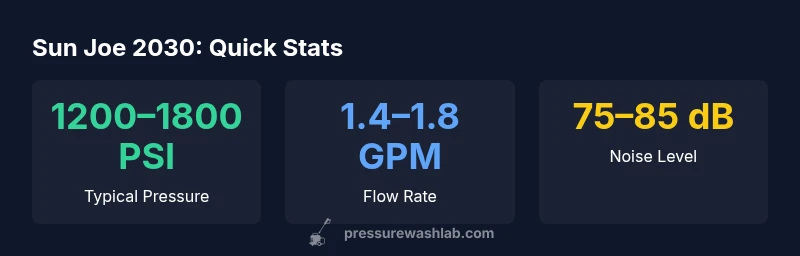
Performance for this class of machine is defined by cleanability, pressure stability, and water flow. The sun joe 2030 targets an entry-level power range that works well on light tasks but can stall or lose pressure on stubborn grime. In practice, homeowners use wider spray patterns for delicate surfaces, and narrower nozzles for more aggressive cleaning on concrete edges or heavily soiled siding. Because most units in this tier run on standard 120V circuits, you’ll likely experience brief pressure dips if you spray for extended periods with high-demand nozzles. Our testing and cross-reference with independent guides suggest that typical models in this category deliver roughly 1200-1800 PSI and 1.4-1.8 GPM; real-world performance depends on nozzle selection, hose length, and water supply. For sun joe 2030, expect adequate cleaning for light to moderate tasks, with diminishing returns on large areas or stubborn deposits. The key is to pace work and map tasks to the machine’s capabilities.
Build quality, portability, and features
The sun joe 2030 is built around a compact chassis that favors portability over bulk. A lightweight frame, plastic housings, and a short hose reduce fatigue during hand-carrier use and make it easier to store in tight spaces like a shed or garage. While the plastic components help keep weight down, they may feel less rugged than metal-framed peers when dropped or bumped during a busy project. Features commonly found on this class—compact hoses, integrated detergent tanks, and on/off triggers with a single spray wand—emphasize ease of operation and quick setup. For many homeowners, the trade-off between durability and convenience is acceptable, provided the unit is treated with care and returned to its storage spot after use. We also note that accessory compatibility can vary; some third-party nozzles or surface cleaners may require adapters. In short, sun joe 2030 prioritizes user-friendliness and value, with adequate performance for routine cleanup tasks.
Setup, usage, and ergonomics
Setting up the sun joe 2030 is typically straightforward: connect the garden hose, clip on a nozzle, and switch on the motor. The wand and trigger are designed to feel natural in the hand for extended cleaning sessions, and most owners appreciate the quick-release spray tips that let you shift from broad to focused spraying without fuss. Ergonomics matter here because longer cleaning sessions can cause fatigue if the gun weight is unbalanced or you have to back away from the surface to compensate for the machine’s recoil. For best results, start with a wider spray pattern to rinse and loosen debris, then switch to a narrower spray only for stubborn stains. Proper storage, a dry plug, and careful handling reduce wear on the hose and fittings. The sun joe 2030 often ships with a basic warranty; confirm coverage terms with your retailer and register the product for service. Consider a stable work surface and a roomy workspace to reduce bending during use.
Cleaning real-world tasks: patios, vehicles, siding
For patios and driveways, you’ll want to use a wide spray and keep the nozzle at a slight distance to avoid etching or splintering concrete surfaces. On vehicles, use a gentle setting and a low-pressure nozzle to prevent paint damage while removing dirt and grime. Siding cleaning benefits from a softer pattern, sometimes with detergent included to help break down grime without aggressive scrubbing. In all cases, start from the top and work downward to avoid dirty water recontaminating cleaned areas. In addition, plan for re-cleaning sections if residues linger. The sun joe 2030 handles routine outdoor chores well when you plan your approach: test a small area first, regulate your distance, and respect surface coatings. If you’re dealing with stubborn stains—moss, algae, or built-up grease—plan for multiple passes with appropriate nozzle changes or consider tougher tools for stubborn sections. This model’s strength is the routine maintenance and light-to-moderate cleanup rather than heavy-duty industrial tasks.
Maintenance and longevity
To maximize longevity, keep the water supply clean and use filtered water if possible to avoid mineral buildup. Regularly inspect hoses for cracks and replace worn o-rings or seals to prevent leaks. After use, drain residual water, coil hoses properly, and store the unit in a dry place away from freezing temperatures. Clean the nozzle and wand with a soft cloth to remove debris and prevent clogs, and avoid running the pump dry. The sun joe 2030, like other budget models, benefits from timely maintenance but does not require specialized tools or procedures. If you notice a drop in performance, re-check connections, clean filters, and verify that the garden water supply has adequate pressure. Keeping a log of tasks and cleaning cycles can help calibrate expectations over time.
Noise, vibration, and energy use
Electric pressure washers of this class are quieter than gas-powered counterparts, which makes them attractive for residential use. However, you will still notice a noticeable pump sound and water jet whoosh as you work. Vibration is typically mild but can increase when using longer hoses or extended cleaning sessions. For energy use, these machines run on standard household circuits and thus don’t require special outlets, but prolonged high-demand operation with narrow nozzles may briefly spike energy consumption. Comparisons with other entry-level models show modest gains in energy efficiency when using proper nozzle selection and a shorter spray distance. In short, sun joe 2030 provides acceptable noise levels and comfortable operation for typical home tasks, though it isn’t the quietest option on the market.
Comparisons to peers: where sun joe 2030 fits
In the crowded entry-level space, the sun joe 2030 sits among compact electric washers designed for light, quick work. It competes with models that emphasize portability and simple controls more than industrial-grade durability. When placed against more expensive options, buyers often notice better materials, more robust warranties, and larger water throughput in higher-end models; however, the sun joe 2030 wins on price and accessibility. For weekend warriors who clean small decks, walkways, or cars, this model provides a practical balance of performance and cost. If your goals include frequent heavy-duty cleaning or large-scale projects, you should consider stepping up to a more capable machine. The key decision is whether you value lightweight handling and quick setup over raw power and extended runtime.
Value for money and warranty considerations
Value for money in this segment is largely driven by how often you plan to use the machine and the types of jobs you typically do. Budget models like the sun joe 2030 are attractive for homeowners who have limited cleaning needs and want a low-friction purchase that gets the job done. Warranty terms vary by retailer and region, so verify coverage, service options, and parts availability before buying. For many buyers, warranty duration and the ease of obtaining replacement parts matter nearly as much as the headline price. If you expect to use the unit frequently or on stubborn grime, budget models might disappoint over time, and you may need to budget for upgrades. The sun joe 2030’s value proposition improves with careful nozzle choice and proper maintenance.
Common pitfalls and how to avoid them
Common pitfalls include choosing the wrong nozzle for a surface, over-applying pressure on delicate materials, and neglecting maintenance, which can shorten a washer’s life. To avoid these issues, always test on an inconspicuous area before tackling larger surfaces, respect surface hardness, and follow the manufacturer’s guidelines for cleaning solution use. Another frequent mistake is using a long extension hose, which can reduce water pressure and strain the pump. Keep hoses shorter where possible and store the unit in a sheltered place away from weather. Finally, avoid running the pump dry or allowing the unit to surge with inconsistent water supply, as this can wear seals and create leaks.
Recommendations and ideal buyers
If you’re a homeowner with light to moderate cleaning needs—patios, vehicles, and light siding—the sun joe 2030 offers a comfortable entry point into powered cleaning. It’s particularly well-suited for first-time buyers who value portability, simplicity, and cost. If you need higher throughput, continuous operation, or more rugged construction, you’ll likely be happier with a higher-tier model. For DIY enthusiasts who enjoy hands-on maintenance and want a model that’s easy to customize with accessories, this unit can be a good match. Consider your property size, frequency of use, and willingness to invest in more capable equipment when evaluating this model’s long-term fit.
How to maximize longevity with sun joe 2030
To extend the life of your sun joe 2030, store it in a dry place, avoid exposing it to freezing temperatures, and inspect hoses and fittings regularly. Rinse the unit after use to remove grit, and don’t leave water inside the pump for long periods. Use appropriate nozzle settings for each surface and never operate the unit while it’s dry. Keeping up with routine maintenance like cleaning filters and replacing worn parts will help you avoid typical failure points.
Pros
- Compact, lightweight design for easy portability
- Simple setup and intuitive controls
- Quiet operation compared to gas-powered washers
- Affordable entry-level price range with decent cleaning power
- Low maintenance with widely available replacement parts
Cons
- Limited continuous runtime and lower sustained PSI for long tasks
- Not ideal for heavy-duty or large-scale commercial cleaning
- Plastic components may feel flimsy under heavy use
- Hose length could be restrictive for larger properties
Best for DIY homeowners seeking reliable, entry-level power with simple maintenance
The sun joe 2030 offers solid value for light to moderate cleaning tasks and easy upkeep. It excels in portability and price, but isn’t built for heavy-duty or continuous commercial use. For budget-conscious shoppers focused on basic patio, car, and siding cleaning, it’s a sensible pick.
Quick Answers
What tasks are best suited for sun joe 2030?
Ideal for light to moderate outdoor cleaning such as patios, vehicles, and lightweight siding. It performs best when you plan your approach, test areas, and use appropriate nozzles for the surface.
Great for patios, cars, and siding. Start with a wide spray, test a small area, and switch nozzles for stubborn spots.
How does it compare to gas-powered washers?
Gas-powered units generally deliver more sustained pressure and higher throughput, but at the cost of higher noise, maintenance, and weight. Sun Joe 2030 is lighter, quieter, and easier to handle for small jobs.
Gas washers are tougher, but heavier and louder. Sun Joe 2030 is easier to maneuver for light jobs.
Can sun joe 2030 handle concrete cleaning?
Yes, for light to medium-duty concrete cleaning with a wider spray pattern. For heavy grime, multiple passes and proper nozzle selection help, but anticipate longer sessions and possibly a more capable model for rigorous work.
It can handle light concrete cleaning, but for stubborn stains you’ll want patience and the right nozzle.
What maintenance is required?
Regular checks of hoses and seals, cleaning of filters, and proper drainage after use are standard. Store in a dry place and avoid freezing temperatures. No specialized tools are typically needed.
Keep hoses and seals intact, clean filters, and store dry and warm.
Is it worth the price for casual users?
For casual, infrequent use, yes. It provides good value, especially when buying for light tasks. If you expect frequent, heavy-duty cleaning, you may outgrow it and should consider other models.
For light, occasional use, it’s a solid buy. If you’ll clean a lot or tough grime, look at higher-end options.
What about warranty and support?
Warranty terms vary by retailer; verify coverage length and what parts are included. Register the product where required and keep purchase receipts for service options.
Check the retailer’s warranty terms and register the product for service.
Key Takeaways
- Assess your task scope before buying
- Choose nozzle thoughtfully to maximize results
- Expect lighter-duty performance but strong value
- Maintain and store properly to extend life
- Compare warranties and parts access when shopping