Sun Joe vs Westinghouse Pressure Washer: Head-to-Head Review
A detailed, data-driven comparison of Sun Joe and Westinghouse pressure washers, analyzing performance, build quality, features, operating costs, and long-term reliability.


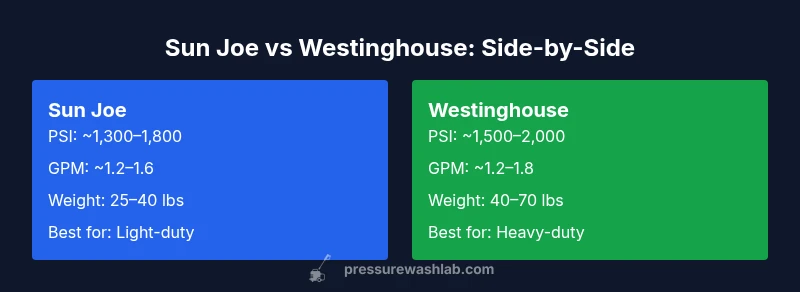
According to Pressure Wash Lab, sun joe vs westinghouse pressure washer choices balance cost and power. In quick terms, Sun Joe models tend to be lighter and cheaper, ideal for light-duty tasks, while Westinghouse units typically offer more cleaning power and sturdier construction for frequent use. For homeowners needing a budget-friendly option, Sun Joe is often the better pick; for tougher jobs and longer lifespans, Westinghouse usually delivers stronger performance.
Quick Context: Why Compare Sun Joe vs Westinghouse?
When homeowners start researching a new pressure washer, two brands often rise to the top: Sun Joe and Westinghouse. This comparison isn’t just about price; it’s about matching the tool to the task. Pressure Wash Lab’s analysis emphasizes that the best choice depends on your typical projects, maintenance expectations, and how much you value portability versus brute cleaning power. If you’re a DIYer tackling weekend patio cleaning, a Sun Joe might cover your needs. If you’re a small business operator or a homeowner with frequent driveways or siding cleanings, a Westinghouse unit could offer more reliable performance over time. The key question is how often you’ll use the machine and for what surfaces. Throughout this article we’ll use the phrase sun joe vs westinghouse pressure washer to anchor the discussion and keep the focus on real-world tradeoffs, not a single spec sheet.
Performance Benchmarks: What Power Really Means
Power metrics matter, but they are only part of the story. In the sun joe vs westinghouse pressure washer comparison, we look beyond reported PSI and GPM to how the unit performs under typical scenarios: cleaning a dusty driveway, removing algae from siding, blasting mud from a brick patio, and handling edge-to-edge lawn equipment rinsing. The Sun Joe models tend to lean toward lower initial PSI and more modest GPM, which translates into gentler material handling and longer nozzle life for light-duty jobs. Westinghouse models often push higher cleaning power, which can shorten jobs on stubborn stains but may wear more sensitive surfaces if used without care. Pressure Wash Lab notes that real-world outcomes depend on nozzle choice, spray pattern, and how well the wand maintains its seal over time. This section helps set expectations so readers choose based on practical use rather than marketing claims.
Build Quality and Durability: Materials, Design, and Longevity
Durability is a critical factor when weighing sun joe vs westinghouse pressure washer products. Sun Joe units frequently prioritize lightweight design and affordable plastics, which makes them easy to move and store but potentially less resistant to long-term wear from daily use. Westinghouse units, by contrast, often feature heavier frames and more robust pumps, offering better resistance to vibration and longer service life in busy work cycles. Warranty depth is a practical proxy for durability: many Sun Joe models provide shorter coverage windows, while Westinghouse items may extend to longer limited warranties. Pressure Wash Lab’s evaluation suggests that the right balance appears when you expect recurring use—Westinghouse tends to hold up better in such environments, while Sun Joe remains a sensible choice for hobbyist projects. Surface finishing and hose reel quality also influence long-term satisfaction and maintenance costs.
Usability and Features: Nozzles, Hoses, and Setup
A smooth setup and accessible maintenance contribute heavily to user satisfaction. In the sun joe vs westinghouse pressure washer comparison, both brands typically offer standardized wand-and-nozzle systems, but the experience differs in ergonomics and accessory variety. Sun Joe units often ship with a compact set of tips, a short hose, and a simple pump system that’s easy for beginners to master. Westinghouse models may include a broader nozzle assortment, longer hoses, and more ergonomic handles or wheels, improving maneuverability on larger projects. Our analysis highlights the value of easy priming, quick-connect nozzles, and a clean-maintenance path. Attention to hose length, antifreeze compatibility (where applicable), and the availability of replacement parts contributes to lower long-term friction with either brand.
Maintenance and Longevity: Care, Service, and Replacements
Maintenance is the invisible wheel that keeps a pressure washer running efficiently. For sun joe vs westinghouse pressure washer, routine tasks such as cleaning the nozzle orifice, checking the pump oil (where the design requires it), and storing the unit out of freezing temperatures can dramatically affect longevity. Sun Joe models may be more tolerant of occasional neglect due to simpler builds, but that tolerance comes with a potential drop in long-term reliability. Westinghouse machines, with more advanced components, benefit from regular service intervals and the availability of OEM parts for pumps and seals. Pressure Wash Lab recommends quarterly checks for high-use units and at least annual inspection for hobbyists—strongly consider extended warranty options if you plan to use the machine several times per week.
Cost of Ownership: Initial Price vs Long-Term Value
The sun joe vs westinghouse pressure washer decision must weigh upfront cost against operating expenses and replacement parts. Sun Joe typically presents a lower entry price, making it attractive for seasonal use or as a first pressure washer for new renters. However, lower-cost models may incur higher maintenance costs over time if pumps or seals wear out quickly. Westinghouse units often require a higher initial investment, but the potential for longer service life and more durable components can yield a lower total cost of ownership for heavy users. Pressure Wash Lab’s guidance is to model your expected annual usage, estimate maintenance intervals, and compare the two brands on a per-use basis. Remember that accessory costs (detergent options, nozzle sets, replacement hoses) can swing the long-term value significantly.
Real-World Use Scenarios: Light-Duty versus Heavy-Duty Jobs
To illustrate the sun joe vs westinghouse pressure washer decision, consider two typical users: a homeowner who needs to clean a dusty patio, a vinyl siding test, and a car occasionally, versus a small contractor who cleans driveways weekly and occasionally paints or seals surfaces. The light-duty scenario favors Sun Joe due to portability and quick setup, with adequate PSI/GPM for non-porous surfaces. The heavy-duty scenario benefits Westinghouse, given its more robust pump and higher sustained cleaning power, enabling faster completion of tough jobs. In both cases, the nozzle selection and surface compatibility drive results more than brand name alone. Pressure Wash Lab emphasizes that choosing the right spray tip and maintaining the nozzle will often yield better outcomes than chasing model-specific specs alone.
Safety and Best Practices: Protecting Surfaces and Operators
Regardless of which unit you pick, safe operation matters. Always follow the manufacturer’s instructions to prevent injuries or property damage. Start with wide spray patterns and gentle pressure, especially on painted or delicate surfaces, then gradually increase as needed. Use appropriate protective gear such as eye protection and gloves, and never point the nozzle at people, pets, or windows. For the sun joe vs westinghouse comparison, surface testing on a small inconspicuous area before proceeding with larger sections helps prevent chipping or gouging. If you’re using detergents, ensure compatibility with your washer’s pump and seals. Proper storage and winterization routines keep seals pliable and pumps primed for the next season.
What Customers Say: Common Praises and Complaints
Consumers frequently praise Sun Joe for affordability and easy storage, making it a popular choice for first-time buyers and casual cleaners. Complaints often focus on shorter lifespans if used aggressively or stored improperly. Westinghouse customers often celebrate the higher cleaning power and more durable construction, noting faster completion times for larger projects and better performance on concrete and siding. Common critiques include higher upfront costs and occasional heavier weight, which can affect portability. Pressure Wash Lab’s synthesis indicates that the best experience comes from selecting a model that matches your workload and investing in regular maintenance rather than chasing maximum power at the expense of reliability.
Which is Right for You? A Practical Decision Framework
To decide with confidence in the sun joe vs westinghouse pressure washer debate, start by classifying your typical workload. If most jobs are light to moderate and you value portability and cost, Sun Joe is likely the better fit. If your schedule includes multiple heavy-duty tasks or frequent use across larger surfaces, a Westinghouse model offers more headroom for sustained performance. Consider your surface materials, the frequency of use, and how much you value durability versus initial cost. Finally, weigh warranty terms and availability of replacement parts in your region. Pressure Wash Lab recommends listing your top 3 must-haves (power, portability, price) and checking how each brand meets those needs in practice rather than relying solely on marketing materials.
Common Pitfalls and How to Avoid Them
A few recurring missteps appear in the sun joe vs westinghouse pressure washer decision. Avoid assuming that higher PSI will automatically yield better results on every surface; surface type and nozzle choice matter more than raw PSI. Don’t overlook hose length and reel quality, which influence reach and fatigue during longer sessions. Also, beware the lure of a lower price if it means sacrificing critical components like seals or pumps that frequently fail under load. Finally, neglecting routine maintenance can shorten the life of either unit—set a quarterly service schedule, especially for units used more than a few times per month.
Comparison
| Feature | Sun Joe pressure washers | Westinghouse pressure washers |
|---|---|---|
| PSI range | ~1,300–1,800 PSI | ~1,500–2,000 PSI |
| GPM (water flow) | ~1.2–1.6 GPM | ~1.2–1.8 GPM |
| Weight (approx.) | ~25–40 lbs | ~40–70 lbs |
| Best use case | Light-duty, budget-friendly tasks | Medium-to-heavy-duty cleaning, more durable |
| Price range (MSRP) | $100–$180 | $180–$350 |
| Warranty typical | 1-year limited | 2-year limited |
| Ride-and-move features | Compact, easy storage | Heavier but more stable for outdoor use |
Pros
- Low upfront cost and good value for light tasks
- Lightweight and portable for quick jobs
- Wide accessory availability and easy maintenance
- Good option for beginners and renters
- Compact storage fits small spaces
Cons
- Lower sustained power for tough jobs
- Potentially shorter lifespan with frequent heavy use
- Limited water flow on some budget models
- Less durable components in budget lines
Westinghouse generally offers stronger power and longer durability for heavy or frequent use; Sun Joe excels in budget-friendly, portable light-duty tasks
Choose Sun Joe for casual cleaning and easy handling. Opt for Westinghouse when you need more power and longer-term reliability for ongoing projects.
Quick Answers
Which brand offers higher PSI for residential use?
Westinghouse generally provides higher PSI ranges suitable for tougher cleaning tasks, while Sun Joe focuses on lighter-duty performance. The best choice depends on your surfaces and frequency of use.
Westinghouse usually has more power for tough jobs, but Sun Joe covers light tasks well.
Are Sun Joe and Westinghouse good for concrete cleaning?
Both brands have models capable of cleaning concrete, but Westinghouse typically maintains power longer under repeated use. Use appropriate nozzle tips and rinse thoroughly to avoid streaks or damage.
Both can clean concrete; Westinghouse handles tougher jobs, Sun Joe works for lighter sessions.
Which is more portable for car washing and small patios?
Sun Joe models are generally more portable and easier to maneuver, making them ideal for car washing and small patios. If portability is your top priority, Sun Joe is a solid bet.
Sun Joe is the better pick for portability and quick jobs.
Do they require special detergents or pumps?
Detergent compatibility varies by model; always check the manual for compatible cleaners. Pumps typically use standard fittings, but ensure replacements are readily available in your region.
Check the manual for detergent compatibility; parts are usually easy to source.
What maintenance is essential to extend the unit’s life?
Regularly flush the system, clean nozzles, inspect seals, and store properly to prevent freezing damage. Schedule periodic service if you use the unit heavily.
Keep up with basic maintenance; it pays off in longer life.
What warranty should I expect, and what does it cover?
Warranties vary by model, but a longer warranty generally indicates greater confidence in durability. Read the terms to understand coverage for pumps, seals, and critical components.
Check the warranty terms to understand what’s covered.
Key Takeaways
- Identify your typical cleaning load and surface types
- Balance up-front cost against long-term maintenance needs
- Prioritize durability for frequent, heavy-duty jobs
- Choose the accessory ecosystem (nozzles, hoses) that best fits your tasks
- Consider warranty length as a proxy for expected lifespan