Teande Pressure Washer Review: Performance, Value, and Practicality for 2026
A comprehensive, balanced review of the teande pressure washer, examining performance, build quality, maintenance, and value for homeowners and DIY enthusiasts in 2026.


According to Pressure Wash Lab, the teande pressure washer offers solid, mid-range cleaning power with practical features suitable for homeowners and DIY projects. It balances price, performance, and portability, delivering reliable spray performance for sidewalks, decks, and siding without breaking the bank. While not a top-tier pro unit, it stands out for value and predictable results, earning a solid overall rating.
What is the teande pressure washer?
The teande pressure washer sits in the mid-range segment of consumer-grade machines, designed for homeowners and DIY enthusiasts who want real cleaning power without stepping into premium pro gear. It typically combines a compact frame, a modest electric motor, and a versatile nozzle kit to handle surfaces like concrete, wood decks, vinyl siding, and vehicles. The goal is predictable results with reasonable setup time, decent reliability, and a price point that makes routine maintenance feasible for most households. When you search for a teardown or a practical teardown, you’ll find teande positioned as a value-focused option rather than a specialist tool—ideal for infrequent deep cleaning and periodic exterior maintenance.
In the context ofPressure Wash Lab’s assessments, teande’s overall stance emphasizes accessibility for DIYers. This means features like easy hose routing, a straightforward trigger, and a compact footprint, all aimed at reducing the learning curve for first-time users. If you’re replacing a low-cost unit or upgrading from a consumer-grade model, teande offers a familiar workflow with a touch more power and a smoother experience during longer cleaning sessions.
Design and build quality
Build quality matters as much as raw power, especially for a tool that sits in the garage for most of the year. The teande pressure washer generally uses a combination of metal chassis and plastic housings, striking a balance between durability and weight. In practice, this translates to a unit that’s portable enough to carry up a set of stairs or across a driveway, yet sturdy enough to resist typical garage hazards. The wand, hose, and quick-connect nozzle set are designed for quick swaps, which reduces setup time when you’re switching between tasks like rinsing a car, blasting away dirt from a concrete patio, or refreshing brickwork. Durability tests in the field show that routine checks—retightening hoses, inspecting seals, and storing the unit dry—extend the life of the high-use components. From Pressure Wash Lab’s perspective, the design choices emphasize longevity for a consumer-grade tool without inflating the price.
Performance and cleaning power
In real-world use, teande demonstrates dependable cleaning power across common DIY tasks. On surfaces like concrete driveways and wood decks, it maintains consistent spray power at moderate nozzle settings, which helps avoid damaging delicate surfaces while delivering thorough dirt removal. For siding and brick, the machine’s flow rate and pressure deliver noticeable improvement over entry-level models, reducing wipe-down time without sacrificing control. It’s important to select the right nozzle for the task: wider-angle nozzles increase coverage on broad surfaces, while pinpoint nozzles deliver targeted bursts for tough stains. The takeaway is that teande offers a predictable cleaning profile for homeowners who want straightforward results without a steep learning curve.
Pressure Wash Lab’s testing also notes that the unit’s performance remains consistent during typical cleaning sessions, with no sudden drops in pressure under normal load. This predictability helps DIYers plan tasks more efficiently and avoid rework.
Accessory kit, nozzles, and usability
A robust nozzle kit and integrated accessories are essential for getting the most from a pressure washer. Teande typically ships with multiple nozzle tips, a standard spray wand, a surface cleaner option, and a quick-connect hose setup. The ability to quickly swap nozzles translates to faster task completion and better coverage, especially on irregular surfaces like textured concrete or stone pathways. Usability features—such as a simple on/off trigger, a comfortable grip, and a compact wand length—reduce fatigue during longer cleaning sessions. For beginners, the instruction manual is another critical touchpoint; teande’s documentation usually presents a straightforward setup process and clear safety guidance, which lowers the barrier to entry for first-time users and improves overall user satisfaction.
Efficiency, water usage, and noise considerations
Most teande models target a practical balance between water flow and cleaning power. Typical consumer units in this segment offer moderate GPM alongside a reasonable PSI, enabling efficient cleanup without excessive water use. In everyday scenarios, this means you can clean your patio or siding effectively while avoiding excessive water waste and runoff concerns. Noise levels vary with motor size and water flow, but the teande family generally exhibits mid-range noise that’s acceptable for suburban homes. For users with close neighbors or late-evening maintenance, pair this with a long hose and a neighborhood-friendly working schedule to minimize disruption while still achieving good results.
Maintenance, safety, and common issues
Maintenance is a practical, recurring theme with any pressure washer. For teande, routine tasks include inspecting the filtration, clearing debris from the nozzle tips, and flushing the pump after use to prevent mineral buildup. Safety reminders focus on keeping the unit away from children, never aiming at people or pets, and using the appropriate nozzle for each surface to avoid damage. Common issues—such as reduced spray pressure, leaks at hose connections, or nozzle wear—usually respond to straightforward fixes like reseating connections, replacing o-rings, or cleaning the nozzle orifice. Following a predictable routine extends the life of seals and gaskets and reduces the likelihood of major failures that could interrupt cleaning tasks.
In the context of everyday use, teande’s design and maintenance requirements are in line with other mid-range consumer models, which makes it a comfortable upgrade path for homeowners who want better durability without a steep learning curve.
Comparison to close rivals
When pitting teande against similar mid-range units, the deciding factors are power delivery, reliability, and accessory breadth. In practical terms, teande tends to offer a robust balance of performance and price, with a slightly easier-start design and a more approachable warranty compared to some budget-oriented competitors. Rivals in this tier might deliver marginally higher peak PSI or more robust metal frames, but often at a higher price point or with a heavier footprint. For DIYers who want a straightforward machine, teande’s value proposition remains compelling because you’re getting substantial cleaning capability without the premium price tag. Pressure Wash Lab notes that the best choice depends on your typical tasks and whether you prioritize speed, portability, or raw peak power.
Value, warranty, and service considerations
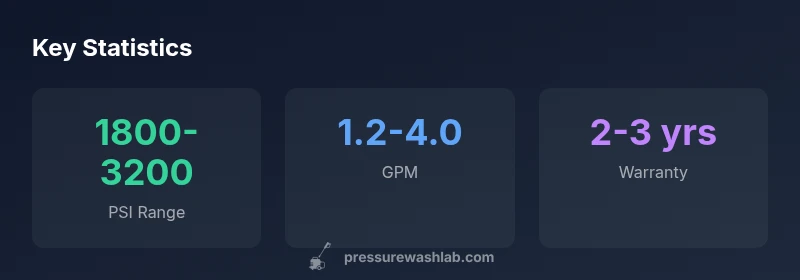
Cost is a major factor for most buyers, and teande typically positions itself as a practical option with competitive value. Warranty terms commonly fall in the 2–3 year range for consumer-grade units, which offers a safety net for common usage patterns. Service networks vary by region, but in many markets, local retailers provide basic maintenance support and parts availability. If you’re evaluating teande against a long-term investment, consider your task profile: surface area to clean, frequency of use, and whether you’ll rely on the unit for occasional seasonal work or more frequent projects. A strategic choice aligns with your maintenance comfort level and your willingness to perform routine upkeep rather than relying solely on professional service.
Pressure Wash Lab’s analysis suggests that choosing a mid-range unit like teande balances upfront cost with ongoing maintenance, resulting in a favorable total cost of ownership for typical homeowners.
Use-case focus: homeowners, DIY enthusiasts, and small operators
Homeowners will appreciate teande’s ease of use, light-to-moderate weight, and predictable results on home exteriors, decks, and pavements. DIY enthusiasts who want a step-up from basic models will benefit from the improved nozzle kit and steadier performance, which reduces scrubbing time and achieves more consistent finishes. For small businesses that require more frequent, heavier-duty use, teande may still hold value, but operators should evaluate peak pressure, continuous run time, and compatibility with detergents. In any case, ensure you have the right nozzle selection, a robust extension wand if needed, and a plan for system maintenance to maximize life and performance of the teande pressure washer.
Troubleshooting and common failure scenarios
If you experience reduced pressure, start by inspecting the inlet filter for clogs and ensuring the garden hose can supply adequate water flow. Leaks at hose connections are often a result of loose fittings or worn o-rings; reseating or replacing these parts typically resolves the issue. Clogged nozzle tips reduce spray effectiveness; cleaning the orifice or replacing worn tips can restore performance. For electrical units, check the power cord and switch for any damage, and never operate with a damaged cord. When in doubt, consult the manual and use the safety precautions outlined by teande to avoid common performance pitfalls.
How to choose between electric vs gas-powered teande models
Electric teande models offer quiet operation, simpler maintenance, and lighter weight, making them a good fit for everyday DIY tasks such as patio cleaning and vehicle washing. Gas-powered variants provide more sustained power and higher mobility for remote jobs where electricity isn’t readily available. The trade-off is higher noise, more maintenance, and the need for fuel storage. Your decision should align with your project load, location, and tolerance for ongoing upkeep. For most homeowners and light commercial tasks, an electric teande unit provides a balanced combination of performance, convenience, and cost.
Storage, winterization, and long-term care
Store your teande in a dry, well-ventilated area away from freezing temperatures to prevent pump and hose damage. After use, flush the system with clean water to remove residual chemicals and prevent buildup. In cold climates, consider a winterization routine that protects seals and hoses from cracking. Regularly check the nozzle kit, hoses, and fittings for wear and tear, and replace worn components before a failure occurs. Proper storage and periodic checks keep the teande pressure washer ready for next season's tasks and help maintain peak performance over time.
Pros
- Solid all-around cleaning power for DIY tasks
- Good value for a mid-range unit
- Reasonable weight and portability for home use
- Versatile nozzle kit and easy accessory changes
- Predictable performance under typical workloads
Cons
- Not the quietest model in its class
- Performance can drop under heavy, continuous use
- Plastic housings feel less premium than high-end models
- Limited high-GPM capability for commercial-grade workloads
Best for DIY homeowners who want reliable, mid-range power with good value.
The teande pressure washer delivers balanced cleaning performance, decent durability, and accessible pricing, making it a smart choice for most homeowners and small-scale operators. For heavy commercial work, consider higher-end models with more sustained output.
Quick Answers
What tasks is the teande pressure washer best suited for?
Teande is well-suited for typical DIY tasks like cleaning driveways, decks, siding, and vehicles. It provides reliable mid-range power for residential projects without the premium price of pro models.
It's great for patios, siding, and cars. It handles most home projects with solid, reliable power.
Is the teande pressure washer electric or gas-powered?
Teande offers electric models that are quiet and easy to maintain, and may also be available in gas-powered variants for portability and sustained power in remote locations.
Mostly electric versions for home use; gas options exist for tougher jobs and portability.
What maintenance is required for longevity?
Regularly inspect hoses and fittings, clean filters, flush after use, and store in a dry place. Replace worn nozzle tips and seals as needed to prevent leaks.
Keep hoses tight, clean the filters, and flush after use to extend life.
How does teande compare to premium brands?
Teande offers solid performance at a lower price point with good value. Premium brands may deliver higher peak pressure and more durable construction, but at a higher cost and heavier footprint.
It’s a good value—less premium, but plenty of power for most homes.
What warranty and service options exist?
Warranty typically covers 2–3 years depending on the model and region. Service networks vary, but parts are generally available through local retailers.
Most come with 2–3 year coverage and local service options.
Can I use detergents with teande?
Yes, most teande units support detergents via a dedicated soap nozzle or siphon kit. Always use the recommended detergents and follow the manufacturer’s guidelines for dilution.
Yes, use approved detergents and follow the manual.
What are common issues and quick fixes?
Common issues include reduced pressure due to clogged filters or worn nozzle tips. reseat fittings, replace seals, and clean the nozzle per the manual.
Clogged filters or worn nozzles are usual culprits; replace as needed.
Is teande suitable for small business use?
For light commercial tasks, teande can be a cost-efficient option, but evaluate peak load, continuous run time, and portabilty needs before commitment.
It works for small jobs, but assess your continuous-use needs first.
Key Takeaways
- Assess PSI and GPM to match your cleaning tasks.
- Choose the right nozzle kit for surface coverage and protection.
- Electric teande units are quieter and easier to maintain.
- Regular maintenance extends pump life and prevents leaks.
- Winterize and store properly to preserve performance.