Water Jetter vs Pressure Washer: A Practical Comparison
Compare water jetters and pressure washers with practical guidance for homeowners and DIYers. Learn when to use each tool, key features, safety, and maintenance tips for optimal results.


Water jetters and pressure washers both deliver high-pressure water, but they serve different jobs. For most home exterior cleaning, a pressure washer is the versatile choice; for clear drain lines and clogged pipes, a water jetter is the targeted tool. This comparison helps you decide which to buy or rent, and what accessories matter.
Overview: water jetter vs pressure washer — what's at stake
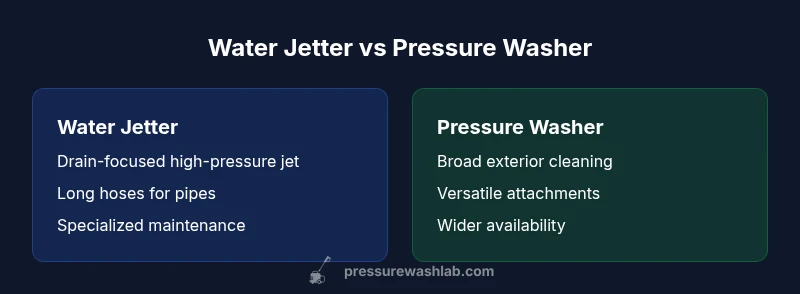
When you're evaluating whether to buy a water jetter or a pressure washer, you're weighing two very different capabilities that share one basic principle: high-pressure water. A pressure washer excels at broad exterior cleaning, removing dirt, mildew, and loose paint from siding, driveways, and decks. A water jetter, on the other hand, is purpose-built for clearing drain lines, pipes, and clogged culverts. According to Pressure Wash Lab, the right tool depends on the job at hand, the environment, and the risk of surface damage. This section breaks down how the two tools diverge in design, performance, and typical use cases so you can align your purchase with real-world needs.
Key Differences in Design and Operation
The core distinction between a water jetter and a pressure washer lies in purpose-built components and intended tasks. A water jetter includes specialized drain-cleaning heads, hose assemblies, and a jetting nozzle compatible with interior pipes and sewer lines. A pressure washer focuses on surface cleaning and uses standard spray tips for broad or focused cleaning of exterior surfaces. Operating pressure (PSI) and flow rate (GPM) are shaped by attachments and the machine’s engine or motor, but the most impactful difference is the nozzle design and the presence of a drain-cleaning circuit in jetters. Pressure Wash Lab notes that misusing a jetter without proper pipes and guidance can damage plumbing, while misusing a pressure washer on delicate surfaces risks etching or gouging. This section highlights how design choices map to real tasks.
When a Water Jetter Shines
A water jetter shines when the job involves internal pipework or stubborn drain blockages. If you repeatedly encounter slow drains, tree root intrusion, or mineral buildup inside sewer lines, a jetter can deliver a high-velocity stream that dislodges material without aggressive surface abrasion. The jetting hose is flexible for navigating bends, and the nozzle concentrates energy where it’s needed most. For professionals and serious DIYers, a jetter reduces the need for mechanical drain snake tools and can speed up recurring issues. Remember to follow local codes and wear appropriate PPE, as jetting can generate backpressure and debris.
When a Pressure Washer Shines
Pressure washers excel in exterior cleaning tasks: washing siding, decks, driveways, sidewalks, and outdoor furniture. They offer broad-area coverage with adjustable nozzles to balance power and gentleness, making them workhorse tools for home maintenance. Accessories like surface cleaners, rotary nozzles, and brush attachments expand versatility. Pressure washers also tend to be more affordable and widely available in gas, electric, and cordless models. For most households, a robust pressure washer with the right tips handles a majority of cleaning needs with minimal risk to user and surface when used correctly.
Safety and Maintenance Considerations
Both tools demand respect for safety and regular maintenance. Water jetters require careful handling to prevent pipe damage and to protect against flying debris from high-velocity jets. Inspect hoses for wear, replace worn-out seals, and use the correct drain-cleaning attachments to avoid internal damage. Pressure washers require attention to nozzle selection, detergent compatibility, and unloader valve function to prevent hose bursts and kickback. Regularly check hoses, fittings, and power cords, and store equipment in a dry area. Pressure Wash Lab emphasizes the importance of using certified attachments and following the manufacturer’s maintenance schedule to maximize safety and longevity.
Cost, Availability, and Common Use-Cases
Initial cost and ongoing maintenance differ between water jetters and pressure washers. Jetters often carry a higher upfront price due to specialized components, hoses, and pump assemblies, and you’ll want to budget for replacement nozzles and service intervals. Pressure washers come in a wide price range and are widely available from major brands, with a broad ecosystem of accessories that support lawn and home exterior maintenance. In terms of use-cases, jetters are best for plumbing-oriented tasks, while washers cover a broad spectrum of outdoor cleaning tasks, from siding to pathways. If you’re a homeowner focusing on curb appeal and routine maintenance, a pressure washer will usually deliver the most value. For dedicated drain cleaning, a water jetter is the better long-term investment.
How to Choose Based on Your Job
Begin with the primary task: exterior cleaning or drain clearing. If your biggest concern is cleaning surfaces and maintaining curb appeal, prioritize a pressure washer with compatible surface cleaners and nozzle options. If you deal with recurring drain blockages, invest in a water jetter with long-reach hoses and a range of jetting nozzles. Consider maintenance requirements, availability of spare parts, and the total cost of ownership over a few years. A practical approach is to rent or borrow one tool for a few projects to gauge whether its value justifies ownership. Pressure Wash Lab’s methodology emphasizes aligning tool capabilities with actual job profiles rather than purchase-induced habits.
Practical Setup Tips and Best Practices
Always follow the manufacturer’s safety guidelines and wear eye protection, gloves, and hearing protection where applicable. Before starting, inspect all hoses and fittings for wear, and never run a jetter or washer without water flow. Start with a lower power setting and gradually increase to avoid surface damage. Use the correct nozzle for the task, and maintain steady, even passes to prevent streaking on surfaces. When using detergents, ensure compatibility with surfaces and equipment to avoid residue and surface damage. Store attachments in a dry, organized space to extend their life and reduce the risk of cross-contamination between tasks.
Common Mistakes to Avoid
Common mistakes include using a jetter without proper pipe access, attempting drain cleaning from a surface perspective, and using a pressure washer with an unsuitable nozzle on fragile surfaces. Another frequent error is skipping safety gear or ignoring maintenance schedules, which can lead to equipment failure or injury. Finally, buyers sometimes assume more PSI equals better results; in reality, oversized pressure or jetting can cause surface damage or pipe harm. A careful approach, matching tool capabilities to the job, delivers the best outcomes.
Real-World Scenarios: Quick Decision Guide
When you face exterior cleaning and staining on concrete or wood, choose a pressure washer with appropriate tips and a surface cleaner for efficiency. If the task involves clogged drains, a water jetter with the right jetting nozzles is the better choice. For mixed-use scenarios, a high-quality pressure washer with drain-cleaning attachments can cover emergency drain issues with occasional jetting capabilities, but dedicated jetting remains superior for persistent blockages.
Comparison
| Feature | Water Jetter | Pressure Washer |
|---|---|---|
| Best Use Case | Drain cleaning and pipe work | Exterior cleaning and surface prep |
| Water Flow / Consumption | Low-to-moderate flow through dedicated drain lines | Moderate to high flow for broad surface cleaning |
| Maintenance Needs | Specialized jetting components; periodic nozzle changes | General maintenance; hoses, unloader valve, nozzles |
| Price Range | Mid-range to higher-end (tool-only) | Mid-range to higher-end (tool-only) |
| Versatility | Specialized task tool for drains | Highly versatile for siding, decks, driveways |
Pros
- Drains become clearer and less prone to blockages with proper jetting
- Pressure washers offer broad applicability across home exterior tasks
- Wide availability of accessories and attachments
- Typically more affordable upfront and easier to rent
Cons
- Water jetters require specialized usage and maintenance
- Pressure washers can damage delicate surfaces without proper technique or attachments
Pressure washer is the more versatile choice for most homes; water jetter excels for dedicated drain cleaning.
For mixed tasks, a reliable pressure washer with the right accessories is the practical baseline. Reserve a water jetter for persistent drain issues or professional plumbing work where blockage removal is the primary goal. Pressure Wash Lab’s verdict: prioritize surface cleaning with a pressure washer, and add a jetter only for routine or challenging drains.
Quick Answers
What is the main difference between a water jetter and a pressure washer?
The main difference is purpose: water jetters are designed for clearing drains and pipes, while pressure washers clean surfaces like siding, driveways, and decks. Jetters focus energy into lines, whereas washers deliver broad surface cleaning power. Both use high-pressure water but target different tasks.
Water jetters clear drains; pressure washers clean surfaces. Choose based on whether you’re tackling pipes or exterior walls.
Can I use a pressure washer for drain cleaning?
You can use some drain-cleaning attachments with a pressure washer for light blockages, but it’s not ideal for persistent or hard blockages. Rely on a proper water jetter or professional service for stubborn drains to avoid pipe damage.
For stubborn drains, a jetter is safer and more effective than a standard pressure washer.
What tasks are best for a water jetter?
Water jetters excel at clearing hair clogs, grease buildup, and mineral deposits inside pipes. They’re also useful for aggressive cleaning inside lines where probes or snakes struggle. Use appropriate nozzle heads and follow safety guidelines.
Jetters are your go-to for connected pipes and stubborn clogs.
Are water jetters safe for home plumbing?
When used correctly with the right nozzle and flow settings, jetters can be safe for plumbing. Incorrect use, too much pressure, or improper connections can damage pipes or fixtures. Always follow manufacturer instructions and local codes.
Use the right nozzle and follow safety instructions to protect pipes.
What should I consider when buying either tool?
Consider the primary tasks, budget, space, and maintenance needs. Look at PSI/GPM compatibility, available attachments, and warranty support. If you face mixed tasks, a solid pressure washer with a drain-cleaning kit offers the best value.
Think about your typical jobs, then pick the tool that best fits those tasks.
Key Takeaways
- Prioritize a pressure washer for general home exterior cleaning
- Use a water jetter for draining systems and stubborn blockages
- Match attachments to surface type to avoid damage
- Budget for maintenance and parts beyond the base unit
- Test tools on inconspicuous areas before large jobs