Westinghouse Pressure Washer vs Craftsman Pressure Washer: An In-Depth Comparison
Detailed, data-driven comparison of Westinghouse and Craftsman pressure washers, focusing on power, features, portability, maintenance, and value for homeowners and DIYers.


In a westinghouse pressure washer vs craftsman pressure washer comparison, Westinghouse models generally offer the best value and portability for routine home cleaning tasks, making them a strong first choice for many DIY projects. Craftsman models, on the other hand, often deliver higher cleaning power in mid-range variants, which can be advantageous for tougher jobs. Your pick should hinge on intended tasks, budget, and willingness to upgrade accessories.
Context and Positioning
According to Pressure Wash Lab, Westinghouse and Craftsman pressure washers occupy the practical mid-range in the consumer market. Both brands aim at homeowners, DIY enthusiasts, and small businesses seeking reliable cleaning power without premium price tags. In this westinghouse pressure washer vs craftsman pressure washer comparison, we assess core specs, build quality, and total cost of ownership to help you decide which brand better aligns with your cleaning agenda and budget. These devices share design language, porting options, and modular accessories, but subtle differences in performance and reliability matter in day-to-day use.
As you read, keep in mind that every model under these brands varies by wattage (for electric motors), pump design, and included nozzle kits. The Pressure Wash Lab team will outline how these variables translate to real-world results and how to avoid common buying pitfalls. This section sets the stage for a rigorous, model-agnostic evaluation that homeowners can apply in practical shopping scenarios.
Understanding the Core Specs That Matter
When evaluating any pressure washer, several core specs determine whether a model will perform for your specific tasks. PSI (pounds per square inch) indicates cleaning power, while GPM (gallons per minute) controls how much water flows and how quickly surfaces are cleaned. The nozzle assortment and spray patterns influence versatility for tasks like deck cleaning or concrete removal. In this comparison, both Westinghouse and Craftsman lines typically offer multiple models with model-dependent PSI and GPM, but the real value comes from how those specs translate into practical results on your surfaces. Consider also motor type, pump durability, and ease of maintenance when choosing between brands.
Westinghouse Lineup: Strengths and Limitations
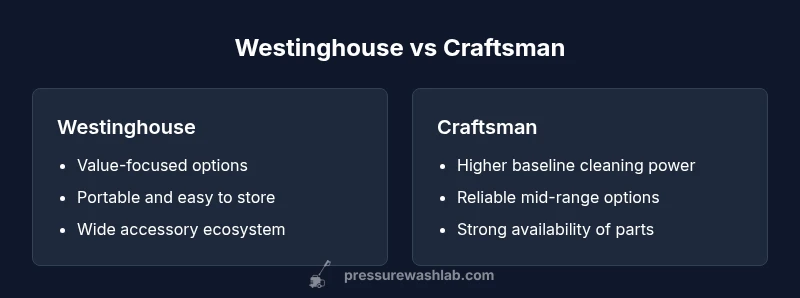
Westinghouse models tend to emphasize value for money, portability, and a broad compatibility with common spray nozzles. The brand's lineup often includes compact, lighter machines that are easy to maneuver in tight spaces, which is ideal for homeowners with small yards or limited storage. They also tend to offer a wide array of accessories and hose lengths, enhancing convenience for everyday outdoor chores. However, some budget-oriented Westinghouse models rely on more basic components, which can affect long-term durability if used heavily. For most light- to mid-duty tasks, a mid-range Westinghouse model provides compelling value when paired with the right nozzle kit and surface cleaner.
Craftsman Lineup: Strengths and Limitations
Craftsman pressure washers often emphasize higher baseline cleaning power in mid-range models, with solid wand design and reliable quick-connect nozzle options. This makes Craftsman attractive for homeowners who tackle tougher jobs like heavy deck mildew, concrete grime, or multi-surface cleaning in a single session. The trade-off is that some Craftsman variants may come at a higher upfront price and can be heavier than leaner Westinghouse units. Nevertheless, in the mid-range segment, Craftsman frequently delivers competitive power with dependable parts availability and broad service support.
Efficiency and Cleaning Power: When to Choose Which
Efficiency hinges on how PSI and GPM work together for your specific tasks. For routine siding, cars, and light deck cleaning, a Westinghouse with balanced PSI and decent GPM often provides adequate performance with comfortable operation and longer hose reach. If you frequently clean larger areas, thick grime, or hard-to-remove buildup, a Craftsman model with higher power output in the mid-range can reduce cleaning time and surface pass counts. In both brands, the best value comes from pairing a model with an appropriate nozzle kit, including a rotary turbo nozzle for tough spots and a surface cleaner for flat surfaces like sidewalks.
Durability, Warranty, and Serviceability
Durability in this segment depends on pump quality, hose material, and overall build. Westinghouse often targets a lower initial price with reliable components suitable for intermittent, home-use cleaning. Craftsman models tend to bring stronger pumps and more robust fittings in their mid-range lines, which can translate to longer service life under similar workloads. Warranty offerings typically vary by model and region, but most mid-range units provide at least a one-year warranty, with extended coverage possible on higher-end variants. Always verify the specific model’s warranty terms before purchase.
Portability, Footprint, and Usability
Portability is a common deciding factor for DIY users. Westinghouse units typically aim for lighter weight, more compact footprints, and easier storage—perfect for small garages or apartments. Craftsman models often balance power with a bit more heft, appealing to users who want stronger cleaning performance without stepping up to pro-grade equipment. In practice, consider your storage space, the length of your hose, the ease of reel storage, and how frequently you’ll transport the unit to outdoor cleaning sites. A lighter unit can be advantageous for one-person setups, while a heavier model may feel more sturdy on rough surfaces.
Maintenance and Spare Parts Availability
Maintenance requirements are similar for both brands, focusing on pump lubrication, hose care, and tip maintenance. Parts availability tends to be broad due to the brands’ consumer reach, but regional variation exists. For critical components such as the pump head and seals, buying from authorized dealers or reputable retailers helps ensure genuine parts compatibility and warranty coverage. Regular inspection of hoses for cracks or leaks and prompt replacement of worn tips can dramatically extend the life of either brand’s washer.
Cost of Ownership and Overall Value
The long-term value of a pressure washer depends on purchase price, maintenance frequency, noise, energy and water use, and downtime. Westinghouse models usually offer strong value on initial cost with competitive performance for standard DIY jobs. Craftsman models may carry a higher upfront price but potentially deliver more robust cleaning power and larger task suitability, which can translate into time savings and fewer model swaps. When evaluating total cost of ownership, include maintenance costs, replacement nozzles, and potential service needs across years of use.
Ideal Use Cases: Which Brand for Which Task
For compact yards, light to medium cleaning tasks, and frequent repositioning, Westinghouse typically shines due to portability and value. For users who regularly face tougher grime on driveways, stone surfaces, or heavy-surface tasks, Craftsman mid-range models can offer stronger cleaning power that reduces overall cleaning time. If your space and budget permit, consider keeping a lighter Westinghouse for quick touch-ups and a mid-range Craftsman for heavier cleaning days. This dual approach mirrors real-world usage patterns and can maximize both value and performance.
Accessories and Upgrades: What to Look For
Nozzle kits with a variety of tips (0°, 15°, 25°, 40°), turbo nozzles for caked-on grime, surface cleaners for large flat surfaces, and extension wands all contribute to versatility. Check the compatibility of attachments with your chosen brand and model, and assess hose length as a practical factor in reach and maneuverability. Some models offer built-in detergent tanks or wash-and-wloom features which can streamline routine outdoor cleaning. Prioritize systems with widely available parts and accessories to minimize long-term ownership friction.
Common Buyer Mistakes and How to Avoid Them
Common errors include selecting a model based solely on price without considering nozzle compatibility or duty cycle, failing to account for hose length, and underestimating the importance of accessories. Avoid buying a unit with limited parts availability or poor warranty terms. Always verify the model’s maximum PSI aligns with your intended tasks and ensure you have a suitable surface cleaner or nozzle set for the surfaces you plan to treat. Finally, store and transport the unit safely to prevent accidental damage to hoses and connectors.
Comparison
| Feature | Westinghouse Pressure Washer | Craftsman Pressure Washer |
|---|---|---|
| Lineup emphasis | Value-focused, portability-first | Higher baseline cleaning power in mid-range |
| Typical use-case | Light to medium DIY tasks | Medium to heavy-duty outdoor cleaning |
| Nozzle ecosystem | Broad range of tips and accessories | Solid nozzle options with reliable wand design |
| Portability | Generally lighter and easier to move | Often heavier but more powerful per model |
| Warranty approach | Model-dependent; generally standard coverage | Model-dependent; longer-term options in mid-range |
| Maintenance footprint | Common pump maintenance with accessible parts | Premium components in many mid-range models |
| Best for | Budget-conscious homeowners, portable tasks | Users needing stronger cleaning power for tougher jobs |
Pros
- Good balance of price and performance for most DIY tasks
- Extensive accessory ecosystem and wide availability
- Portability makes it easy to use in tight spaces
- Solid warranty options across many models
Cons
- Model-to-model variation can lead to inconsistency in performance
- Lower-end variants may rely on less-premium components
- Maintenance and parts availability can vary by region
Westinghouse wins on value and portability for routine tasks; Craftsman offers stronger mid-range power for tougher jobs.
If your cleaning needs are typical home-maintenance chores, Westinghouse generally provides the best value. For demanding tasks that require higher cleaning power, Craftsman mid-range models tend to perform more efficiently and handle tougher grime more quickly.
Quick Answers
What are the main differences between Westinghouse and Craftsman pressure washers?
The main differences lie in power delivery and value. Westinghouse typically targets budget-conscious buyers with portable units, while Craftsman emphasizes higher cleaning power in mid-range models. Both brands offer a range of accessories, but model selection and regional parts availability can influence long-term satisfaction.
Westinghouse focuses on value and portability, Craftsman on power. Consider your job size and budget when choosing.
Which brand is more reliable for long-term use?
Reliability depends on model quality and maintenance. Both brands offer entry-level to mid-range options with varying pump durability. Prioritize models from reputable retailers, check warranty terms, and plan for regular maintenance to improve longevity.
Reliability depends on the specific model and how well you maintain it.
Are these brands suitable for concrete cleaning or deck cleaning?
Yes, both brands have models capable of tackling concrete and deck grime. Craftsman models in the mid-range typically provide higher cleaning power, which can reduce cleaning time on tough surfaces. Always choose appropriate nozzles and optionally a surface cleaner for large flat areas.
They can handle concrete and decks, especially Craftsman mid-range models.
Do both brands offer similar warranty coverage?
Warranty terms vary by model and region. In general, mid-range models from both brands offer longer or more robust coverage, while budget models may have shorter terms. Always verify the exact warranty details for the specific model you’re considering.
Warranty varies by model; check the terms before buying.
Can I upgrade accessories for both brands easily?
Accessories like nozzles, surface cleaners, and extra hoses are broadly available for both brands through major retailers. Verify compatibility with your exact model to ensure a smooth upgrade path and to preserve warranty validity.
Yes, upgrades are generally straightforward if you pick compatible parts.
Key Takeaways
- Choose Westinghouse for budget-friendly, portable cleaning
- Opt for Craftsman when higher PSI/GPM matters for tougher jobs
- Assess model-specific warranty and parts availability before buying
- Pair any model with appropriate nozzles and accessories for best results